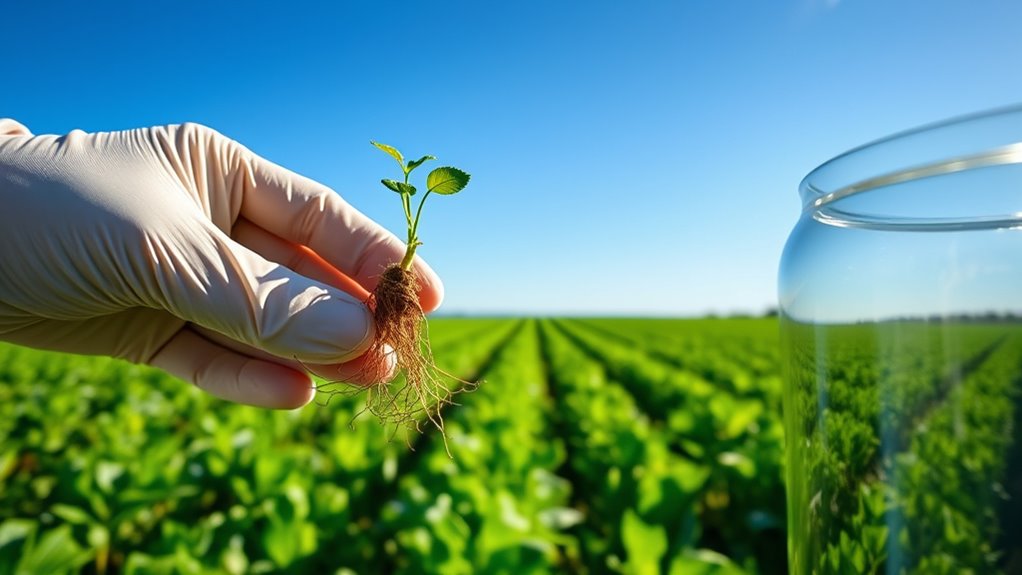

GMO organisms are not chemicals; they’re living organisms or organisms with altered DNA to give them specific traits. While chemicals like pesticides or herbicides may be used in farming GMO crops, the genetic modification itself isn’t a chemical substance. The process involves biological changes rather than adding chemicals. Understanding the difference helps clarify safety and environmental concerns—if you want to explore how GMOs and chemicals relate, keep going to learn more.
Key Takeaways
- GMOs involve genetic modifications at the DNA level, not chemical substances.
- Chemicals like pesticides may be used on GMO crops but are separate from the organism itself.
- Genetic modification is a biological process, whereas chemicals have a defined molecular composition.
- GMOs are living organisms or DNA, not chemical compounds.
- The safety and regulation of GMOs are independent of chemical substances used in farming.
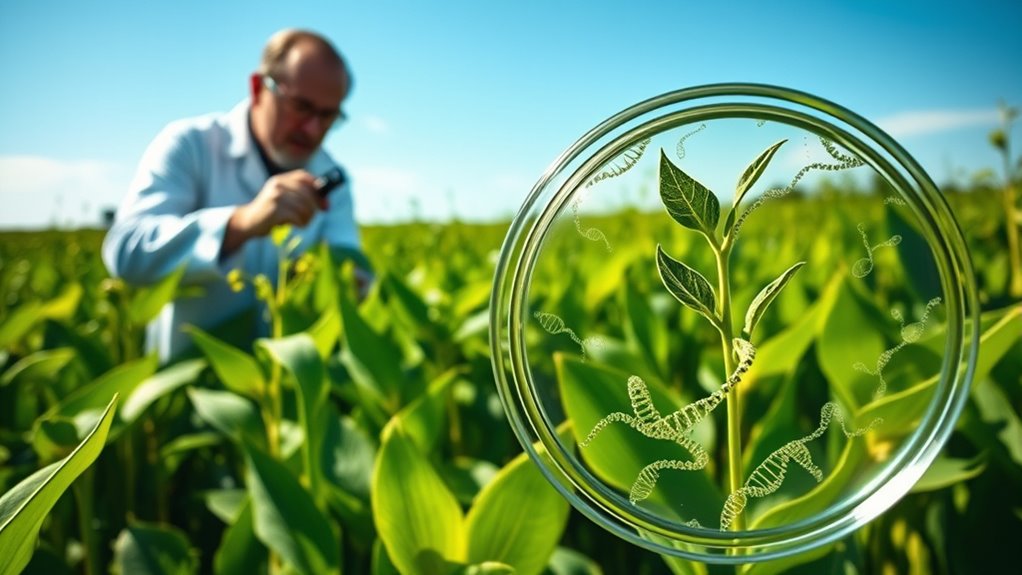
Genetically modified organisms (GMOs) and chemicals are often linked in debates about food safety and environmental impact. When you hear discussions about GMOs, a common question arises: are GMOs considered chemicals? The answer hinges on understanding what genetic modification involves and how it differs from chemicals. Genetic modification is a process where scientists alter the DNA of an organism to achieve specific traits, like pest resistance or drought tolerance. This process is distinct from adding chemicals directly to the food or environment. Instead, it involves precise alterations at the genetic level, which may or may not involve chemical agents during the process. Some critics worry that these modifications could introduce chemical concerns, especially if chemicals are used in the production or testing phases. However, the genetic modification itself is not a chemical substance; it’s a biological change at the DNA level. Moreover, the distinction between biological modifications and chemical substances is fundamental to understanding safety assessments and regulatory classifications.
You might think that because GMOs are associated with chemicals in some contexts, they must be chemicals themselves. But this isn’t accurate. Chemicals are substances with a defined molecular composition, like pesticides, herbicides, or preservatives. GMOs, on the other hand, are living organisms or their DNA, altered through laboratory techniques. While chemicals can be involved in the manufacturing, testing, or application of GMO crops—such as herbicides used on glyphosate-resistant plants—they are not inherently part of the GMO. This distinction is vital because it influences how regulations and safety assessments are conducted. GMOs undergo rigorous testing to guarantee they are safe for consumption and the environment, separate from the chemicals they might be associated with. Understanding the chemical interactions involved in cultivation can help clarify the differences between biological and chemical components in GMO production.
Your concerns about chemical exposure are valid, especially with ongoing debates about chemicals in pesticides and food additives. However, it’s important to differentiate between the GMO itself and the chemicals used in farming practices. Many GMO crops are designed to reduce the need for chemical pesticides, potentially lowering chemical concerns overall. Conversely, some GMO traits require specific chemicals for cultivation, which can raise questions about chemical residues or environmental impacts. Still, the core genetic modification process does not automatically mean the organism is a chemical. Instead, it’s a biological change that can influence how chemicals are used in agriculture, but it’s not synonymous with chemicals.
Frequently Asked Questions
Are GMOS Considered Natural or Synthetic?
You might think GMOs are natural, but they’re actually considered synthetic because they result from genetic modification, which involves altering DNA in ways natural selection rarely does. Unlike natural selection, which happens gradually over time, GMOs are created through scientific techniques to introduce specific traits. This process makes GMOs different from purely natural organisms, blending natural biology with human intervention, and often classifies them as a form of synthetic modification.
Do GMOS Contain Artificial Chemicals?
No, GMOs don’t contain artificial chemicals in the way you might imagine. Instead, they’re created through genetic modifications, which tweak DNA rather than douse plants with lab-made substances. Think of it as nature’s version of a software update, aimed at food safety and crop resilience. So, while they aren’t packed with artificial chemicals, GMOs are a high-tech way to keep your food safe and sustainable.
How Do GMOS Differ From Chemical Pesticides?
Genetically modified organisms (GMOs) differ from chemical pesticides through crop engineering, where genetic modification enhances plants’ natural defenses without introducing harmful chemicals. Pesticides are chemical substances designed to kill pests, while GMOs alter the plant’s DNA for pest resistance or improved traits. You can think of GMOs as a way to improve crops naturally, whereas chemical pesticides involve applying external chemicals to protect plants.
Can GMOS Cause Allergic Reactions?
Yes, GMOs can cause allergic reactions in some people. Cross contamination during GMO production might introduce new proteins that trigger immune responses. If you’re sensitive to certain allergens, consuming GMO foods could potentially cause symptoms like hives or swelling. It’s important to stay informed about GMO ingredients and monitor your body’s reactions. While many GMOs are safe, individual immune responses vary, so consult your doctor if you suspect allergies related to GMO consumption.
Are GMO Ingredients Safe for Human Consumption?
You’ll be glad to know that GMO ingredients are considered safe for human consumption, with over 90% of scientists agreeing on their safety. Genetic modification and crop engineering have been carefully tested through rigorous research and regulatory reviews. These innovations aim to improve crop yields and nutritional value. As a consumer, you can trust that GMO-derived foods meet safety standards, making them a reliable part of your diet without concerns about health risks.
Conclusion
So, next time you see a GMO in your food, remember it’s not just a chemical lurking inside. Coincidentally, many chemicals used in farming are also part of the process, but GMOs are more about genetic tweaks than chemicals. It’s funny how we often think of them as dangerous chemicals, yet they’re just a part of the natural science puzzle. In the end, understanding these connections helps you see the bigger picture behind what’s on your plate.