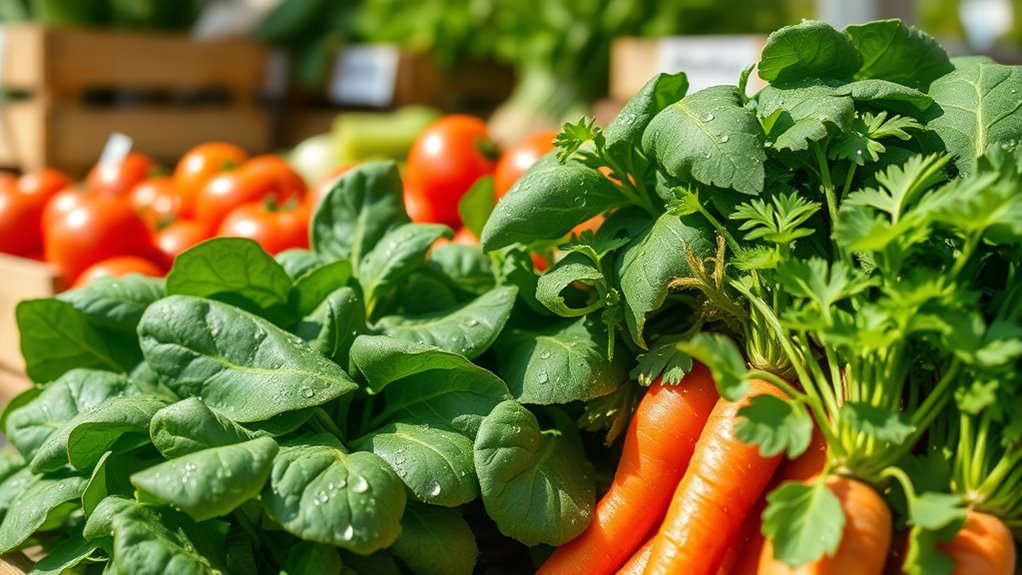

Organic foods typically contain fewer pesticide residues than conventional options because organic farming emphasizes soil health and natural pest control. While they are not completely pesticide-free, the pesticides used are derived from natural sources and are regulated to be less persistent. practices like crop rotation and compost enrichment help reduce the need for chemical treatments. To discover how these methods impact pesticide levels and what else makes organic foods a healthier choice, keep exploring.
Key Takeaways
- Organic foods are grown without synthetic pesticides, but may use natural pest control substances approved by standards.
- Organic farming emphasizes soil health, which naturally reduces pest issues and the need for pesticides.
- Pesticides used in organic agriculture are derived from natural sources and are generally less persistent than synthetic ones.
- Regular testing ensures pesticide residues on organic produce remain within safe, regulated limits.
- Organic foods tend to have lower pesticide residue levels compared to conventional options, but may not be completely pesticide-free.
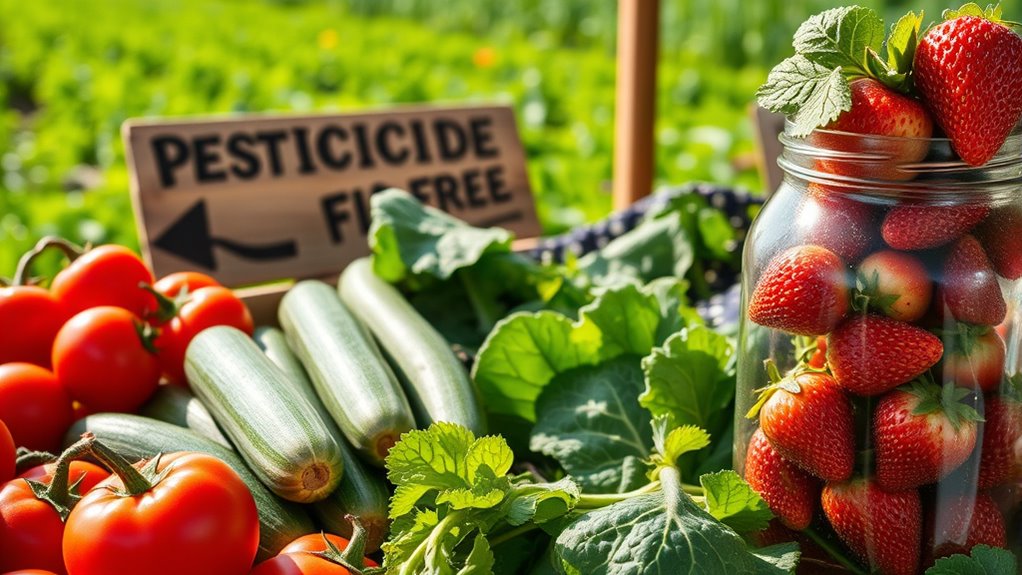
Choosing organic foods means you’re selecting products grown without synthetic pesticides, ensuring you’re consuming produce free from harmful chemicals. This choice supports not only your health but also the environment. Organic farming practices prioritize soil health, which plays a crucial role in reducing the presence of pesticide residues on fruits and vegetables. When soil remains healthy, it naturally suppresses pests and weeds, lessening the need for chemical interventions. As a result, organic crops tend to have lower levels of pesticide residues compared to conventionally grown produce, giving you peace of mind about what you’re eating.
Soil health is fundamental to the organic farming ecosystem. Instead of relying on synthetic fertilizers and pesticides, organic farmers use compost, crop rotation, and cover cropping to enrich the soil. These methods foster a vibrant microbial community, making plants more resilient and reducing the necessity for chemical pest controls. Healthy soil acts as a natural barrier, limiting the absorption and accumulation of pesticide residues in the produce you buy. When you choose organic, you’re supporting farming systems that focus on maintaining and improving soil vitality, which ultimately helps keep pesticide residues at bay. Additionally, healthy soil contributes to the overall sustainability of organic agriculture by promoting renewable resources and reducing environmental impact.
It’s important to understand that while organic foods are grown without synthetic pesticides, they are not entirely free of natural or approved pest control substances. However, these are typically derived from natural sources and are used in accordance with strict regulations. This means the pesticides used in organic farming are generally less persistent and less likely to leave harmful residues on your food. Organic standards also require regular testing to ensure that pesticide residues on produce stay within safe limits, adding an extra layer of protection for consumers.
Frequently Asked Questions
Are All Organic Foods Completely Free of Pesticides?
Not all organic foods are completely free of pesticides, despite common consumer misconceptions. Organic certification standards allow certain natural pesticides, which are considered less harmful, but they do not guarantee zero pesticide residues. As a consumer, you should understand that organic farming focuses on reducing synthetic chemicals, but traces of natural pesticides might still be present. Always read labels carefully and stay informed about what organic certification really means.
How Do Organic Farmers Control Pests Without Synthetic Chemicals?
Think of organic farmers as pest-fighting ninjas, mastering natural pest control methods. They rely on beneficial insects, like ladybugs and parasitic wasps, to keep pest populations in check. They also use crop rotation, barriers, and organic-approved sprays to deter pests. By working with nature rather than against it, organic farmers protect their crops without synthetic chemicals, ensuring a healthier environment and food for you.
Can Organic Foods Contain Residues From Nearby Conventional Farms?
Yes, organic foods can contain residues from nearby conventional farms. Organic certification standards require farmers to follow strict practices, but pesticides can drift from neighboring fields. Pesticide residue testing helps verify compliance and safety. You should wash organic produce thoroughly, as some residues might be present due to environmental factors. While organic foods minimize synthetic chemical use, they aren’t entirely free from pesticide residues caused by proximity to conventional farming.
Are Organic Pesticides Safer Than Synthetic Ones?
Like a trusted hero from myth, organic pesticides are designed to be safer than synthetic ones, but they aren’t without concerns. Organic certification requires adherence to strict pesticide regulations, aiming for lower toxicity and environmental impact. While they’re generally safer, it’s essential to remember that “natural” doesn’t always mean completely risk-free. Always wash produce thoroughly, and stay informed about pesticide use to protect your health.
How Often Are Organic Farms Inspected for Pesticide Use?
Organic farms are inspected regularly as part of certification processes, typically once a year. However, inspection frequency can vary depending on the certifying agency and farm size. During these inspections, authorities check for pesticide use and adherence to organic standards. You should know that these rigorous inspections aim to guarantee organic farms maintain their standards, providing consumers with confidence that their food is grown without synthetic pesticides.
Conclusion
So, as you sift through the saga of sustainable sustenance, remember that organic foods don’t necessarily mean pesticide-free, but they do typically contain fewer synthetic substances. By choosing conscientiously, you’re cultivating a cleaner, safer, and more satisfying snack. Stay savvy, select selectively, and savor the sustainable side of food. Your mindful munching makes a meaningful difference, making every meal a mission for health, happiness, and a healthier harvest.