
Achieving full plastic circularity today is still a challenge because of current limitations in recycling infrastructure, material design, and biodegradability. While innovations like chemical recycling and advanced sorting techniques help, not all plastics can be recycled or biodegraded effectively. Many systems still rely on linear use or incomplete processes. If you want to explore how these obstacles are being addressed and what future solutions might look like, there’s more to uncover.
Key Takeaways
- Complete plastic circularity is currently unachievable due to infrastructure and material limitations.
- Advances in chemical recycling and biodegradable plastics improve potential but are not universally implemented.
- Automated sorting and design for recyclability enhance plastic reuse, supporting circularity efforts.
- Biodegradable plastics help reduce long-term environmental impact but depend on specific conditions for decomposition.
- Achieving full circularity remains an ongoing goal, with continued research and technological development needed.

Have you ever wondered how plastics can be reused instead of discarded? The idea of a fully circular plastic system is appealing, but achieving it requires understanding the latest advancements in materials and processes. Biodegradable plastics play a key role here, offering an alternative that can break down naturally in the environment, reducing long-term waste. These plastics are designed to decompose through biological activity, which means they don’t persist in landfills or oceans like traditional plastics. However, their effectiveness depends on proper conditions and infrastructure, which are still developing worldwide. As you consider the future, recycling innovations are essential in closing the loop. New technologies are making it easier to recover and repurpose plastic waste efficiently. For example, chemical recycling methods break plastics down into their basic building blocks, allowing for the creation of high-quality new materials. This process can handle complex or contaminated plastics that traditional mechanical recycling can’t process well, considerably expanding the scope of what can be reused.
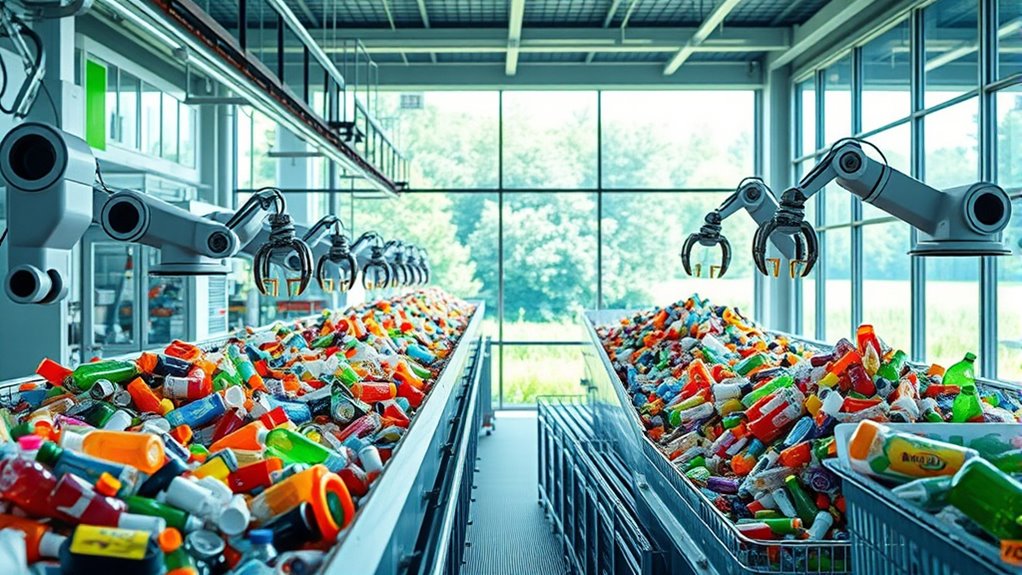
Advancements in sorting technologies also contribute to the push for circularity. Automated systems now use AI and machine learning to identify and separate different types of plastics more accurately and faster than ever before. This improvement reduces contamination and enhances the quality of recycled materials, making them more viable for a wider range of applications. Additionally, innovations in design are encouraging manufacturers to create products with recyclability in mind. For instance, using a limited number of compatible plastics or designing for disassembly simplifies the recycling process and reduces waste. These efforts align with the idea of a circular economy, where plastics are kept in use for as long as possible and then recovered at the end of their life cycle.
Despite these promising developments, challenges remain. Not all plastics are recyclable, and infrastructure gaps in many regions hinder the full potential of recycling innovations. Biodegradable plastics offer a promising solution, but they also require specific conditions to decompose properly, which aren’t always available. Moreover, the market for recycled plastics needs to grow, supported by policies and consumer demand, to truly make plastics circular. While complete circularity today is an ambitious goal, ongoing research and technological advances are steadily moving us closer to that reality. By embracing biodegradable plastics, supporting recycling innovations, and advocating for better waste management, you can help push the system towards a more sustainable, closed-loop future.
Frequently Asked Questions
What Are the Main Barriers to Achieving Full Plastic Circularity?
You face barriers like limited recycling infrastructure, which makes it hard to process all plastics efficiently. Consumer education is another challenge because many people don’t know how or why to recycle properly. Without widespread awareness and improved facilities, achieving full plastic circularity remains difficult. You need better systems and more informed consumers to close the loop and make plastics truly circular today.
How Do Different Types of Plastics Impact Circularity Efforts?
Imagine a vibrant mosaic of plastics, each piece with unique colors and textures. Different plastics, like PET, HDPE, and LDPE, impact circularity efforts because some, like PET, are easier to recycle through chemical processes, while others, like biodegradable plastics, break down naturally. You need to contemplate these variations, as chemical recycling can help repurpose tough plastics, but biodegradable options may simplify disposal, shaping your approach to achieving true circularity.
Can Biodegradable Plastics Contribute to a Fully Circular System?
Biodegradable plastics can contribute to a more circular system, but they alone can’t make it fully circular. You need to guarantee they’re properly composted or recycled to maximize their circular contribution. While they break down faster and reduce long-term waste, their effectiveness depends on the waste management infrastructure. Integrating biodegradable plastics with other sustainable practices helps move toward a more circular economy, but it’s not a complete solution by itself.
What Role Do Consumers Play in Promoting Plastic Circularity?
Think of yourself as the captain steering the ship of plastic circularity. Your recycling awareness and consumer behavior are essential sails that propel this journey. By choosing reusable products, properly recycling plastics, and supporting brands committed to sustainability, you help close the loop. Your actions influence supply chains and inspire industry change, turning the tide toward a full circular system. Every mindful choice makes you a key player in plastic sustainability.
Are There Successful Examples of Fully Circular Plastic Supply Chains?
Yes, there are successful examples of fully circular plastic supply chains. Companies leverage recycling innovations like chemical recycling to break down plastics efficiently, while supply chain integration guarantees seamless collection, processing, and reuse. By adopting these strategies, you can help close the loop, reduce waste, and promote sustainability. Continuous improvements in recycling tech and better collaboration across stakeholders make full circularity increasingly achievable today.
Conclusion
You might find it surprising that only about 9% of all plastic ever produced has been recycled. While full circularity remains a challenge today, progress is happening with innovative technologies and increased recycling efforts. By supporting sustainable practices and choosing products made from recycled plastics, you can help close the loop. Every small action counts toward creating a more circular future where plastics are reused endlessly, reducing waste and conserving resources.