
Biodegradable polymers are designed to break down into harmless substances under certain conditions, but it is crucial to understand the standards and misconceptions involved. Certifications like ASTM and ISO help ensure their claimed environmental benefits, but many people overlook that biodegradation often requires specific settings like industrial composting. Market growth is influenced by regulations and awareness, yet many still misunderstand how and where these materials decompose. Keep exploring to discover how to make informed choices and support responsible use.

Prime made for students and young adults
- Fast, free delivery for dorm and study essentials
- Prime Video and Amazon Music included
- Member-only deals
Key Takeaways
- Clear standards (e.g., ASTM, ISO) define biodegradation rates and environmental conditions necessary for certification.
- Market growth is driven by regulatory policies, consumer awareness, and demand for environmentally friendly packaging solutions.
- Misconceptions arise when biodegradability claims lack specific environmental conditions, leading to improper disposal.
- Proper disposal in industrial composting is essential for biodegradation; improper disposal can cause pollution similar to traditional plastics.
- Ongoing research and certification efforts aim to enhance standards, ensure quality, and prevent greenwashing in biodegradable polymers.
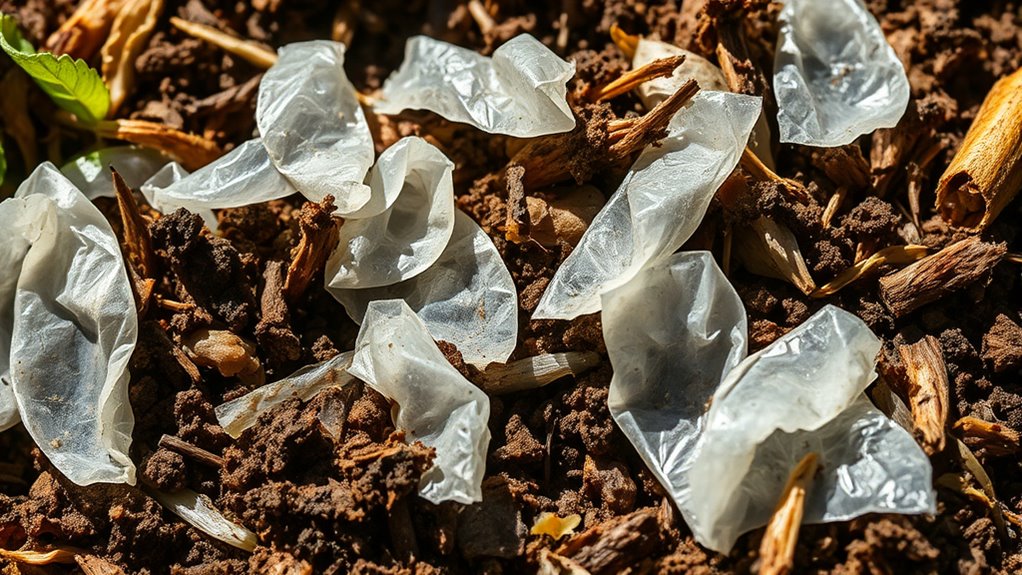
Have you ever wondered how we can reduce plastic waste and its impact on the environment? One promising solution lies in biodegradable polymers, which are designed to break down more quickly and safely than traditional plastics. Understanding how these materials work involves exploring biodegradation processes—natural mechanisms by which microbes, fungi, and other organisms decompose materials into simpler, environmentally harmless substances. When biodegradable polymers undergo these processes, they markedly lessen the environmental impact often associated with conventional plastics, which can persist in ecosystems for hundreds of years. The goal is to create materials that not only serve their purpose but also minimize long-term pollution.
Biodegradable polymers break down naturally, reducing long-term environmental pollution caused by traditional plastics.
However, not all biodegradable polymers degrade in the same way or within the same timeframe. Factors like temperature, humidity, presence of microorganisms, and the specific chemical structure of the polymer influence the biodegradation process. Some plastics might break down swiftly in industrial composting facilities but linger in natural settings, creating misconceptions about their biodegradability. This highlights the importance of clear standards and certifications to guarantee that consumers and industries understand the conditions required for effective breakdown. Misleading claims about biodegradability can lead to improper disposal and false senses of environmental safety, which ultimately undermine efforts to reduce plastic waste.
As you consider the market for biodegradable polymers, you’ll notice a growing demand driven by environmental concerns, regulatory pressures, and consumer awareness. These polymers are increasingly used in packaging, agriculture, and medical applications. Yet, the market’s expansion also brings challenges, such as guaranteeing consistent quality and establishing reliable standards. Governments and industry groups are working to define clear criteria—such as ASTM or ISO standards—that specify biodegradation rates and conditions. These standards help prevent greenwashing and guarantee that biodegradable products truly benefit the environment.
Despite their potential, misconceptions persist. Many believe that biodegradable plastics will automatically disappear in any environment, which isn’t true. They require specific conditions like industrial composting facilities to fully biodegrade within a reasonable timeframe. If improperly disposed of in landfills or natural environments, some biodegradable polymers can behave like traditional plastics, contributing to pollution rather than alleviating it. It’s essential for consumers, manufacturers, and policymakers to understand these distinctions and promote responsible use and disposal practices. Additionally, ongoing research into biodegradation conditions helps refine standards and improve the environmental performance of these materials.
As an affiliate, we earn on qualifying purchases.
Frequently Asked Questions
How Do Biodegradable Polymers Differ From Compostable Plastics?
You might think biodegradable polymers and compostable plastics are the same, but they differ in degradation mechanisms and polymer structures. Biodegradable polymers break down through natural processes, but the time frame varies and isn’t always suitable for composting. Compostable plastics are a subset designed to degrade within specific composting conditions, ensuring they turn into nutrient-rich compost. So, while all compostable plastics are biodegradable, not all biodegradable polymers are necessarily compostable.
Are All Biodegradable Polymers Environmentally Safe?
Think of biodegradable polymers as a double-edged sword—they can be environmentally safe or harmful. Not all are inherently safe; some may release biodegradable toxicity or harm ecosystems if not properly managed. Their environmental impact depends on factors like composition, degradation conditions, and additives. So, you can’t assume all biodegradable polymers are automatically eco-friendly; always check their specific standards and how they break down in nature.
What Is the Average Lifespan of Biodegradable Polymers?
The average lifespan of biodegradable polymers varies, typically from a few weeks to several years, depending on degradation mechanisms and material stability. Factors like environmental conditions, such as moisture, temperature, and microbial activity, influence how quickly they break down. If you want them to degrade faster, optimize for conditions that enhance microbial activity. Keep in mind, their lifespan isn’t fixed and can be tailored based on specific application needs.
Can Biodegradable Polymers Be Recycled Like Conventional Plastics?
It might seem like biodegradable polymers can be recycled just like conventional plastics, but in reality, recycling processes and material compatibility often make this difficult. They require specialized facilities and methods to avoid compromising their biodegradability. The coincidence is that what’s good for recycling isn’t always compatible with biodegradability. You should carefully consider these factors before attempting to recycle biodegradable polymers, as improper handling can hinder their environmental benefits.
How Do Biodegradation Rates Vary Across Different Environments?
Environmental factors like temperature, humidity, and microbial activity considerably influence biodegradation rates. In composting conditions, biodegradation occurs rapidly through microbial activity, while in marine or soil environments, it slows down due to less ideal conditions. Degradation mechanisms vary accordingly, with hydrolysis and microbial digestion playing key roles. You’ll find that understanding these environmental factors helps predict how quickly biodegradable polymers break down in different settings.
Conclusion
So, next time you toss that biodegradable bag into the compost, remember—it’s not a magic bullet. While it seems like a hero saving the planet, it might just be another marketing trick. You’re happily contributing to a greener future, but perhaps unknowingly fueling misconceptions. Ironically, what’s supposed to vanish in months could linger, just like the old plastics. Sometimes, the simplest act of awareness is the real biodegradable solution we all need.
Fall Picks
fall essentials
As an affiliate, we earn on qualifying purchases.