Biomaterials for regenerative medicine involve designing synthetic or natural materials that can interact with your body to repair or replace damaged tissues and organs. They help cells attach, grow, and function, often by mimicking the natural tissue’s structure at the nanoscale. To guarantee safety, these materials are tested thoroughly for biocompatibility. Keep exploring to discover how combining nanostructure fabrication with biocompatibility advancements enhances the future of tissue regeneration.
Key Takeaways
- Biomaterials facilitate tissue regeneration by supporting cell attachment, growth, and differentiation within engineered scaffolds.
- Nanostructure fabrication enhances tissue mimicry, guiding cell organization and improving regenerative outcomes.
- Biocompatibility assessment ensures safety, preventing adverse reactions like toxicity and inflammation in biological environments.
- Combining nanostructure design with biocompatibility optimizes biomaterials for repairing skin, cartilage, and complex organs.
- Advances in biomaterials accelerate regenerative medicine, enabling functional tissue constructs with improved integration and clinical success.
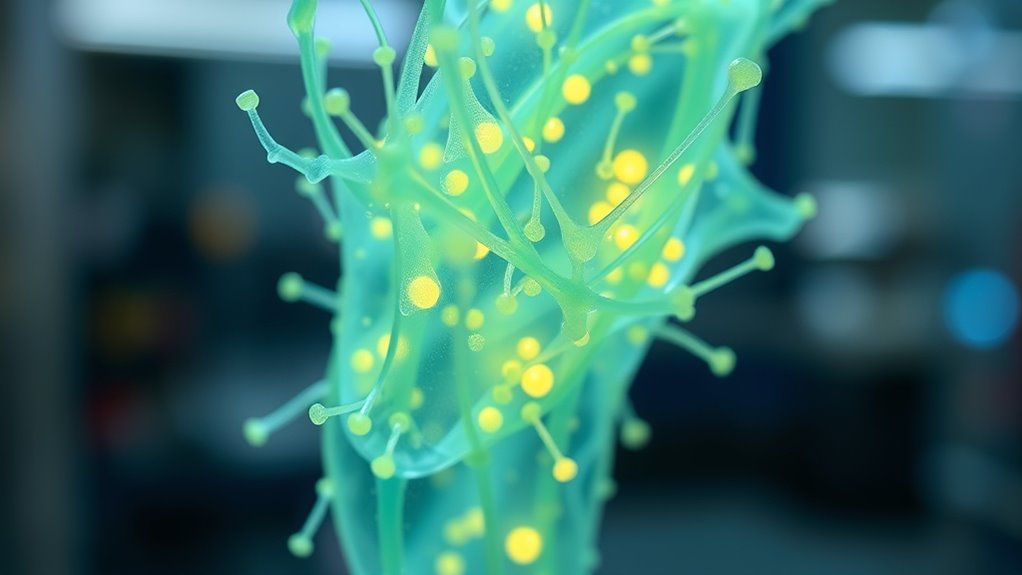
Have you ever wondered how scientists restore damaged tissues and organs? It’s a fascinating process that relies heavily on biomaterials, specially designed substances that interact with biological systems to promote healing. One of the critical steps in developing these materials involves nanostructure fabrication. This technique allows scientists to create materials with features at the nanometer scale, mimicking the natural architecture of tissues and enhancing cell attachment, growth, and differentiation. By manipulating the nanostructure, researchers can improve the mechanical properties and functionality of biomaterials, making them more effective in regenerative applications. For example, nanostructured scaffolds can guide tissue formation, supporting cell proliferation and organization in ways that bulk materials simply can’t match. Additionally, advances in nanostructure fabrication techniques enable more precise control over the material features, further optimizing their regenerative capabilities.
But designing these advanced materials is only part of the challenge. You also need to guarantee they’re safe and compatible with the human body, which is where biocompatibility assessment comes into play. This process involves rigorous testing to determine how the material interacts with living tissues and whether it triggers any adverse immune responses. When you’re evaluating biocompatibility, it’s essential to contemplate factors like toxicity, inflammation, and long-term stability. The goal is to develop biomaterials that not only promote healing but do so without causing harmful side effects. Researchers often conduct in vitro studies using cell cultures to observe cellular responses and in vivo tests in animal models to assess how the material behaves within a complex biological environment.
The combination of nanostructure fabrication and thorough biocompatibility assessment drives innovation in regenerative medicine. When you design materials with precise nanoscale features, you can tailor their interactions with cells and tissues, leading to more efficient and successful tissue regeneration. Meanwhile, rigorous biocompatibility testing ensures these materials won’t provoke rejection or chronic inflammation, which are major hurdles in clinical applications. This delicate balance between engineering at the nanoscale and ensuring safety is what allows scientists to develop breakthrough biomaterials capable of repairing everything from skin and cartilage to complex organs. Ultimately, these advancements bring us closer to replacing damaged tissues with functional, biocompatible constructs that integrate seamlessly and restore health effectively.
Top picks for "biomaterial regenerative medicine"
As an affiliate, we earn on qualifying purchases.
Frequently Asked Questions
How Are Biomaterials Customized for Individual Patient Needs?
You customize biomaterials by designing personalized scaffolds and patient-specific implants based on detailed medical imaging and patient data. You use advanced techniques like 3D printing and bioprinting to tailor the structure, porosity, and material composition for ideal fit and function. This guarantees the biomaterial integrates seamlessly with your tissue, promotes healing, and addresses your unique biological needs, ultimately enhancing the success of regenerative treatments.
What Are the Long-Term Safety Concerns of Implanting Biomaterials?
You should be aware that long-term safety concerns include chronic toxicity and long-term degradation of biomaterials. Over time, these materials might release harmful substances or degrade unpredictably, which can cause inflammation or tissue damage. Continuous monitoring and thorough testing are essential to guarantee that the implant remains safe, minimizing risks of adverse reactions. Staying informed helps you understand potential complications related to implant longevity and biocompatibility.
How Do Biomaterials Interact With the Body’s Immune System?
Think of your immune system as a vigilant gatekeeper, constantly checking new guests. When you introduce a biomaterial, it might see it as an outsider, triggering an immune response. Good biomaterial compatibility means it quietly coexists without causing trouble, like a diplomat. But if the immune system perceives the biomaterial as a threat, it activates defenses, leading to inflammation or rejection. Designing materials that blend seamlessly minimizes immune reactions and promotes healing.
What Are the Latest Advancements in Biodegradable Biomaterials?
You’ll find that recent advancements in biodegradable biomaterials include nanofiber scaffolds that promote cell growth and bioactive coatings that enhance tissue integration. These innovations allow materials to degrade safely over time, reducing the need for removal surgeries. Researchers are also developing smarter materials that respond to environmental cues, improving regenerative outcomes. This progress accelerates the development of more effective, biocompatible solutions for tissue repair and regeneration.
How Cost-Effective Are Biomaterials Compared to Traditional Treatments?
Think of biomaterials as the new “cost-saving toolkit” for medicine. You’ll find that their cost comparison to traditional treatments is favorable, especially considering their potential for faster recovery and fewer complications. An affordability analysis shows that, over time, biomaterials may reduce overall healthcare costs. While initial expenses might be higher, the long-term savings and improved outcomes make them a smart choice for both patients and providers.
Conclusion
As you explore biomaterials for regenerative medicine, it’s clear they hold incredible promise for healing and restoring tissues. Will you harness their full potential to transform patient outcomes? With ongoing advancements, you have the power to innovate and make a real difference. Embrace the challenges and opportunities ahead—because the future of medicine depends on the biomaterials you develop today. Are you ready to be part of this groundbreaking journey?