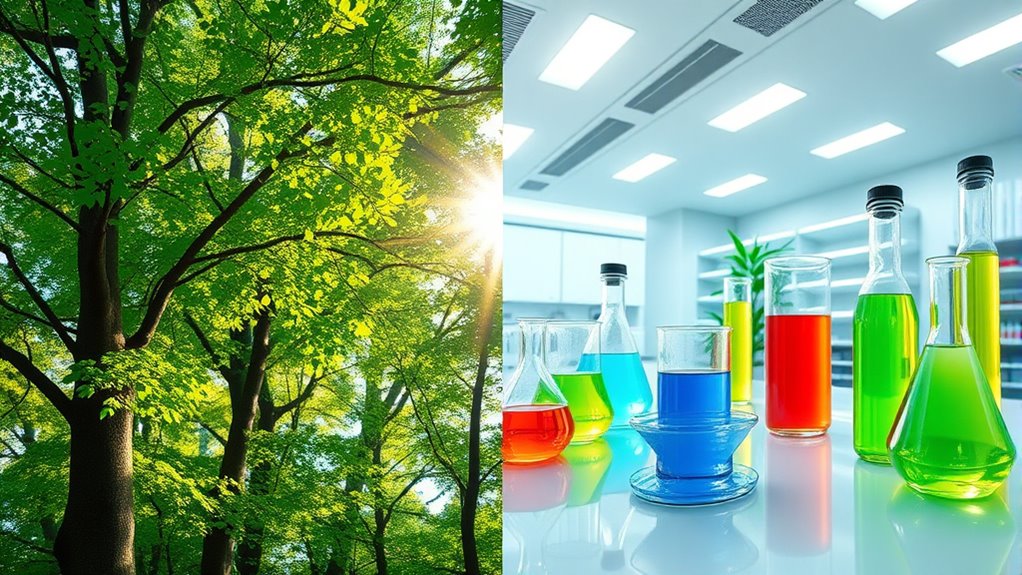

When comparing natural and synthetic products, neither is automatically safer; both carry specific chemical risks and environmental impacts. Natural items often seem safer because they’re perceived as pure and eco-friendly, but they can contain toxins and be inconsistent. Synthetic options are usually tested and can be produced more consistently and sustainably. To make truly informed choices, it’s important to contemplate each product’s chemical makeup, safety standards, and ecological footprint—more details that can help guide your decisions.

Get school and study supplies delivered free — and shop member deals
- Fast, free delivery on millions of items
- Access to Prime Big Deal Days deals on October 6–7
- Prime Video, Amazon Music and more included
Key Takeaways
- Safety depends on chemical composition and proper use, not solely on whether a product is natural or synthetic.
- Natural products can contain toxins or contaminants; synthetic ones are often tested for purity.
- Both natural and synthetic options carry specific environmental impacts; safety isn’t guaranteed by origin alone.
- Informed evaluation of chemicals, testing standards, and ecological effects is essential for safety decisions.
- Neither natural nor synthetic is inherently safer; individual product analysis is crucial for accurate assessment.

When it comes to choosing products or substances, many people wonder: is natural always safer than synthetic? It’s a common question, and the answer isn’t straightforward. Often, we assume that “natural” automatically means safer, but that’s not always the case. One reason for this misconception is the way natural products are perceived—they’re seen as pure, wholesome, and free from harmful chemicals. However, natural substances can still pose chemical concerns, especially when they’re used improperly or in high doses. For example, some natural plants contain toxins that can harm your health if consumed without proper processing. So, safety isn’t solely determined by whether a product is natural or synthetic but depends on the specific chemical makeup and how it interacts with your body. Additionally, natural materials used in products can sometimes carry contaminants if not sourced responsibly.
On the other hand, synthetic products are often viewed with suspicion, mainly because they are man-made. People worry about potential chemical concerns, fearing that synthetics may contain harmful additives or contaminants. While it’s true that some synthetic chemicals have caused health issues or environmental problems, many are thoroughly tested and regulated to ensure safety. In fact, synthetic methods can produce compounds with a high degree of purity, reducing the risk of unexpected reactions. This precision can sometimes make synthetics safer than natural alternatives, especially when natural sources are contaminated or inconsistent.
Environmental impact plays a significant role in this debate, too. Natural products are generally seen as more environmentally friendly because they originate from renewable resources and tend to biodegrade more easily. However, harvesting large quantities of natural ingredients can lead to habitat destruction, overharvesting, and loss of biodiversity. Conversely, synthetic production, while initially resource-intensive, can be scaled efficiently and designed to minimize waste and pollution. Some synthetic processes incorporate green chemistry principles, reducing their environmental footprint.
Ultimately, safety and environmental impact depend on the specific substance, how it’s produced, and how it’s used. Natural doesn’t automatically mean safer or better for the environment, just as synthetic doesn’t inherently mean dangerous or harmful. You need to evaluate each product individually, considering chemical concerns, testing standards, and ecological effects. Making informed choices means looking beyond labels and assumptions, understanding that both natural and synthetic options have their risks and benefits. It’s about striking a balance and choosing what’s best for your health and the planet based on facts rather than perceptions.
natural vs synthetic skincare products
As an affiliate, we earn on qualifying purchases.
As an affiliate, we earn on qualifying purchases.
Frequently Asked Questions
Are Natural Products More Environmentally Sustainable Than Synthetic Ones?
Natural products are generally more environmentally sustainable because they often use biodegradable packaging and come from renewable sourcing. You can reduce your ecological footprint by choosing natural options that break down easily and are sourced sustainably. Synthetic products may rely on non-renewable resources and create waste that persists in the environment. By opting for natural, you help promote sustainability and protect ecosystems for future generations.
Can Synthetic Ingredients Cause Allergic Reactions More Often Than Natural Ones?
Synthetic ingredients can cause allergy risks more often than natural ones because they often contain preservatives or fillers that trigger sensitivities. Studies show that about 30% of allergic reactions are linked to synthetic compounds, primarily due to lower ingredient purity. You should be cautious with synthetic products, especially if you have sensitive skin, since their chemical complexity can increase the likelihood of allergic reactions compared to more natural options.
Do Natural Remedies Have Stronger Medicinal Effects Than Synthetic Drugs?
Natural remedies often have stronger medicinal effects because of their herbal potency and complex chemical composition. You might find that these remedies contain a mix of active compounds working together, enhancing their effectiveness. However, keep in mind that natural doesn’t always mean safer; some herbs can cause adverse reactions. Always consult a healthcare professional before relying on natural remedies, especially if you’re on medication or have health concerns.
Are Natural Preservatives Safer Than Synthetic Preservatives in Food?
Natural preservatives are often considered safer because they minimize chemical exposure, reducing potential health risks. You might think natural safety is unbeatable, but synthetic risks can include allergic reactions or long-term health issues from additives. While natural options seem gentler, they may not always keep food fresh as effectively. Ultimately, weigh the benefits and risks—sometimes, synthetic preservatives are safer and more reliable for food preservation.
How Do Manufacturing Processes Differ Between Natural and Synthetic Products?
You’ll notice manufacturing processes differ mainly in extraction methods and purity standards. Natural products often use gentle extraction techniques like cold pressing or distillation, aiming to preserve original compounds. Synthetic products, however, typically involve chemical reactions in controlled environments, ensuring high purity and consistency. These methods influence product quality, safety, and efficacy, with natural processes emphasizing minimal processing and synthetic methods prioritizing precision and scalability.
Conclusion
When choosing between natural and synthetic products, remember that about 60% of consumers believe natural options are safer, but that’s not always true. In reality, synthetic ingredients are strictly regulated, often making them just as safe — or safer — than natural ones. So, next time you pick a product, don’t rely solely on labels. Instead, consider the science behind it. Your safety depends on informed choices, not just what’s labeled as “natural” or “synthetic.”
Halloween Picks
halloween
As an affiliate, we earn on qualifying purchases.