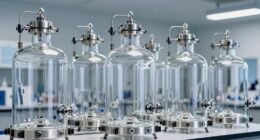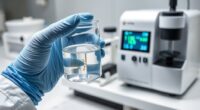
To guarantee the purity of your chemicals, you must control trace metals by maintaining a clean lab environment. Use acid-washed, metal-free equipment, verify reagent purity, and regularly clean surfaces with high-quality agents. Implement environmental controls like HEPA filters and proper gowning to prevent airborne contamination. Consistently monitor your workspace and protocols; mastering these steps helps avoid data skewing. If you continue, you’ll discover more effective strategies to keep your lab contamination-free.
Key Takeaways
- Use high-purity chemicals certified for low metal contamination to prevent introducing trace metals into experiments.
- Regularly clean lab equipment with ultrapure acids and verify cleanliness with metal detection methods.
- Implement strict protocols for handling, storing, and disposing of chemicals to minimize metal contamination sources.
- Maintain a metal-free environment using HEPA-filtered air, dedicated tools, and contamination-controlled workflow zones.
- Conduct routine environmental monitoring and use clean, non-metallic consumables to sustain low trace metal levels.
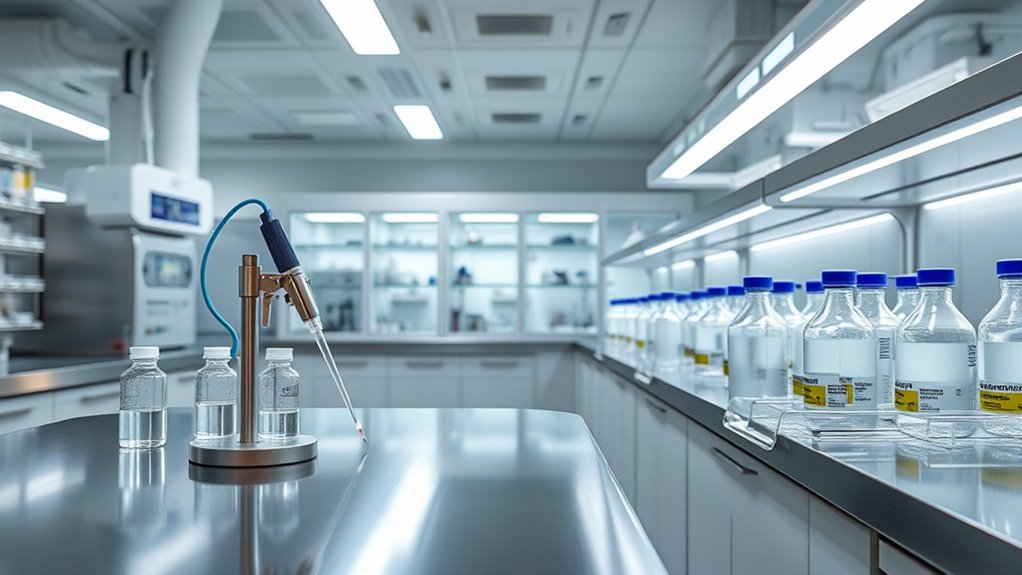
Maintaining trace metal control is essential in clean labs to guarantee precise and reliable experimental results. When working with high‑purity chemicals, even the smallest amount of metal contamination can skew data and compromise findings. Metal contamination often originates from various sources, including laboratory equipment, reagents, or ambient environmental factors. If you neglect proper procedures, these contaminants can interfere with sensitive assays, particularly in fields like analytical chemistry, biochemistry, and materials science. To minimize this risk, lab cleanliness becomes a top priority. You need to implement strict protocols to prevent the introduction of extraneous metals and maintain a contamination-free environment. This includes regular cleaning of work surfaces, using dedicated tools that are free of metal residues, and ensuring all containers and utensils are thoroughly cleaned and properly stored.
Maintaining strict cleanliness protocols minimizes metal contamination, ensuring accurate, reliable results in high‑purity chemical experiments.
One of the core strategies to ensure lab cleanliness is the routine use of high‑quality cleaning agents specifically designed for trace metal removal. For instance, acid washes with ultrapure acids can effectively eliminate residual metals from glassware and equipment. When handling high‑purity chemicals, it’s vital to verify that all reagents are free from metal impurities, which can be a common source of contamination. Always source chemicals from reputable suppliers who provide certificates of analysis confirming trace metal levels. Additionally, you should consider using metal-free consumables, such as plastic or ceramic tools, to reduce the risk of introducing new contaminants. These small steps significantly contribute to maintaining a clean environment where the presence of unwanted metals is minimized.
Air quality control is another critical component of lab cleanliness. Metal particles can settle from the air or be transferred through dust, so employing HEPA filters in your ventilation systems helps in reducing airborne contaminants. Regularly monitoring the environment with particle counters or metal-specific detection methods ensures that your lab maintains ideal conditions. Moreover, establishing a controlled workflow—such as performing delicate procedures in designated clean areas—limits cross-contamination risks. Proper gowning procedures, including wearing gloves and lab coats made from non-metallic materials, further protect your experiments from inadvertent metal transfer.
In essence, controlling metal contamination hinges on your commitment to rigorous cleanliness practices. Every step you take, from choosing the right chemicals and cleaning methods to maintaining a controlled environment, directly impacts the reliability of your results. By prioritizing lab cleanliness and carefully managing trace metals, you create a workspace where high‑purity chemicals can perform at their best. This not only ensures the integrity of your data but also helps you achieve consistent, reproducible outcomes in your research or testing endeavors. Implementing proper contamination control measures is fundamental to maintaining the highest standards of lab integrity.
Frequently Asked Questions
What Are the Main Sources of Trace Metal Contamination in Labs?
You’ll find that main sources of trace metal contamination in labs come from contamination pathways like poorly maintained equipment, contaminated reagents, and improper sampling protocols. These pathways allow metals to enter your samples unexpectedly. To prevent this, you should regularly check your sampling procedures, use high-purity materials, and maintain strict cleanliness standards. Being vigilant about contamination pathways helps keep your lab environment free of trace metals.
How Do High-Purity Chemicals Impact Product Quality?
High-purity chemicals directly boost your product quality by ensuring maximum purity and minimizing contamination risks. When you rely on purity certification, you can confidently prevent trace metal contamination, which otherwise could compromise your results. This precision safeguards your processes and enhances reliability. In turn, your products meet strict standards, ensuring customer satisfaction and regulatory compliance, all while maintaining a clean, controlled environment essential for top-tier outcomes.
What Equipment Is Best for Trace Metal Analysis?
For trace metal analysis, you should use sensitive analytical instruments like ICP-MS or AAS, which detect ultra-low metal concentrations with precision. Proper sample preparation is vital; you need clean, acid-washed labware and contamination-free procedures to guarantee accurate results. These instruments and meticulous sample prep help you identify even minute metal traces, guaranteeing your high-purity chemicals meet strict quality standards and prevent contamination in your processes.
How Often Should Clean Labs Be Tested for Contamination?
Think of your clean lab as a delicate garden needing constant care. You should test for contamination regularly, ideally weekly, to catch issues before they spread. Set strict lab cleaning frequency and contamination monitoring schedules that fit your processes. By doing so, you guarantee your environment remains pristine, just like a well-tended garden, allowing high-purity chemicals to thrive without interference. Consistent checks keep your lab’s integrity intact.
Are There Industry Standards for Trace Metal Limits in Chemicals?
Yes, industry standards for trace metal limits in chemicals exist to guarantee regulatory compliance and quality assurance. You should refer to guidelines from organizations like ISO, ASTM, and the EPA, which specify permissible levels for trace metals in various chemicals. Adhering to these standards helps maintain lab safety, product purity, and regulatory adherence. Regular testing and strict quality control are essential to meet these industry benchmarks effectively.
Conclusion
Maintaining high-purity chemicals and clean labs requires your vigilance in controlling trace metals. By implementing strict protocols, you guarantee your work remains reliable and free from contamination. Remember, “A chain is only as strong as its weakest link,” so don’t overlook even the tiniest details. Your attention to detail not only safeguards your results but also upholds the integrity of your research. Stay diligent, because in this field, precision makes all the difference.