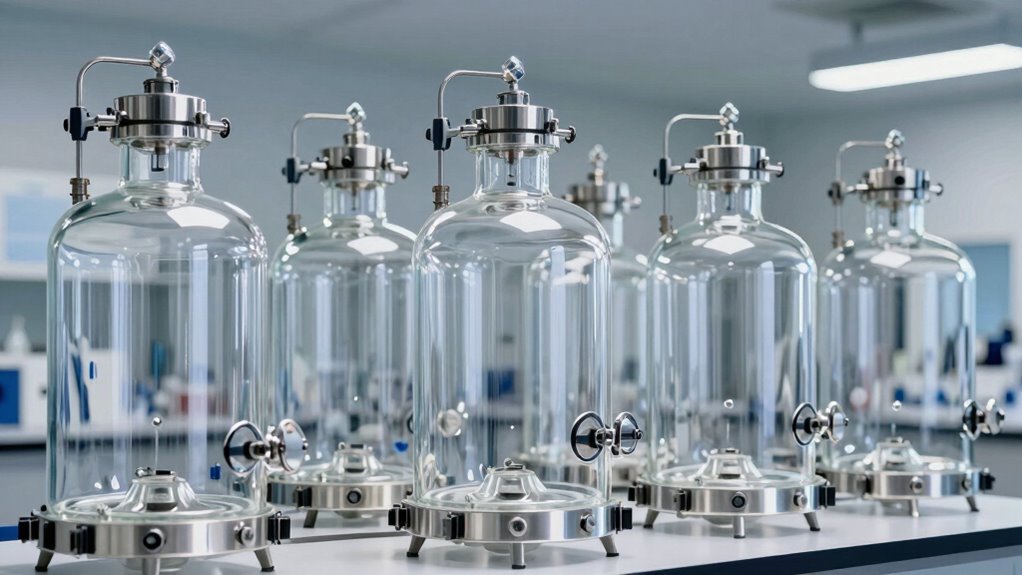

A 5L jacketed glass reactor gives laboratory teams a vessel for controlled heating or cooling, mixing, and chemical processing, but the listings vary in jacket design, power supply, and included equipment. My best overall pick is the 5L Double Layer Lab Reactor with High Borosilicate Glass & PTFE Valves, because its double-layer vessel and PTFE valves suit buyers who want core temperature-control features without a more specialized configuration. The VEVOR 5L reactor is a straightforward alternative with a digital display, while the USA Lab single-jacketed model is the more specialized choice for buyers who need options such as explosion-proof or pneumatic configurations. The main tradeoffs are between double- and single-jacket designs, control and mixing details, and the need to match voltage and accessories to the lab setup. Read on for the full comparison, selection criteria, and guidance on which configuration fits your work.

Prime made for students and young adults
- Fast, free delivery for dorm and study essentials
- Prime Video and Amazon Music included
- Member-only deals
Key Takeaways
- Double-layer models lead this comparison when temperature-control capability is a priority; the high-borosilicate-glass model with PTFE valves stands out as the best overall fit.
- Digital displays are common, not a complete specification. Buyers still need to verify what temperature information and control functions the display provides.
- Voltage splits the field: several listings specify 110V and others specify 220V, so electrical compatibility can rule out a reactor before other features matter.
- Single-jacketed options serve distinct needs. USA Lab offers optional explosion-proof and pneumatic mixer configurations, while TECHTONGDA pairs single-layer construction with an electric heating sleeve.
- Accessory and listing detail vary. A spiral condenser, support frame, or stated RPM range may matter more to a particular workflow than a broad product name or a digital display.


| jacketed glass reactor 5l | Capacity | Voltage |
|---|---|---|
| 5L Double Layer Lab Reactor wi | 5L | 110V |
| 5L Jacketed Glass Reactor | 5L | 220V |
| INTSUPERMAI 220V 5L Jacketed G | — | 220V |
| VEVOR 5L Jacketed Glass Reacto | 5L | — |
| USA Lab 5L Single Jacketed Gla | — | — |
| 5L Jacketed Glass Reactor | 5L | 220V |
| MXBAOHENG 5L Glass Reactor wit | 5 liters | 110V |
| TECHTONGDA 5L Single-Layer Gla | 5 liters | 110V |
| 5L Glass Reactor with Digital | 5L | 220V |
| 5L Jacketed Glass Reactor Vess | 5 liters | — |
| 110V 5L Jacketed Glass Reactor | 5L | — |
| Single Jacketed Glass Reactor | 5L | — |
More Details on Our Top Picks
5L Double Layer Lab Reactor with High Borosilicate Glass & PTFE Valves, 110V, Constant Temperature Control
For a lab limited to 110V power, this 5L double-layer reactor is a practical fit: its borosilicate vessel supports visual monitoring, while the stated operating range of -80°C to 250°C spans both cooling and high-temperature work. The 0–600 RPM control also gives more mixing flexibility than the USA Lab JR5, which is listed at up to 450 RPM. That range is useful only when the required circulation and cooling equipment is available separately; the reactor does not appear to include those systems. Compared with the 220V INTSUPERMAI, this model suits a different electrical setup rather than offering a clear advantage in capacity. I would shortlist it for a 110V bench, but handle the glass carefully and verify what temperature-control hardware is included.
Pros:- 110V power requirement suits labs without a 220V supply.
- Stated -80°C to 250°C range covers a broad span of reaction conditions.
- 0–600 RPM speed range allows adjustable stirring.
- High-borosilicate glass and PTFE valves support chemical handling and sealed operation.
Cons:- External circulation and cooling equipment is required for jacket operation.
- Glass components can break if mishandled.
- The 110V specification limits use in facilities set up for 220V equipment.
Best for: Laboratories with 110V power that need a 5L jacketed vessel for varied heating, cooling, and stirring tasks and already have suitable circulation equipment.
Not ideal for: 220V facilities or buyers expecting an all-in-one system with a chiller or circulation unit included.
- Capacity:5L
- Power:90W
- Speed:0–600 RPM
- Reaction temperature:-80°C to 250°C
- Vacuum:-0.098 MPa
- Voltage:110V
- Materials:High-borosilicate glass, stainless steel, aluminum alloy
Our verdict“Choose this model when 110V compatibility and a broad stated temperature range matter more than included circulation hardware.”
5L Jacketed Glass Reactor, Double Layer Lab Reactor with Digital Display & 0-600 RPM, 220V High Borosilicate Glass Vessel for Chemical Synthesis, Distillation and Extraction
This 220V model earns its place for buyers who want adjustable stirring with a specified torque, not just a listed speed range. Its 0–600 RPM control and 200 N·cm maximum torque provide useful reference points when comparing mixing needs, while the digital display makes operating settings easier to monitor. The double-wall jacket is designed for heating and cooling, and the listing says it can work with external circulating chillers and pumps. That flexibility comes with a setup requirement: those circulation components are not presented as built in. At 155 pounds, it is also heavier than the VEVOR 5L reactor at 110 pounds, so placement needs planning. Compared with the INTSUPERMAI, it shares a 5L scale and 220V supply but offers a stated torque figure to guide process matching.
Pros:- 0–600 RPM speed control and 200 N·cm maximum torque are specified.
- Double-wall jacket supports heating and cooling with compatible external equipment.
- Digital display provides a clear way to monitor settings.
- PTFE mechanical seals are specified for the reactor setup.
Cons:- External chillers or pumps are needed for full jacket functionality.
- At 155 pounds, it requires planned handling and sturdy support.
- 220V supply excludes facilities limited to 110V.
Best for: 220V laboratory teams selecting a 5L reactor around defined stirring needs and able to provide external circulation equipment and a sturdy installation surface.
Not ideal for: 110V labs, mobile setups, or buyers who need a reactor that arrives with its heating and cooling loop included.
- Capacity:5L
- Power:90W
- Speed:0–600 RPM
- Maximum torque:200 N·cm
- Voltage:220V
- Temperature range:-80°C to 250°C
- Seal type:PTFE mechanical seals
- Weight:155 pounds
Our verdict“Pick this reactor if you need a 220V, 5L platform with a documented torque rating and can supply the circulation loop.”
INTSUPERMAI 220V 5L Jacketed Glass Reactor Double-Layer Chemical Reaction Vessel with Digital Display and Support Frame
The INTSUPERMAI makes the most sense when a stable framed setup is a priority for vacuum reactions, distillation, or mixing. Its stainless steel support frame pairs with a borosilicate vessel, and the listing gives both a 5L reaction capacity and a 2L jacket capacity—useful details when planning the working and circulation volumes separately. Like the B0GN89WNJS reactor, it runs on 220V and lists 0–600 RPM with 200 N·cm maximum torque; the available data does not establish a clear performance lead between them. Its 150-pound weight calls for a deliberate installation, and glass cleanup requires care. I would favor this option when the specified jacket capacity and support frame match the setup, rather than if easy relocation or a lighter footprint is central.
Pros:- Lists reaction and jacket capacities separately: 5L and 2L.
- Stainless steel support frame provides a defined structural setup.
- 0–600 RPM speed and 200 N·cm maximum torque are specified.
- Designed for vacuum reactions as well as distillation and processing.
Cons:- The 150-pound weight makes installation and relocation difficult.
- The 5L reaction capacity will not suit larger batches.
- Glass components require careful cleaning and handling.
Best for: 220V laboratory operators who want a framed 5L reactor with a stated 2L jacket capacity for vacuum, distillation, or mixing workflows.
Not ideal for: Buyers who need portable equipment, a larger reaction vessel, or a setup that avoids careful glass cleaning and handling.
- Reaction container capacity:5L
- Jacket capacity:2L
- Speed:0–600 RPM
- Motor power:90W
- Maximum torque:200 N·cm
- Voltage:220V
- Materials:Borosilicate glass and stainless steel
- Weight:150 pounds
Our verdict“Choose the INTSUPERMAI when its specified 2L jacket capacity and framed 220V setup fit your process better than portability.”
VEVOR 5L Jacketed Glass Reactor Laboratory Chemical Reaction Vessel with Digital Display
Among these listed units, the VEVOR stands out for a comparatively lighter 110-pound build and a defined footprint, which can help teams plan a lab installation before delivery. Its LCD temperature control is listed for -60°C to 200°C, a narrower span than the 110V B0DYJKTVHV reactor’s stated -80°C to 250°C range. The VEVOR also provides 100 ml graduation intervals, giving operators a visible volume reference during loading. PTFE seals and vacuum operation suit processes where containment matters, though the supplied data does not specify a motor speed range or power requirement. It is still a tall, bulky piece of equipment at over 55 inches high, and heavier than a truly portable unit. I would choose it over the INTSUPERMAI when its lower listed weight and volume markings better fit the lab’s installation needs.
Pros:- Listed weight of 110 pounds is lower than the other framed reactors in this batch.
- 100 ml graduation intervals provide a volume reference.
- LCD temperature control is specified for -60°C to 200°C.
- PTFE seals are listed for airtight vacuum operation.
Cons:- Its 22.83 × 16.53 × 55.11-inch dimensions require substantial space and overhead clearance.
- The stated temperature range is narrower than the B0DYJKTVHV model.
- The product data does not specify motor speed or power.
Best for: Laboratories that want a 5L reactor with visible volume graduations, digital temperature control, and a stated weight below the other framed models here.
Not ideal for: Buyers who need the broadest temperature range, a specified stirring-speed range, or compact equipment for a crowded bench.
- Capacity:5L
- Temperature range:-60°C to 200°C
- Materials:Borosilicate glass and stainless steel
- Motor:Variable speed
- Dimensions:22.83 × 16.53 × 55.11 inches
- Weight:110 pounds
- Graduation interval:100 ml
Our verdict“Choose the VEVOR if its graduated vessel and comparatively lower listed weight suit your installation, and confirm motor details before ordering.”
USA Lab 5L Single Jacketed Glass Reactor (Optional ETL, Explosion Proof & Pneumatic Mixers)
The USA Lab JR5 is the specialist pick for labs that value configuration options and condensation capacity over a double-jacket design. Its large condensing area and 120W stirrer are aimed at demanding laboratory applications, while optional ETL certification, explosion-proof, and pneumatic mixer choices give buyers a route to tailor the setup. Those options should be confirmed at purchase; they are not described as standard inclusions. Compared with the B0DYJKTVHV, the JR5 has a lower listed maximum speed—0–450 RPM versus 0–600 RPM—and a narrower stated temperature ceiling of 210°C, but it specifies glass thickness, positive-pressure limits, and a low vacuum figure. The tradeoff is substantial: this 170-pound, 52 × 40 × 38-inch unit needs a spacious installation and a compatible 230V supply.
Pros:- Large condensing area is specified for condensation-focused workflows.
- 120W stirrer and 0–450 RPM range are stated.
- Optional ETL certification, explosion-proof, and pneumatic mixer configurations are available.
- Glass thickness, vacuum level, and maximum positive pressure are listed.
Cons:- Requires 230V 60Hz 15A power and is listed as incompatible with 208V input.
- At 170 pounds and 52 × 40 × 38 inches, it demands substantial space and handling.
- Its 450 RPM maximum is lower than the 600 RPM models in this batch, and configuration details need confirmation.
Best for: Advanced lab buyers who need a single-jacket 5L system with a large condenser area and want to specify optional certification or mixer configurations.
Not ideal for: Small labs, 208V facilities, or buyers who need a compact double-layer reactor with a 0–600 RPM speed range.
- Model:JR5
- Vessel capacity:5L / 1.32 gal
- Glass thickness:6.5 mm ±0.5 mm
- Rotary speed:0–450 RPM
- Glass temperature range:-80°C to 210°C
- Power requirements:230V, 60Hz, 15A
- Stirrer wattage:120W
- Vacuum and positive pressure:Lowest vacuum level: 0.0033 MPa; maximum positive pressure: 3 psi
- Dimensions and weight:52 × 40 × 38 inches; 170 pounds
Our verdict“Select the USA Lab JR5 for a configurable, condenser-oriented 5L setup when its large footprint and 230V requirements are workable.”
5L Jacketed Glass Reactor – 220V Single-Layer Chemical Lab Reaction Vessel with Digital Display, Adjustable Speed 0-600RPM & Stainless Steel Frame
This is the strongest fit here for buyers who need a stated -120°C to 300°C temperature range alongside digital speed and temperature controls. Its 90W motor reaches 0–600 RPM, while the borosilicate vessel and 304 stainless-steel frame suit routine stirred, reflux, and distillation work. Compared with the MXBAOHENG 5L Glass Reactor, it specifies a broader temperature span and negative-pressure capability, but MXBAOHENG lists all-PTFE valves and titanium-alloy mechanical sealing. The electric heating jacket also differs from reactors designed around circulating heating or cooling media, so buyers should check that its setup matches their thermal process. The tradeoffs are a 220V-only supply, a fixed 5L capacity, and a control setup that may take more preparation for a first-time operator.
Pros:- Specified temperature range of -120°C to 300°C supports varied thermal protocols.
- Digital controls and 0–600 RPM adjustment allow speed tuning during stirred reactions.
- Borosilicate glass and 304 stainless steel provide chemical-resistant vessel and frame materials.
- Designed for stirred reactions, reflux, distillation, and normal or negative pressure.
Cons:- Requires 220V power, limiting use in facilities without compatible supply.
- A 5L vessel cannot accommodate larger batch volumes.
- The digital controls and reactor setup may require more familiarity than a simpler arrangement.
Best for: Laboratories with 220V power that need digital stirring control and a reactor specified for a broad range of temperature conditions.
Not ideal for: 110V-only labs, new operators seeking a simple plug-and-run setup, or teams whose batches exceed 5 liters.
- Capacity:5L
- Vessel and frame materials:Borosilicate glass; 304 stainless steel
- Voltage:220V
- Motor power:90W
- Speed range:0–600 RPM
- Temperature range:-120°C to 300°C
- Temperature control accuracy:±1°C
- Pressure tolerance:Normal and negative pressure, down to -0.1MPa
Our verdict“Choose this model if your 220V lab needs a 5L reactor with a wide stated temperature range and digital speed control.”
MXBAOHENG 5L Glass Reactor with Jacketed Double Layer and PTFE Valves
The MXBAOHENG stands out for buyers who prioritize wetted-component compatibility: its all-PTFE valves and titanium-alloy mechanical seal are clearly specified, a useful distinction for synthesis and distillation setups where contact materials matter. Its jacketed, double-layer vessel is rated for experiments from -60°C to 250°C, although the product data does not list digital controls or a stirring-speed range. By comparison, the 5L Jacketed Glass Reactor B0F13549HG supplies explicit digital speed control and a wider stated temperature range, but gives less detail about valve materials. MXBAOHENG’s 110V supply may suit facilities that lack 220V, while its listed 12.6-by-17.32-by-33.07-inch dimensions and heavy build call for a stable, dedicated bench. Buyers should verify the control and drive package they need before choosing it.
Pros:- All-PTFE valves offer a clearly specified chemical-contact material.
- Titanium-alloy mechanical sealing is identified in the product details.
- Jacketed double-layer design supports heating and cooling experiments within its stated range.
- 110V supply may fit labs without a 220V circuit.
Cons:- The provided specifications do not state a motor speed range or digital control features.
- Its substantial listed dimensions require a stable setup with adequate clearance.
- The stated temperature range does not reach the broader limits listed for some alternatives.
Best for: Synthesis and distillation labs that prioritize PTFE valves, a titanium-alloy seal, and 110V compatibility.
Not ideal for: Buyers who need documented digital temperature and speed controls, specified stirring speeds, or a compact installation.
- Capacity:5 liters
- Material:High borosilicate glass
- Voltage:110V
- Temperature range:-60°C to 250°C
- Dimensions:12.6″D × 17.32″W × 33.07″H
- Bottom shape:Round
- Valves:All PTFE
- Mechanical seal:Titanium alloy
Our verdict“Pick the MXBAOHENG when PTFE valves and 110V operation matter more than documented digital controls or a broad temperature range.”
TECHTONGDA 5L Single-Layer Glass Reactor with Electric Heating Sleeve, 110V
For a lab that wants an electric heating sleeve and 110V connection, the TECHTONGDA pairs a 0–600 RPM stepless speed range with a 5L borosilicate reactor. The adjustable drive gives operators more control over mixing than the MXBAOHENG listing, which does not specify a speed range. However, the distinction between this product’s single-layer vessel with an electric heating sleeve and a double-layer jacketed vessel matters: buyers seeking a separate circulating-fluid jacket for heating or cooling should confirm this configuration fits their process. Its listed maximum temperature of 450°C is unusually high in the supplied data, but operating limits and the correct accessories should be confirmed with the supplier before planning work around that figure. At 40.6 inches tall, it also needs more vertical clearance than the MXBAOHENG.
Pros:- 110V power supply suits facilities without 220V service.
- Stepless 0–600 RPM adjustment allows the stirring speed to be tuned.
- Electric heating sleeve is intended to distribute heat across the vessel.
- Borosilicate glass and stainless steel are specified as construction materials.
Cons:- Single-layer vessel configuration may not meet needs for a separate fluid-circulation jacket.
- The listed 40.6-inch height calls for substantial vertical clearance.
- Glass construction requires careful handling, and the 5L capacity limits batch size.
Best for: 110V labs that want stepless stirring control and an electric heating sleeve for 5L reaction, reflux, or distillation work.
Not ideal for: Buyers who specifically require a double-layer circulating-fluid jacket, limited bench height, or a smaller footprint.
- Capacity:5 liters
- Voltage:110V
- Maximum temperature:842°F (450°C), as listed
- Speed range:0–600 RPM
- Materials:High borosilicate glass; stainless steel
- Dimensions:14.8″D × 18.7″W × 40.6″H
- Heating:Electric heating sleeve
- Vessel configuration:Single-layer
Our verdict“Choose the TECHTONGDA for a 110V, electrically heated 5L setup with variable stirring, after confirming its single-layer arrangement matches your process.”
5L Glass Reactor with Digital Display for Chemical Reactions
This double-layer reactor makes the most sense for buyers who want a digital display for temperature and speed and plan to connect separate heating or cooling accessories. Its 90W motor is listed at 0–600 rpm, with a maximum torque of 200 N·cm—a useful drive specification when comparing it with models whose listings omit torque. The stated accessory compatibility leaves more of the thermal setup to the buyer, unlike the TECHTONGDA, which explicitly includes an electric heating sleeve. At 108 pounds, this is a poor match for a frequently moved workstation; the MXBAOHENG is also described as heavy, but this model gives a specific weight that helps with installation planning. The 220V requirement narrows where it can be connected, and the product data does not include a temperature range.
Pros:- Digital display supports monitoring and adjustment of temperature and speed.
- Listed 0–600 rpm range covers a broad set of stirring requirements.
- Maximum torque is specified at 200 N·cm.
- Double-layer glass design is compatible with heating and cooling accessories.
Cons:- At 108 pounds, installation and repositioning require planning.
- 220V supply is not suitable for facilities limited to 110V.
- Heating or cooling accessories are needed for full thermal operation, and no temperature range is listed.
Best for: 220V labs that need a double-layer 5L vessel with digital speed and temperature monitoring and already have compatible thermal accessories.
Not ideal for: Facilities needing a ready-to-run heating package, a stated temperature operating range, or equipment that is easy to relocate.
- Capacity:5L
- Vessel material:High borosilicate glass
- Power:90W
- Speed range:0–600 rpm
- Maximum torque:200 N·cm
- Voltage:220V
- Weight:108 pounds
- Vessel configuration:Double-layer
Our verdict“Choose this reactor if your 220V lab values digital monitoring and already has the auxiliary equipment needed for temperature control.”
5L Jacketed Glass Reactor Vessel Lab Chemical Equipment
This model is a fit for pilot and lab setups built around interchangeable accessories: its dual-layer GG-17 borosilicate vessel is described as compatible with auxiliary equipment, and the digital display covers stirring speeds up to 600 RPM. The listed 200 N·cm torque gives buyers a concrete drive figure, matching the specification provided for B0D53YGV1D. Compared with that digital-display reactor, this listing adds clear frame and overall dimensions, but it does not specify voltage or a temperature range, so electrical and thermal compatibility need confirmation before purchase. Its frame uses 201 stainless steel, rather than the 304 steel specified for B0F13549HG. At nearly 49.21 inches tall, this is the least suitable option here for a low-clearance bench, and external support equipment is part of the intended setup.
Pros:- Dual-layer GG-17 borosilicate vessel is specified for chemical-resistant glass construction.
- Digital speed display covers adjustments up to 600 RPM.
- Maximum torque is listed at 200 N·cm.
- Auxiliary-equipment compatibility suits labs with established thermal-control hardware.
Cons:- Voltage and temperature range are not provided in the product data.
- The listed 49.21-inch height may exceed available bench clearance.
- External support equipment is needed for full functionality, and the 5L capacity limits batch scale.
Best for: Pilot and research labs that already use compatible thermal accessories and need a tall, accessory-ready 5L jacketed vessel.
Not ideal for: Buyers who need confirmed voltage, a stated operating temperature range, compact equipment, or a complete standalone heating package.
- Capacity:5 liters
- Vessel material:GG-17 borosilicate glass
- Frame material:201 stainless steel
- Power:90W
- Speed range:0–600 RPM
- Maximum torque:200 N·cm
- Dimensions:19.69″D × 15.75″W × 49.21″H
- Vessel configuration:Dual-layer
Our verdict“Select this model for an accessory-equipped lab that can confirm its electrical and thermal requirements and accommodate its tall frame.”
110V 5L Jacketed Glass Reactor Lab with Digital Display, Double Glass Chemical Reaction Vessel
I’d choose this 5L double-glass reactor when a wide stated operating range matters more than a compact footprint. Its listed -80 to 250°C reaction temperature, vacuum capability, and digital speed and temperature controls suit lab workflows that call for heating, cooling, stirring, and reduced-pressure processes in one setup. Compared with the Single Jacketed Glass Reactor from this roundup, it offers a double-glass vessel and specified vacuum performance, while that alternative names a spiral condenser and electric heating mantle. The tradeoff is its substantial 52-inch height and the upkeep associated with vacuum connections and grease; it is less appealing for a crowded bench or frequent relocation. I’d also confirm that the temperature range and vacuum rating fit the intended setup before purchase, since the listing provides limited operating detail.
Pros:- 5L high-borosilicate glass vessel offers chemical resistance and visibility into the reaction.
- Digital display provides temperature and stirring-speed control.
- Listed temperature range spans -80 to 250°C.
- Vacuum capability supports reduced-pressure workflows.
Cons:- Vacuum connections and parts need regular maintenance, including vacuum grease.
- At 52 inches tall, the assembly needs substantial clearance and is awkward to move.
- The listing gives limited detail on the heating and cooling equipment needed to reach its stated temperature range.
Best for: Research and process-development labs needing a 5L double-glass vessel with broad listed temperature coverage, digital controls, and vacuum capability.
Not ideal for: Small labs or users who need to move equipment often, given the 52-inch height, heavy construction, and vacuum-system maintenance.
- Capacity:5L
- Power:90W
- Speed:0–600 RPM
- Maximum torque:200 N·cm
- Reaction temperature:-80 to 250°C
- Vacuum:0.098 Mpa
- Material:High borosilicate glass
- Dimensions:17.3″D × 14.2″W × 52″H
Our verdict“Choose this model if broad stated temperature coverage and vacuum capability matter more than an easy-to-place, low-maintenance setup.”
Single Jacketed Glass Reactor, 5L Laboratory Glass Reactor with Digital Display Temperature and Spiral Condenser
This single-jacketed 5L reactor is the more focused choice for buyers who want a named condenser and heating mantle in the listed package. The spiral condenser gives it a clear role for lab procedures where condensation is part of the setup, while its digital temperature display and PTFE stirring paddle cover basic control and agitation needs. Compared with the 110V 5L Double Glass Chemical Reaction Vessel, this listing specifies the condenser and electric heating mantle, but does not state a vacuum rating, speed range, torque, or operating-temperature span. That makes it harder to match to demanding process requirements, even if the described configuration is simpler to understand. I’d favor it for routine, controlled laboratory work, not applications that depend on documented vacuum performance or a clearly specified broad temperature range.
Pros:- Borosilicate glass provides chemical resistance and a transparent view of the vessel.
- Spiral condenser is explicitly included in the product description.
- Electric heating mantle and digital temperature display are specified.
- PTFE stirring paddle and motor are included in the described setup.
Cons:- The listing does not provide a vacuum rating or vacuum capability.
- No stirring-speed range or motor power is stated, limiting performance comparisons.
- The single-jacket configuration is less clearly suited to processes needing the double-glass and vacuum features listed for the other product.
Best for: Lab teams seeking a 5L glass reactor with a listed electric heating mantle and spiral condenser for controlled bench procedures.
Not ideal for: Buyers whose process requires a stated vacuum rating, a specified stirring-speed range, or a documented operating-temperature span.
- Capacity:5L
- Material:Borosilicate glass
- Heating:Electric heating mantle
- Condenser:Spiral condenser
- Temperature control:Digital display
- Stirring paddle:PTFE
- Stirring motor:Stable motor; power and speed range not specified
Our verdict“Pick this reactor for condenser-equipped, temperature-controlled lab work, but choose the other model if documented vacuum capability and a broad stated temperature range are priorities.”

How We Picked
I compared the 12 listings through the needs that shape a 5L reactor purchase: jacket and vessel configuration, stated voltage, control and mixing information, material and valve details, included or optional components, and the clarity of the published specifications. A feature only counted as an advantage when the listing identified it; where a detail was absent, I treated that as uncertainty rather than assuming the unit included it.
The ranking favors options that present a useful combination of 5L capacity, jacket design, and identifiable operating features. The double-layer high-borosilicate model with PTFE valves leads for its clearly stated core configuration; models with a digital display, support frame, or stated speed range follow when those details make comparison easier. Specialized single-jacketed choices rank for the workflows they address, not as universal replacements. Since the listings do not provide a complete, consistent set of performance data, readers should confirm operating limits, included accessories, and electrical requirements with the supplier before purchase.
Factors to Consider When Choosing Jacketed Glass Reactor 5l
Choosing a 5L reactor starts with how your process handles heat, mixing, and vapor—not with the longest feature list. I would use these points to check whether a listing fits the planned workflow and whether its missing details need supplier confirmation.
Match the jacket to your heating and cooling plan
A jacket provides a path for temperature-control fluid around the vessel, while a single-layer vessel with an electric heating sleeve uses a different approach. Decide whether your process needs circulation for both heating and cooling or primarily needs direct electric heating. Do not assume the word “jacketed” specifies the usable temperature range, fluid connections, or thermal performance; those details should be in the documentation. Ask what circulation equipment is required and whether it is supplied separately. A double-layer listing may better fit a process built around external temperature-control fluid, but its jacket alone does not tell you how quickly the batch will reach a setpoint. Match the reactor to the control equipment and process plan as a system.
Treat voltage as a compatibility check, not a footnote
The listings include both 110V and 220V configurations, and those are not interchangeable purchasing details. Check the voltage available at the intended bench or installation point before choosing a model. Confirm plug type, current draw, and whether a dedicated circuit or other electrical provision is required; the listing title alone may not answer these questions. An adapter does not resolve a mismatch in supply voltage or electrical capacity. For shared labs, check whether the chosen unit can be used at the planned location without changes to facility wiring. Resolve these points before comparing smaller feature differences.
Check what the display actually controls
A digital display can make readings easier to observe, but it does not by itself establish that temperature or rotational speed is automatically regulated. Look for separate descriptions of sensing, setpoint control, alarm behavior, and adjustment range. If the process depends on steady temperature, ask where the probe sits and how the control system responds to changes in the vessel. If mixing speed is central, confirm the stated RPM range and whether a speed controller is part of the package. Listings with a stated 0–600 RPM range provide a useful starting point for comparison, but the range alone does not indicate torque or performance with viscous batches. Tie every control claim to the conditions your work requires.
Choose vessel capacity around real working volume
A nominal 5L capacity does not mean a batch should fill the vessel to the brim. Leave working room for stirring, foam, vapor, and changes in liquid level during the process. Ask the supplier for the recommended working volume and the vessel’s usable dimensions, especially if your procedures depend on a particular fill level. Also check whether the stated capacity refers to the vessel or a different part of the assembly. A reactor that fits a 5L label but leaves too little headspace for your reaction may be a poor match. Plan around the largest safe working batch, not just the vessel’s headline capacity.
Verify materials, seals, and wetted parts
High-borosilicate glass and PTFE valves are specifically identified in some listings, but those details should not be assumed for every reactor in this roundup. Compatibility depends on the chemicals, temperatures, pressure conditions, and cleaning method in your process. Request a parts list that identifies the materials in contact with the batch, including seals, valves, and any fittings. Ask how replacement parts are sourced and whether the design permits routine cleaning without specialized tools. A glass vessel can support visual monitoring, yet glass construction alone does not establish chemical compatibility or a safe operating envelope. Confirm the manufacturer’s operating limits for the complete assembled system.
Budget for the whole setup, not just the reactor
The reactor may need a circulating bath or chiller, vacuum equipment, condenser connections, hoses, clamps, and suitable electrical service to perform the intended process. A listing that names a spiral condenser or support frame may reduce some sourcing work, but check whether those parts are included and compatible with your other equipment. Optional configurations, such as pneumatic mixing or explosion-proof components, also require clear confirmation of what is supplied. Write down the equipment and fittings already available in your lab, then compare each listing against that inventory. Paying more for a feature that matches a genuine safety or process need can make sense; paying for an option without confirming its scope can leave important gaps. Request a complete quotation and configuration sheet before committing.
Frequently Asked Questions
Is a double-layer 5L reactor always a better choice than a single-jacketed model?
No. A double-layer design is a strong fit when the process uses circulating temperature-control fluid, but the right choice depends on how the reactor will be heated or cooled. This roundup also includes single-jacketed choices with distinct configurations, including optional pneumatic mixing and an electric heating sleeve. Compare the required temperature-control method, accessories, and operating limits rather than relying on the layer count alone. Ask the supplier to explain the fluid path or heating arrangement and what equipment it requires. If the process plan is still undecided, settle that first; it affects which reactor design makes sense.
How do I choose between the 110V and 220V listings?
Start with the electrical supply at the reactor’s intended location and the equipment’s documented electrical requirements. The roundup includes models listed at both voltages, so the title is a useful screening detail but not a substitute for a specification sheet. Confirm current draw, plug configuration, and any circuit requirements with the supplier and your facility’s electrical staff. Do not assume a plug adapter can make a voltage mismatch safe or functional. If the reactor will be moved between labs, check compatibility at every planned site before ordering.
Does a digital display mean the reactor automatically controls temperature?
Not necessarily. A digital display may show a reading without providing automatic setpoint control, and listings do not all describe their control functions to the same level of detail. Ask whether the unit includes a temperature sensor, what the display reports, and whether the system actively adjusts heating or cooling. For processes that require stable conditions, request information about probe placement and control limits as well. A stated display feature should not be treated as proof of a complete temperature-control system. Confirm the functions in writing before selecting a model for controlled reaction work.
What should I confirm about accessories before ordering a 5L reactor?
Request an itemized list showing what arrives with the reactor and what must be purchased separately. Check for the vessel lid and fittings, valves, stirring components, support frame, condenser, temperature-control connections, and any required controller or probe. A product title that mentions a condenser or frame may not make clear whether it is included in the package. Verify that fittings match the hoses and equipment already used in your lab. A complete configuration check helps prevent delays caused by missing components and gives you a fairer basis for comparing listings.
When is it worth choosing an optional explosion-proof or pneumatic configuration?
Those options may be relevant when a documented process hazard assessment, facility rules, or operating environment calls for them, but a product label alone does not establish that the complete setup is suitable for a hazardous area. Ask for the exact configuration, applicable certifications or documentation, and any installation conditions. Confirm whether the mixer, motor, controls, and surrounding electrical equipment are covered by the stated option. Consult your facility safety team before specifying equipment for work involving flammable materials or hazardous atmospheres. If those needs do not apply, compare the standard configuration on its process fit and support requirements instead.
Conclusion
For a general-purpose 5L double-layer setup, I would choose the 5L Double Layer Lab Reactor with High Borosilicate Glass & PTFE Valves as the best overall pick, based on its clearly stated vessel and valve details. The best value candidate is the VEVOR 5L reactor for buyers who want a named, straightforward digital-display option, though they should confirm the full specification and included equipment. For a best premium or specialized fit, consider USA Lab’s single-jacketed model when its optional explosion-proof or pneumatic configurations match documented lab needs. Beginners should favor a listing with clear voltage, controls, accessories, and supplier support rather than choosing on display features alone; the double-layer model with stated PTFE valves is a practical starting point if its electrical and process requirements fit. For specific needs, compare TECHTONGDA’s electric heating sleeve, the model with a stated 0–600 RPM range, or the spiral-condenser listing against your workflow. Before ordering any of them, confirm working volume, operating limits, and exactly what the package includes.