
To master chocolate’s texture and shine, you need to understand how cocoa butter crystals form during tempering. By carefully heating, cooling, and reheating, you promote the formation of stable Form V crystals that give chocolate its glossy finish, firm structure, and satisfying snap. Controlling temperature and agitation is key to avoiding unstable forms. Keep exploring further, and you’ll uncover the science behind perfect chocolate every time.
Key Takeaways
- Cocoa butter’s polymorphs influence chocolate’s appearance, texture, and stability, with Form V being the most desirable for high quality.
- Tempering involves controlled heating and cooling to promote the formation of stable, glossy, and firm Form V crystals.
- Proper crystallization depends on precise temperature management, stirring, and gradual cooling to prevent unstable forms.
- Unstable polymorphs like Form I and IV can cause dullness, streaks, and soft texture if not eliminated during tempering.
- Achieving the perfect crystal structure ensures chocolate has a smooth, glossy finish, good snap, and desirable mouthfeel.
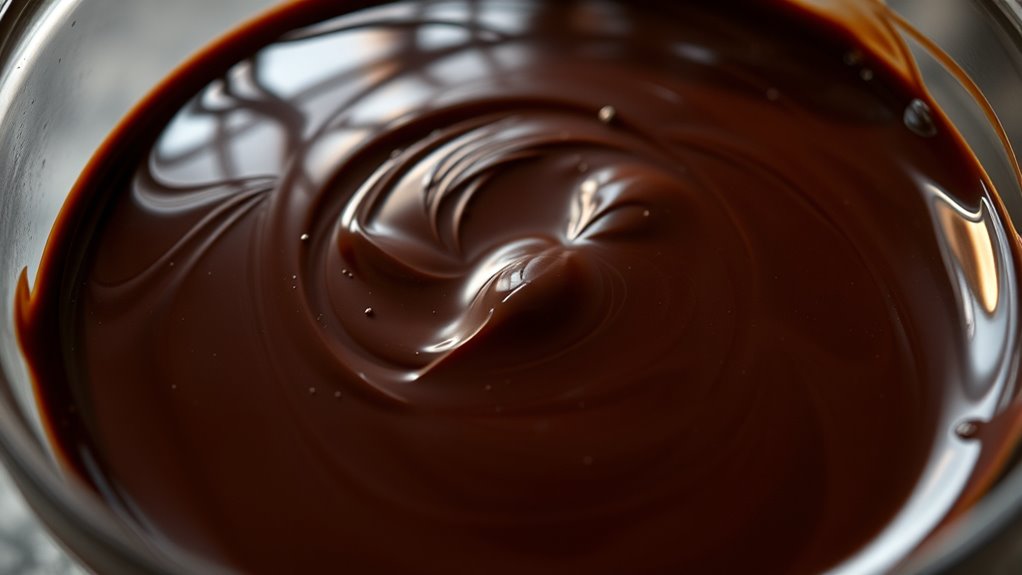
Chocolate’s irresistible appeal comes from a complex chemistry that begins with the cacao bean. Central to this allure is cocoa butter, a fat responsible for chocolate’s smooth texture and glossy finish. When you melt chocolate, you’re working with a mixture of different fats that can exist in several forms known as cocoa butter polymorphs. These polymorphs are unique arrangements of fat molecules, each with distinct melting points and stability levels. Understanding these forms is key to mastering tempering, the process that ensures your chocolate sets with a perfect snap and shine.
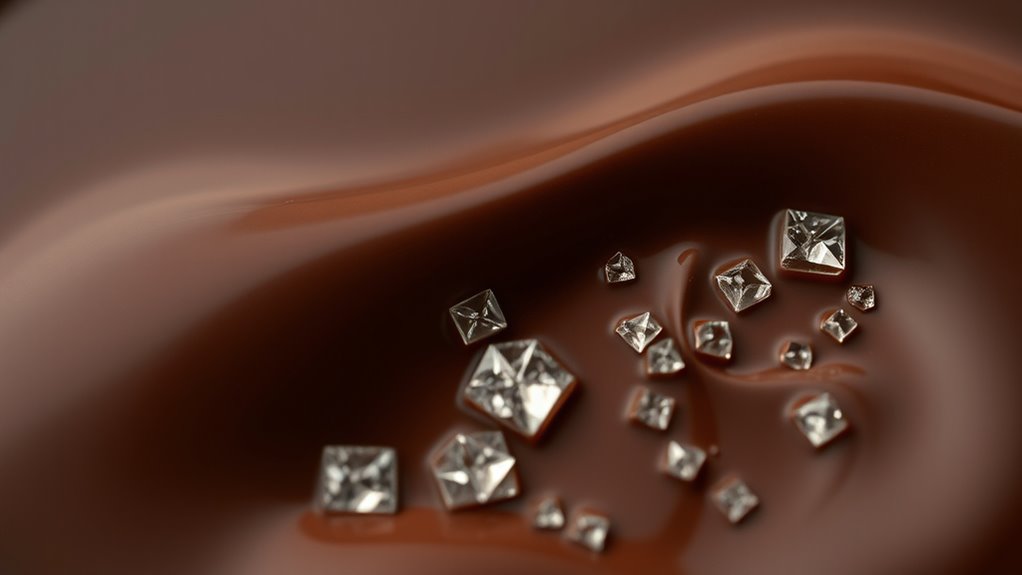
The crystallization process is at the heart of creating stable, high-quality chocolate. As you cool melted chocolate, the cocoa butter molecules begin to arrange themselves into crystalline structures. This formation isn’t random; it follows a specific sequence of polymorphs, each representing a different arrangement of molecules. Out of all these forms, one particular polymorph—known as Form V—is the most desirable because it melts just below body temperature, giving chocolate that satisfying melt-in-your-mouth feel. Achieving this form requires precise control over the crystallization process. crystallization control is essential for producing high-quality finished products.
When you heat and cool chocolate, you’re guiding the cocoa butter molecules to organize into the ideal crystalline structure. Initially, as you melt the chocolate, all polymorphs are dissolved into a liquid state. As it cools, certain crystals begin to form. If cooling is too rapid or uncontrolled, you risk creating unstable forms like Form IV or I, which lead to dull, soft, or streaky chocolate. Proper tempering involves carefully heating the chocolate to a specific temperature to melt all polymorphs, then cooling it down to promote the formation of stable Form V crystals. You then reheat it slightly to eliminate any unstable forms, ensuring the final product is glossy, firm, and snaps cleanly.
The process of crystallization isn’t merely about temperature; it’s about timing and agitation. When you stir or cool the chocolate gradually, you encourage the cocoa butter molecules to align into the most stable and desirable form. This controlled crystallization results in a uniform crystal network, giving your finished chocolate its characteristic texture and appearance. Without proper crystallization, even high-quality ingredients can produce dull, streaky, or soft chocolate.
In essence, understanding cocoa butter polymorphs and carefully managing the crystallization process empowers you to produce professional-quality chocolate at home or in a commercial setting. It’s a delicate dance of science and skill—one that transforms simple ingredients into the glossy, perfectly textured treat everyone loves.

Digital Candy Thermometer with Pot Clip, 10" Long Stainless Steel Probe, Instant Read Kitchen Thermometer for Cooking, Baking, and Candy Making
- Pot Clip for Safe Handling: Securely attaches to pots for safety
- Clear LCD Temperature Display: Easy-to-read digital screen
- Waterproof and Easy to Clean: IP65 rated, dishwasher safe probe
As an affiliate, we earn on qualifying purchases.
As an affiliate, we earn on qualifying purchases.
Frequently Asked Questions
How Does Humidity Affect Chocolate Tempering?
Humidity impact on chocolate tempering is significant; excess moisture can cause the chocolate to seize, ruining its smooth texture. You need to control moisture carefully during tempering because humidity introduces unwanted moisture, disrupting the crystal structure. To guarantee perfect tempering, keep the environment dry, use moisture-proof tools, and avoid humidity fluctuations. Proper moisture control helps maintain the desired glossy finish and crisp snap in your chocolate.
Can Artificial Ingredients Influence Chocolate Crystal Formation?
You might worry artificial ingredients harm your chocolate, but they can actually influence crystal formation positively. Additive effects from certain stabilizers help promote crystal stability, resulting in a smoother, glossy finish and better texture. While some fear they compromise quality, when used properly, artificial ingredients can enhance the tempering process, ensuring consistent results. This means you can enjoy beautifully tempered chocolate with reliable texture and appearance, even with added ingredients.
What Role Does Temperature Fluctuation Play During Storage?
Temperature fluctuation during storage affects chocolate by disrupting temperature stability, which can lead to unwanted crystal growth. When temperatures vary, it causes the delicate cocoa butter crystals to melt and re-crystallize improperly, resulting in a dull appearance and poor texture. To keep your chocolate smooth and glossy, store it in a cool, stable environment, avoiding temperature swings that compromise its crystalline structure and overall quality.
How Do Different Cocoa Bean Varieties Impact Crystal Structure?
You’ll find that different cocoa bean varieties, influenced by genetics, impact the crystal structure in chocolate. These varieties also affect bean flavor profiles, which can alter how crystals form during tempering. For example, certain genetics produce beans with higher fat content, promoting stable crystal formation. By understanding these differences, you can optimize tempering processes to achieve the desired gloss, snap, and mouthfeel in your finished chocolate.
Is There a Vegan Alternative to Traditional Tempering Methods?
Imagine trying to dance without music—that’s what vegan tempering feels like without plant-based alternatives. Yes, there are vegan options like using coconut oil, cocoa butter, or soy lecithin to mimic traditional tempering. These methods help control crystal formation, ensuring smooth, glossy chocolate. So, you can achieve that professional finish with vegan tempering, making your treats totally plant-based and just as delightful.
Conclusion
You might think that tempering chocolate is just about cooling and heating, but it’s really about controlling crystallization. Some say all chocolate naturally forms the best crystals, but scientific studies show that proper tempering actually guides the formation toward the stable Type V crystals. This creates that glossy finish and perfect snap you love. So, next time you temper chocolate, remember—you’re not just melting it, you’re directing its very structure for the best possible result.