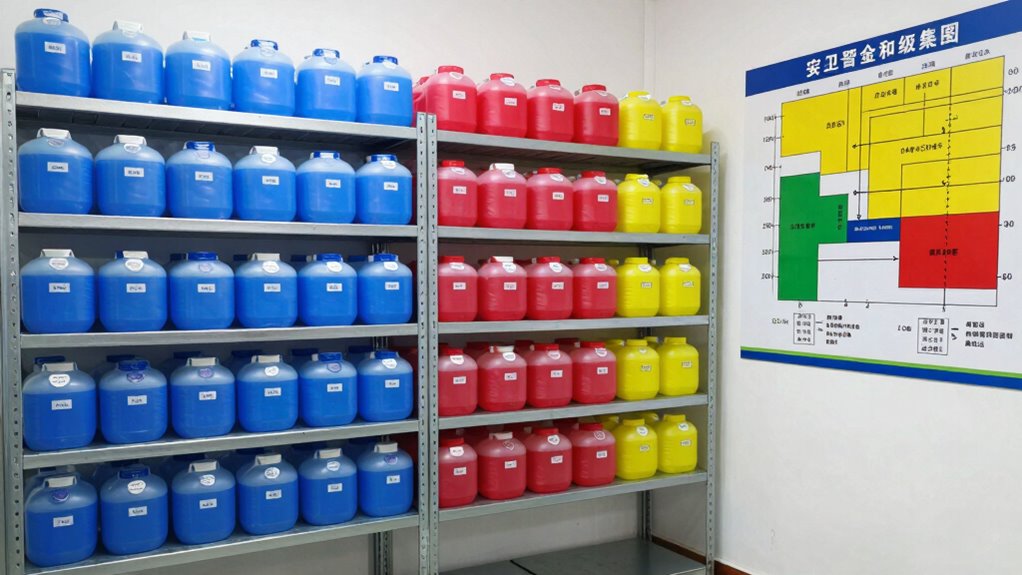

To build a chemical storage segregation map, start by categorizing your chemicals based on hazard classifications like flammable, corrosive, or reactive. Group similar hazards together and identify incompatible chemicals that need separation, such as acids and bases or oxidizers and reducers. Use visual zones or color-coding to clearly mark storage areas, and guarantee containers are labeled with hazard symbols. Following these steps helps you create a safe, organized system—continue on to learn more about implementing effective segregation strategies.

Get school and study supplies delivered free — and shop member deals
- Fast, free delivery on millions of items
- Access to Prime Big Deal Days deals on October 6–7
- Prime Video, Amazon Music and more included
Key Takeaways
- Categorize chemicals by hazard class (flammable, corrosive, reactive, toxic) to determine compatible storage groups.
- Allocate separate storage zones for incompatible chemicals, such as acids and bases or oxidizers and reducers.
- Use visual aids like color-coded labels and maps to clearly delineate hazard zones and promote safe handling.
- Implement safety measures like secondary containment, ventilation, and flame-proof cabinets based on chemical properties.
- Regularly review and update the segregation map to maintain compliance and adapt to new chemicals or safety standards.
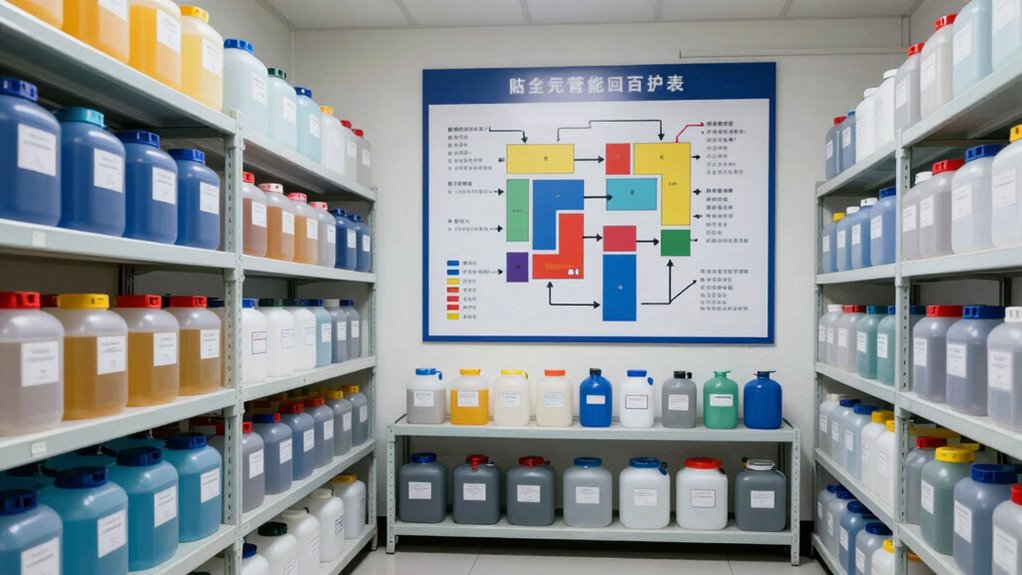
Proper chemical storage is essential to prevent accidents, spills, and dangerous reactions. When you’re setting up a storage area, understanding hazard classification is crucial. This classification helps you identify the risks associated with each chemical, whether it’s flammable, corrosive, reactive, or toxic. By knowing the hazard class, you can develop effective storage guidelines that keep everyone safe. For instance, flammable liquids should be stored in flame-proof cabinets away from sources of ignition, while corrosive substances need to be kept in materials resistant to acids or bases. Implementing these storage guidelines ensures that incompatible chemicals don’t accidentally come into contact, reducing the risk of dangerous reactions. Additionally, understanding the specific properties of chemicals, such as their reactivity and stability, aids in creating more comprehensive storage protocols. Creating a segregation map is your first step in organizing chemicals safely. To do this effectively, you need to categorize chemicals based on their hazard classification. Once you’ve identified the hazard class for each chemical, you can decide where to store them. Keep reactive chemicals, like oxidizers and reducers, apart from each other, as they can cause fires or explosions if mixed. Similarly, acids and bases shouldn’t be stored together to prevent corrosive spills. By mapping out these groups, you create a visual guide that simplifies the process of maintaining safe storage zones. This segregation map acts as a reference, so everyone knows which chemicals are stored together and which must stay separated. Your storage guidelines should also include considerations such as ventilation, spill containment, and labeling. Proper ventilation reduces the buildup of hazardous fumes, especially for volatile chemicals. Spill containment measures, like secondary containment trays, help prevent leaks from spreading and causing harm. Labeling each container clearly with hazard symbols and chemical names ensures quick identification in case of an emergency. When you follow these storage guidelines, you’re actively minimizing risks and creating a safer environment. It’s important to regularly review and update your segregation map as you add or remove chemicals, ensuring that your storage remains compliant with safety standards. Understanding chemical reactivity and proper storage practices can significantly reduce accident risks and improve safety in your facility. In essence, your goal is to design a storage system rooted in hazard classification principles. By applying clear storage guidelines and creating a detailed segregation map, you control chemical interactions and prevent incidents. This proactive approach not only protects your team but also ensures compliance with safety regulations. Remember, effective chemical storage isn’t just about placing chemicals on shelves; it’s about understanding their hazards, segregating them properly, and maintaining a safe, organized environment at all times.
chemical storage segregation map
As an affiliate, we earn on qualifying purchases.
As an affiliate, we earn on qualifying purchases.
Frequently Asked Questions
How Often Should Chemical Segregation Maps Be Reviewed and Updated?
You should review and update your chemical segregation map at least annually, or whenever there’s a significant change in your chemical inventory or storage conditions. Regularly checking guarantees your segregation protocols stay effective and safe. Always reassess after new chemicals are added or if you notice any storage issues. Keeping your map current helps prevent accidents and maintains compliance with safety regulations.
What Are the Common Mistakes in Chemical Storage Segregation?
You often make mistakes in chemical storage segregation by ignoring proper chemical pairing, neglecting clear storage labeling, and overlooking incompatible substances. Failing to contemplate chemical pairing can lead to dangerous reactions, while unclear storage labeling causes confusion and mishandling. You might also improperly group chemicals, increasing risk. To avoid these errors, always check compatibility charts, maintain accurate labels, and organize chemicals logically based on their hazards.
How to Handle Incompatible Chemicals During Emergency Spills?
During emergency spills involving incompatible chemicals, you should prioritize spill containment and quick response. Use appropriate neutralizing agents and spill kits designed for specific chemicals. Immediately evacuate the area if necessary, and follow your emergency response plan. Make certain that incompatible substances are kept apart, preventing reactions. Stay calm, wear proper PPE, and coordinate with trained personnel to manage the spill safely and minimize hazards.
Are There Specific Storage Requirements for Reactive Chemicals?
Reactive chemicals demand special storage requirements, as they can turn your storage area into a ticking time bomb. You must guarantee chemical reaction hazards are minimized by using compatible storage containers and segregating reactive substances from incompatible ones. Always follow manufacturer guidelines and safety regulations, keeping reactive chemicals in sturdy, corrosion-resistant containers. Proper labeling and dedicated storage areas help prevent accidental reactions and keep everyone safe.
What Training Is Necessary for Staff Managing Chemical Storage?
You need to guarantee your staff are trained in proper chemical labeling and safety protocols. They should understand how to interpret labels, recognize hazards, and follow storage guidelines to prevent accidents. Regular training sessions and refreshers help staff stay updated on safety standards. Emphasize the importance of proper segregation, emergency procedures, and proper handling techniques to maintain a safe storage environment and minimize risks associated with chemical management.
Conclusion
By creating a segregation map, you substantially reduce the risk of chemical reactions and accidents. Did you know that improper storage accounts for nearly 30% of chemical incidents in warehouses? Taking the time to understand compatibility not only safeguards your team but also saves costs and prevents environmental harm. Start building your map today—it’s a simple step that can make a huge difference in maintaining a safe, compliant storage environment.
Evergreen bestsellers Picks
bestsellers
As an affiliate, we earn on qualifying purchases.