Ductless fume hoods are not a universal solution for all laboratory hazards. They use filters to capture airborne contaminants, but their effectiveness depends on the specific chemicals or vapors involved. They are suitable for low-risk substances but can’t contain highly toxic, volatile, or reactive materials safely. Relying solely on them can give a false sense of security. Discover why safety and proper hazard assessment matter more than any quick fix.
Key Takeaways
- Ductless fume hoods rely on filters that may not effectively capture all toxic or volatile chemicals.
- They are suitable for low-risk, non-toxic substances but not for highly hazardous materials.
- Filter effectiveness varies; not all filters can handle every chemical or particulate.
- Safety depends on matching the filter’s capabilities to specific hazards; they are not a universal solution.
- For high-risk lab work, traditional vented hoods offer superior protection.

Is a ductless fume hood truly an effective and safe solution for laboratory ventilation? Many believe these units are a convenient and cost-effective way to manage hazardous fumes without the need for complex ductwork. But before you rely on one, it’s essential to understand their limitations and whether they genuinely meet your lab’s needs. One critical factor is filter efficiency. Ductless fume hoods use filters to trap airborne contaminants, but not all filters are created equal. Some may effectively capture certain chemical vapors or particulates, while others fall short. If your work involves highly toxic or volatile substances, standard filters might not provide sufficient protection. You need to verify the filter’s specifications and ensure they are rated for the specific hazards you’re dealing with. Relying on a filter that isn’t efficient enough can give you a false sense of security, risking exposure and compromising safety. Additionally, advancements in nanotechnology are leading to the development of more specialized filtration media that could enhance the effectiveness of ductless systems. Another aspect to consider is installation costs. Ductless fume hoods are often marketed as cheaper alternatives to traditional vented systems. While they eliminate the need for ductwork and external exhaust infrastructure, the upfront costs of high-quality filters can be significant. Replacing filters regularly adds ongoing expenses, and if you choose cheaper, less effective filters, you might end up spending more in the long run due to frequent replacements or inadequate containment. Moreover, you should factor in the cost of maintenance and potential upgrades. Sometimes, opting for a ductless system might seem cheaper initially, but the overall lifecycle costs could surpass those of a traditional vented hood, especially if your lab handles hazardous materials requiring specialized filtration. Ultimately, you need to evaluate whether a ductless fume hood suits your specific application. They can be effective for low-risk, non-toxic substances or for general ventilation purposes, but they’re not a one-size-fits-all solution. If your work involves highly toxic chemicals, volatile organic compounds, or substances requiring precise containment, relying solely on a ductless system might be risky. It’s vital to assess filter efficiency and installation costs carefully and to consider the nature of your work before making a choice. No matter what, safety should always come first, and that often means choosing the ventilation system best suited to your laboratory’s specific hazards.

VEVOR Ducted Fume Hood, 22.83 x 25.98 x 24.80 inch Working Area, Lab Fume Hood with LED Light and G1 Pre-Filter, Adjustable Speed, Steel Exhaust Equipment for Laboratory Fume Control, White
Adjustable Ventilation System: Equipped with a powerful centrifugal fan, the ducted fume hood features vertical airflow to improve…
As an affiliate, we earn on qualifying purchases.
As an affiliate, we earn on qualifying purchases.
Frequently Asked Questions
Are Ductless Fume Hoods Suitable for All Laboratory Environments?
No, ductless fume hoods aren’t suitable for all laboratory environments. You need to contemplate lab safety first, especially when working with hazardous or volatile chemicals. Ductless systems filter contaminants but may not effectively remove all dangerous fumes, which can compromise safety. Additionally, they can impact the environmental footprint, so you should evaluate whether their use aligns with your facility’s safety standards and environmental policies before choosing them.
How Often Should Ductless Fume Hood Filters Be Replaced?
You should replace ductless fume hood filters based on your maintenance schedule and the filter’s condition, typically every 6 to 12 months. Regular filter replacement guarantees peak air quality and safety. Keep an eye on signs like reduced airflow or odors, which indicate it’s time for a filter change. Adhering to a consistent maintenance schedule helps prevent contamination and maintains the hood’s effectiveness.
Can Ductless Fume Hoods Handle Hazardous Chemical Spills?
You might think ductless fume hoods are your go-to for chemical spill response, but they’re not designed for emergency cleanup of hazardous spills. While they can handle some vapors, hazardous chemical spills demand proper ventilation and safety protocols. Relying solely on a ductless hood in such situations could be dangerous. Always prioritize appropriate protective equipment and trained personnel for hazardous spill management—ductless fume hoods aren’t a substitute.
What Are the Cost Differences Between Ductless and Ducted Fume Hoods?
The cost comparison between ductless and ducted fume hoods shows ductless options are usually cheaper upfront, mainly due to lower installation expenses. Ductless hoods eliminate the need for ductwork and complex ventilation systems, reducing initial costs. However, keep in mind that ongoing maintenance and filter replacements can add to the total cost over time. Ducted hoods tend to have higher installation expenses but may offer lower long-term operational costs.
Are Ductless Fume Hoods Compliant With OSHA Regulations?
Ductless fume hoods can be OSHA compliant if they meet specific requirements, including proper air filtration and maintenance to guarantee air quality. You should verify that the unit has appropriate certifications and follows local regulations. While they’re often more energy-efficient, you need to regularly check filters and airflow to maintain safety standards, so you’re making certain both compliance and a healthier environment in your workspace.
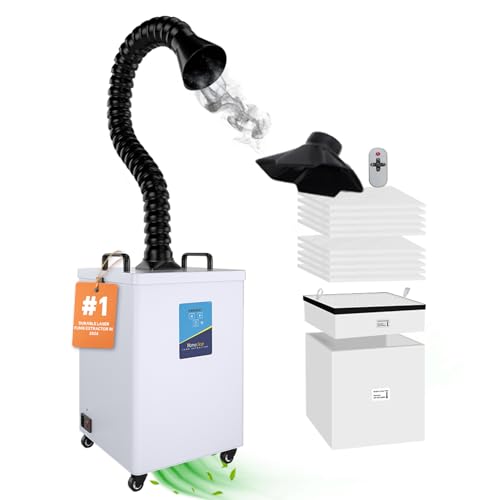
FumeClear FC-2002 Fume Extractor, 260 to 300m³/h Strong Suction, Low-Noise with 12 Filters Laser Fume Extractor for S1, D1 Pro 10W to 20W Laser Engraver Soldering Smoke Extractor
【Powerful Suction Capability】- The FumeClear FC2002 solder fume extractor is capable of achieving a significant suction power of…
As an affiliate, we earn on qualifying purchases.
As an affiliate, we earn on qualifying purchases.
Conclusion
Don’t assume ductless fume hoods can handle every chemical or situation—they’re not a one-size-fits-all solution. Studies show they only filter about 60-70% of contaminants, so relying solely on them can be risky. Always assess your lab’s specific needs and use the right ventilation system. Remember, safety comes first—know your equipment’s limits and don’t cut corners. Proper ventilation saves lives, so choose wisely and avoid the myth that ductless hoods work for everything.

18" Wide Ducted Fume Hood, Exhaust Hood for Laboratory Control, Chemical Fumes, Pharmaceutical Compounding, 3D Printing, and Other Odors
4" Exhaust Collar, 18" Wide Access Area
As an affiliate, we earn on qualifying purchases.
As an affiliate, we earn on qualifying purchases.

TUFFA Take 5 Safety Books, Workplace Hazard Assessment, Accident Prevention, 30-Pack Books. Pocket Sized
WORKPLACE SAFETY: Take 5 Safety Books help reduce workplace injuries and mishaps by providing a systematic approach to…
As an affiliate, we earn on qualifying purchases.
As an affiliate, we earn on qualifying purchases.