Baseline stability is essential in UV-Vis spectrophotometry because it directly impacts the accuracy and reproducibility of your measurements. Even the most advanced features can’t fix an unstable baseline, which can cause measurement errors and unreliable data. Focusing on proper sample preparation, regular calibration, and instrument maintenance guarantees your results are trustworthy. If you want to learn how to maintain stable baselines and get precise results, keep exploring these key practices.

Prime made for students and young adults
- Fast, free delivery for dorm and study essentials
- Prime Video and Amazon Music included
- Member-only deals
Key Takeaways
- Stable baselines ensure accurate, reproducible measurements, which are essential for reliable data interpretation.
- Proper sample prep and calibration maintain baseline consistency, preventing measurement artifacts.
- Routine instrument maintenance and environmental control reduce noise and drift, safeguarding baseline stability.
- Advanced features cannot compensate for unstable baselines that compromise data quality.
- Focusing on foundational practices yields more trustworthy results than relying solely on high-tech instrument capabilities.
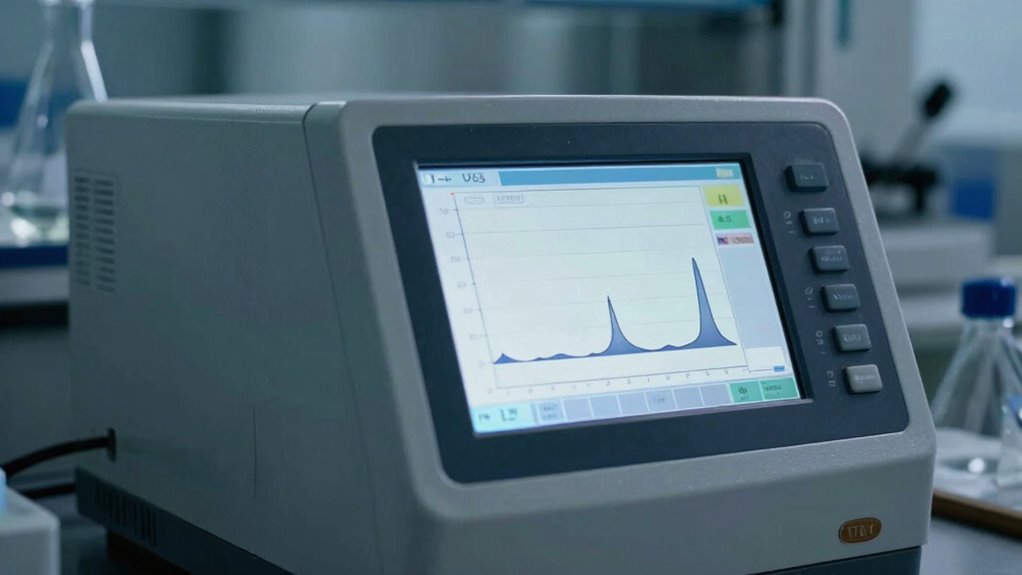
Achieving stable baselines in UV-Vis spectrophotometers is crucial for obtaining accurate and reproducible measurements. When you’re working with spectrophotometry, a steady baseline ensures that your readings truly reflect the sample’s absorbance rather than instrument noise or drift. To accomplish this, you need to pay close attention to your sample preparation and calibration techniques. Proper sample preparation eliminates variables that could distort your baseline, such as particulate matter, bubbles, or inconsistent sample thickness. Using clean cuvettes, filtering samples when necessary, and ensuring homogeneity all contribute to a more stable baseline. These steps might seem simple, but neglecting them can lead to baseline fluctuations that compromise your data’s integrity.
Stable baselines in UV-Vis spectrophotometry rely on proper sample prep and calibration to ensure accurate, reproducible measurements.
Calibration techniques are equally critical in maintaining baseline stability. Regular calibration with standard solutions helps you identify and correct instrument drift over time. You should perform calibration routines frequently—ideally before each set of measurements—to account for any changes in the light source intensity or detector sensitivity. When calibrating, ensure you’re using standards that match your sample’s wavelength range and concentration. This practice helps you establish a reliable baseline and improves measurement accuracy. Additionally, zeroing the instrument with a blank sample that contains all the solvents and buffers used in your actual samples is an essential step. This zeroing ensures that any absorbance from the solvent or container itself doesn’t skew your baseline.
Furthermore, understanding the importance of baseline stability is essential for ensuring the reliability of your spectrophotometric data, especially when working with complex samples or in regulated environments. Routine maintenance of your UV-Vis spectrophotometer also plays a significant role in maintaining baseline stability. Clean optical surfaces, replace worn-out lamps, and verify that all instrument components are functioning correctly. These actions prevent artifacts that could cause baseline instability. Additionally, instrument calibration and proper environmental controls can significantly reduce baseline fluctuations caused by external factors. Proper environmental conditions, such as temperature and humidity control, can help maintain consistent instrument performance. Also, avoid rapid temperature changes in your workspace, since temperature fluctuations can alter the instrument’s performance and affect baseline stability. Recognizing the role of instrument maintenance in overall data quality can help prevent unexpected issues and extend the lifespan of your device. Maintaining awareness of instrument performance and its influence on baseline stability can further enhance measurement consistency.
While features like high spectral resolution or rapid scanning are attractive, they don’t compensate for an unstable baseline. If your baseline isn’t stable, your entire measurement process is compromised, regardless of how advanced your instrument is. It’s better to invest time in establishing good sample preparation practices and robust calibration techniques. These foundational steps will yield more reliable data and save you from troubleshooting complicated issues later. Ultimately, a focus on baseline stability ensures your UV-Vis spectrophotometry results are accurate, reproducible, and scientifically valid—more valuable than flashy features that might look good but don’t improve measurement quality.
UV-Vis spectrophotometer calibration standard
As an affiliate, we earn on qualifying purchases.
As an affiliate, we earn on qualifying purchases.
Frequently Asked Questions
How Does Baseline Drift Affect Measurement Accuracy?
Baseline drift reduces your measurement accuracy by causing inconsistent readings over time. It hampers precise sample calibration, making it harder to trust your results. As your instrument ages, drift can worsen, leading to further inaccuracies. You need stable baselines to detect real sample changes. Regular maintenance and calibration help minimize drift, ensuring your UV-Vis spectrophotometer provides reliable, accurate data, regardless of its age or complex features.
What Maintenance Procedures Improve Baseline Stability?
You might think maintenance is tedious, but proper calibration protocols and sample preparation are key to improving baseline stability. Regularly calibrate your instrument to guarantee consistent performance, and always prepare samples meticulously to avoid contamination or impurities that can cause drift. These simple steps prevent baseline fluctuations, giving you reliable, accurate results. Neglecting them risks measurement errors, overshadowing advanced features with unstable baselines that compromise data integrity.
Can Baseline Stability Be Improved With Software Adjustments?
Yes, you can improve baseline stability with software adjustments. Performing software calibration guarantees accurate readings, minimizing drift. Additionally, applying signal smoothing techniques reduces noise and fluctuations in your baseline. These adjustments help stabilize the baseline over time, making your measurements more reliable. Regularly updating the software and fine-tuning these settings are essential steps to maintain consistent baseline stability, ultimately leading to more precise and reproducible results.
How Do Environmental Factors Influence Baseline Stability?
Environmental factors like poor air quality and temperature fluctuations can profoundly affect your UV-Vis spectrophotometer’s baseline stability. Dust and airborne particles may settle on optical components, causing noise or drift. Temperature changes can alter instrument calibration, leading to unstable baselines. To maintain consistent results, you need to control air quality by using filters and keep the instrument in a temperature-stable environment, ensuring reliable, accurate measurements.
Is Baseline Stability More Critical Than Wavelength Accuracy?
Baseline stability is more critical than wavelength accuracy because it guarantees consistent, reliable readings—key for accurate results. Did you know that even minor fluctuations can lead to errors impacting 30% of your data? Proper calibration procedures help maintain this stability, and a user interface that’s easy to navigate allows you to quickly identify and correct issues. Prioritizing baseline stability keeps your measurements trustworthy and your experiments on point.
Conclusion
When choosing a UV-Vis spectrophotometer, prioritize pristine baseline stability over flashy features. Steady baselines ensure precise, reproducible results, saving you time and troubleshooting trouble. Don’t get dazzled by dazzling displays or fancy functions — focus on consistent, reliable performance. Remember, a stable baseline is the backbone of accurate analysis, so select a system that stays steady and simplifies your scientific journey. Stability in baseline signals, success in spectroscopy.
Halloween Picks
halloween
As an affiliate, we earn on qualifying purchases.