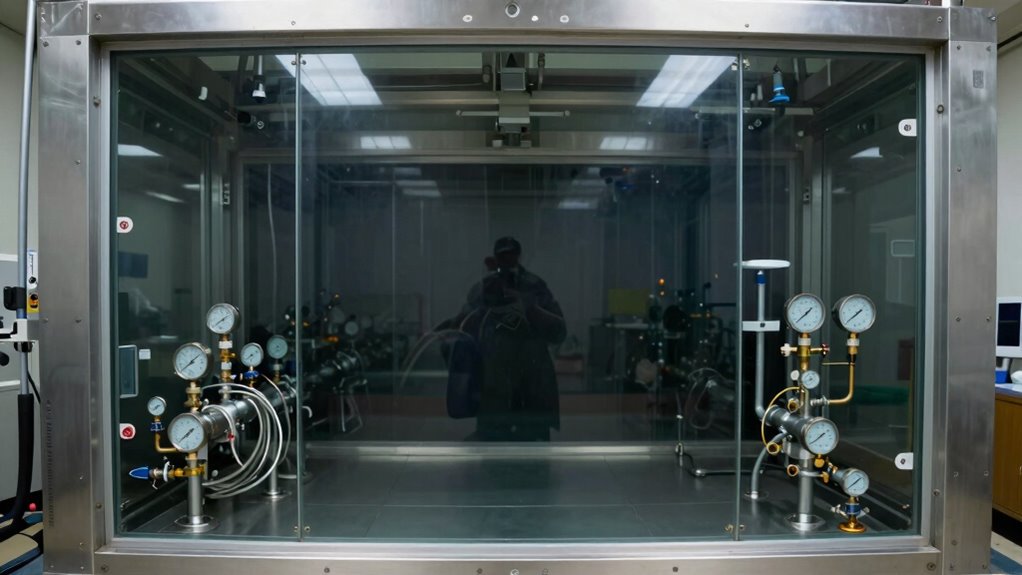

When using large vacuum chambers for degassing, patience is key because removing bubbles and trapped gases takes careful, gradual pressure reduction. Rushing the process can cause damage, contamination, or incomplete outgassing, which affects material quality. You must control the pressure slowly to let gases escape safely without stressing the chamber. If you stay patient and follow proper procedures, you’ll guarantee thorough degassing and long-term success. Keep exploring to learn more about optimizing this delicate process.
Key Takeaways
- Large chambers require extended degassing times to allow trapped gases and bubbles to escape thoroughly.
- Gradual pressure reduction prevents sudden bubble formation and avoids damage to the chamber or materials.
- Proper material selection and maintenance prevent contamination that could cause persistent bubbles.
- Patience ensures complete removal of impurities, reducing the risk of residual bubbles during the process.
- Controlled pressure regulation and system design optimize bubble removal efficiency in large vacuum chambers.
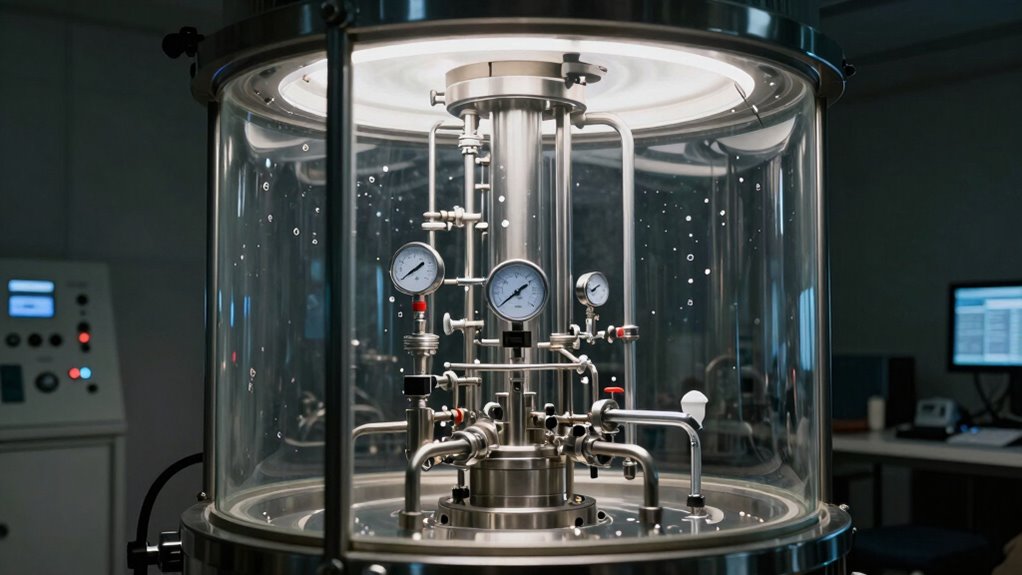
Have you ever wondered how large-scale materials are effectively degassed to remove impurities? It all comes down to the design and operation of the vacuum chamber used in the process. When working with such sizable chambers, understanding the importance of vacuum chamber materials and pressure regulation becomes essential. These elements guarantee the process runs smoothly, efficiently, and safely. The materials used for constructing the vacuum chamber must withstand extreme conditions—high vacuum levels, temperature variations, and chemical exposure. Typically, stainless steel is favored because of its durability, corrosion resistance, and ability to maintain a clean environment, which is vital for avoiding contamination. Selecting the right vacuum chamber materials isn’t just about durability; it’s also about maintaining the integrity of the degassing process. If you use subpar materials, leaks or contamination could occur, prolonging the process or compromising the quality of the degassed material. Proper material selection also helps prevent vacuum leaks, which are critical to the success of the process. Additionally, regular maintenance and inspections are necessary to ensure that the chamber’s integrity remains intact over time. Ensuring proper material compatibility is also essential to prevent degradation or reactions that could compromise the vacuum environment.
Pressure regulation plays a pivotal role during degassing. You need to carefully control the pressure inside the chamber to facilitate the removal of trapped gases and impurities. The process generally involves reducing the pressure gradually until it reaches a level where gases can escape from the material efficiently. Rushing this step can lead to inconsistent results or even damage to the materials or equipment. Precise pressure regulation guarantees that you maintain the right vacuum level throughout the process, allowing gases to outgas at a controlled rate. In large chambers, this control becomes even more critical because the volume of material and chamber size influence how quickly pressure can be lowered and stabilized. Advanced vacuum systems with automatic pressure controls help you monitor and adjust pressure in real-time, creating a stable environment for effective degassing. Additionally, pressure regulation systems help prevent rapid pressure changes that could cause structural stress or damage to delicate components within the chamber. The use of digital control interfaces can further enhance the accuracy and responsiveness of pressure adjustments.
Patience is key when working with large vacuum chambers. The size of the chamber means it takes longer to reach the desired vacuum levels, and the outgassing process itself isn’t instantaneous. You need to give gases enough time to escape thoroughly, which can sometimes mean several hours or even days, depending on the material and chamber size. Rushing the process risks incomplete degassing, leaving impurities behind that could cause problems later. By controlling pressure carefully and using high-quality vacuum chamber materials, you create a more efficient, reliable process. The combination of proper materials, precise pressure regulation, and patience guarantees that large-scale degassing is successful—and that your materials are as pure as they need to be for their intended application. Employing proper vacuum system design and operation protocols can significantly reduce the overall processing time while maintaining quality.
large vacuum chamber for degassing
As an affiliate, we earn on qualifying purchases.
As an affiliate, we earn on qualifying purchases.
Frequently Asked Questions
What Materials Are Best Suited for Constructing Large Vacuum Chambers?
You should choose materials like stainless steel or aluminum for constructing large vacuum chambers because of their durability and excellent sealing capabilities. These metals withstand high vacuum pressures and resist corrosion, guaranteeing long-term performance. Proper sealing techniques, such as rubber or metal gaskets, are essential to maintain vacuum integrity. By selecting the right materials and sealing methods, you guarantee the chamber functions efficiently and safely during degassing processes.
How Energy-Efficient Are Large Vacuum Chambers for Degassing Processes?
Large vacuum chambers for degassing can be quite energy-efficient if designed with good thermal insulation and optimized vacuum systems. You’ll find that their energy consumption depends on factors like size, insulation quality, and pump efficiency. Improving thermal efficiency reduces heat loss, lowering energy use. While they may consume significant energy initially, proper maintenance and advanced technology can help you minimize operational costs and make the process more sustainable over time.
Can Portable Vacuum Chambers Be Used for Large-Scale Degassing?
Think of portable vacuum chambers as tiny sails catching the wind of innovation—they can handle small tasks, but scaling up is like trying to navigate a storm with a small boat. Portable solutions face scalability challenges when used for large-scale degassing, making them less ideal for big projects. You’ll find they’re best suited for smaller jobs, where their flexibility and convenience shine, rather than replacing larger, dedicated chambers.
What Safety Precautions Are Necessary During Vacuum Chamber Operation?
You should follow strict safety protocols when operating a vacuum chamber, including wearing protective gear and guaranteeing proper training. Always double-check equipment for leaks or damage before use. Know emergency procedures like quickly venting the chamber or shutting off power if needed. Keep a clear workspace, avoid over-pressurization, and stay alert. These precautions help prevent accidents and ensure safe, effective degassing processes.
How Does Chamber Size Affect Degassing Duration and Effectiveness?
You’ll find that larger chambers often require longer degassing times because chamber insulation can trap more heat, slowing the process. Additionally, your vacuum pump capacity must match the chamber size; a smaller pump struggles to efficiently remove air from a big space. To guarantee effective degassing, choose a chamber with proper insulation and a vacuum pump powerful enough to handle the volume, reducing bubble formation and improving quality.
Conclusion
In your quest to remove bubbles, patience becomes your best ally. As you watch the vacuum chamber work—sucking out air, releasing trapped gases, and calming turbulent surfaces—you see the process unfold like a gentle tide retreating. With each passing moment, bubbles diminish, clarity emerges, and perfection nears. Embrace the steady rhythm, trust in the process, and remember: just as patience guides the tide, it will lead your degassing to success.