TL;DR
Scientific calculators are vital for students, offering a range of functions from basic calculations to graphing. Recent models include connectivity and eco-friendly features, making them more versatile. Choosing the right one depends on your coursework and exam needs.
Choose a calculator with the functions you need—basic for high school, advanced for college.
Recent models include graphing, programming, and connectivity, making math more visual and interactive.
Always verify if the calculator is allowed for your exams to avoid surprises at test time.
Eco-friendly, solar-powered options save money and help the environment during long study sessions.
Read reviews and test the layout before buying—comfort and ease of use matter.
What Features Matter Most in a Student’s Scientific Calculator?
When choosing a scientific calculator, focus on what you’ll actually use. Basic functions like addition, subtraction, multiplication, and division are the foundation. But for most students, features like trigonometry functions (sin, cos, tan), logarithms, and exponents are essentials. These functions are critical because they directly support solving real-world problems in science and engineering. For example, understanding how to manipulate sine and cosine functions is fundamental in physics when analyzing wave motions or oscillations.
Some models even handle complex numbers and statistics, which are game-changers for advanced classes. Complex number calculations are vital in electrical engineering and signal processing, while statistical functions help in data analysis, research projects, and probability problems. Choosing a calculator with these advanced features means you’re better equipped to handle coursework that extends beyond basic math, but it also involves a tradeoff: more features can sometimes lead to a steeper learning curve or higher cost.
Imagine tackling a calculus problem with a calculator that lets you switch effortlessly between sine and cosine or calculate factorials in a blink. That’s the power of choosing a model with the right features. Plus, user-friendly layouts and clear displays turn math struggles into smooth sailing—saving you time and frustration. The right features can streamline your problem-solving process, but it’s essential to select a calculator that balances complexity with ease of use, so you’re not overwhelmed during exams or homework.

Texas Instruments TI-30XIIS Scientific Calculator, Black with Blue Accents (30XIIS/TBL/1L1/BK)
Robust, professional grade scientific calculator. Logs and antilogs
As an affiliate, we earn on qualifying purchases.
As an affiliate, we earn on qualifying purchases.
How Recent Tech Advances Make Scientific Calculators Better for Students
Today’s scientific calculators are smarter than ever. Many now include graphing capabilities, which fundamentally change how students approach learning. Visualizing equations—like plotting a parabola or sine wave—helps students grasp abstract concepts by turning them into tangible images. This visual aid is crucial because it bridges the gap between theoretical formulas and practical understanding, making complex math more accessible and less intimidating.
Display technology has evolved too. High-res, multi-line screens allow students to see more of their calculations at once, reducing errors and making multi-step problems easier to follow. For example, being able to view an entire logarithmic expression alongside its solution streamlines the problem-solving process. Some models even support programming, enabling students to create custom functions tailored to their coursework, which deepens their understanding and efficiency.
Connectivity features like Bluetooth or USB are more than just convenience—they facilitate seamless data transfer between devices, which is invaluable for collaborative projects or saving work for later review. Eco-friendly designs with solar panels extend battery life, reducing interruptions during long study sessions or exams. These innovations aren’t just bells and whistles—they’re tools that can boost your learning and streamline your study sessions, making math less about struggle and more about insight.
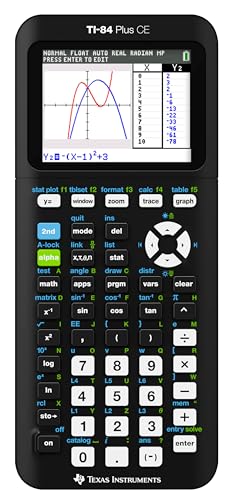
Texas Instruments TI-84 Plus CE Color Graphing Calculator, Black
High-resolution, full-color backlit display.Horizontal and vertical split-screen options..Display type : LED. Number of Items : 1.
As an affiliate, we earn on qualifying purchases.
As an affiliate, we earn on qualifying purchases.
Comparison Table: Scientific vs. Graphing Calculators — Which Do You Need?
| Feature | Scientific Calculator | Graphing Calculator |
|---|---|---|
| Core functions | Algebra, trigonometry, logs, roots | All scientific functions + graph plotting |
| Display | Simple LCD | High-res, multi-line screen |
| Programming | Limited or none | Yes, customizable functions |
| Connectivity | Usually not | USB, Bluetooth, data transfer |
| Price | $10–$50 | $60–$150 |
| Best for | High school math, standardized tests | College courses, engineering, advanced math |
Choosing between them hinges on your coursework and exam rules. If you’re just starting out, a scientific calculator covers most needs, providing essential functions without unnecessary extras. However, as coursework becomes more complex—especially in college or engineering programs—a graphing calculator offers advanced visualization and programming capabilities that can give you a significant edge. But remember, more advanced features often come with higher costs and a steeper learning curve, so weigh your needs carefully before investing.
Texas Instruments TI-30XIIS Scientific Calculator, Black with Blue Accents (30XIIS/TBL/1L1/BK)
Robust, professional grade scientific calculator. Logs and antilogs
As an affiliate, we earn on qualifying purchases.
As an affiliate, we earn on qualifying purchases.
Quick Tips to Pick the Perfect Calculator for Exams and Classwork
- Check if it’s approved for standardized tests like the SAT or ACT. Using an unapproved calculator can disqualify you or cause confusion during exams.
- Look for models with a clear, easy-to-read display. A cluttered or small screen can lead to mistakes under timed conditions.
- Think about battery life—solar power can be a lifesaver during long exams, reducing the risk of sudden shutdowns.
- Match features with your coursework: basic functions for high school, graphing for college. Overloading on features you don’t need can be distracting, while missing essential functions can limit your performance.
- Read reviews and try out the buttons in-store if possible—feel the layout, see if it’s intuitive. Comfort and ease of use during exams are crucial to avoid unnecessary stress.

Texas Instruments TI-30XS MultiView Scientific Calculator
Designed with unique features to allow you to enter more than one Calculation, compare results and explore patterns,…
As an affiliate, we earn on qualifying purchases.
As an affiliate, we earn on qualifying purchases.
Are Eco-Friendly and Solar-Powered Calculators Worth It?
Absolutely. Solar-powered calculators are not only environmentally friendly but also practical. They significantly reduce the need for battery replacements, which can be costly and inconvenient during intense study sessions or exams. For example, a solar TI-30XS can operate for years without needing a battery change, ensuring uninterrupted use when you need it most. This longevity makes them especially valuable for students who study or test in various environments, where replacing batteries might not be immediately feasible.
Furthermore, choosing eco-friendly calculators aligns with sustainable practices, reducing electronic waste and conserving resources. During long study periods, solar-powered models harness ambient light, which means fewer worries about running out of power unexpectedly. If you’re environmentally conscious or want a reliable device that minimizes interruptions, investing in a solar calculator is a smart choice that combines practicality with sustainability.
What’s the Best Scientific Calculator for Different Student Levels?
Choosing the right calculator depends on your grade level, coursework complexity, and future academic plans. Here’s a quick rundown:
- High School Beginners: Texas Instruments TI-30XS MultiView or Casio fx-115ES Plus. These models are affordable, straightforward, and meet standardized test standards, making them ideal for foundational math courses without overwhelming features.
- High School Advanced: Casio fx-991EX or TI-36X Pro. These calculators offer more functions, a better display, and support for higher-level math like algebra, geometry, and basic calculus, preparing students for more challenging coursework.
- College and Beyond: TI-84 or Casio fx-9750GII. With graphing capabilities, programming, and complex functions, these models are suited for engineering, science majors, and advanced math courses. They provide the tools needed for visualizing data and solving complex problems efficiently, which can be critical for success at higher levels.