TL;DR

Prime made for students and young adults
- Fast, free delivery for dorm and study essentials
- Prime Video and Amazon Music included
- Member-only deals
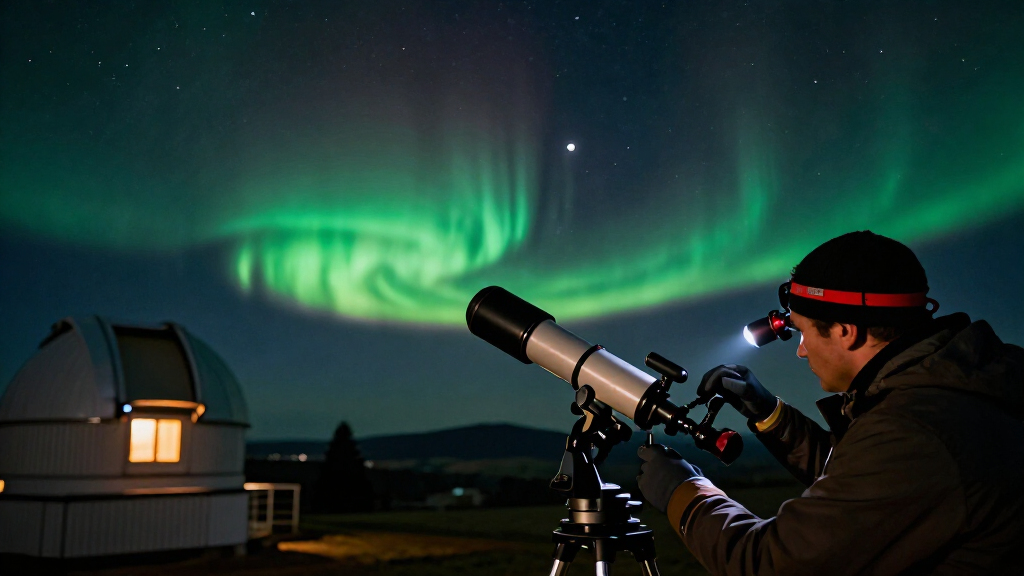
NASA’s Astronomy Picture of the Day for Oct. 14, 2026, features Mars near the Beehive star cluster beneath an aurora photographed near Lansjärv, Sweden. NASA’s explanation says a solar eruption reached Earth on Oct. 10 and disturbed its magnetic field; the image also highlights the cluster’s role in research on how stars’ rotation changes over time.
NASA’s Astronomy Picture of the Day (APOD) for Oct. 14, 2026, shows Mars near the Beehive star cluster beneath a colorful aurora, photographed near Lansjärv in Sweden. NASA’s explanation connects the light display to a solar eruption that reached Earth on Oct. 10, while noting that Mars happened to appear close to the cluster’s center in the sky.
The image brings together three different sights: the auroral curtain above the horizon, Mars and the Beehive cluster in the sky, and trees in the foreground near Lansjärv. NASA identifies the cluster as M44, or Praesepe. The photograph is credited to Petr Horálek of the Institute of Physics in Opava, with Josef Kujal and Vojan Höfer also credited.
In its APOD explanation, NASA says an eruption from the Sun reached Earth on Oct. 10, causing strong disturbances in Earth’s magnetic field. Energetic particles from the event collided with and energized molecules in the atmosphere; those molecules released the energy as the colorful aurora shown in the photograph. The agency’s page presents this as the explanation for the display, rather than reporting a new solar event on Oct. 14.
NASA describes Mars’s position near the cluster as a coincidence: it appeared closest to the Beehive’s center in the sky at the time of the photograph. The cluster itself is not a group of bees but a swarm of young stars. NASA says measurements of the stars’ rotation periods have helped researchers study how stars spin more slowly as they lose mass through stellar winds.
A Sky Image With A Solar Link
The photograph documents how a disturbance originating at the Sun can become visible from Earth as an aurora, while also capturing a chance alignment of Mars and a distant star cluster. NASA’s account links the display to the Oct. 10 eruption and Earth’s magnetic response; the picture itself provides a visual record of the resulting light over a Swedish landscape.
The image also connects a striking sky scene with an ongoing area of astronomy. The Beehive cluster’s stars can be studied as a group, and their rotation periods provide evidence used to understand how stellar spin changes over time. That scientific value is distinct from the apparent alignment: Mars and the cluster look close together from Earth, but the APOD does not suggest they are physically near one another.
For readers, the main news is the publication of a dated astronomy image and its explanation, not a report that the aurora or solar activity is still underway. The entry brings together the event’s stated solar cause, the photograph’s location and credits, and a concise note about the cluster’s research relevance.
As an affiliate, we earn on qualifying purchases.
From Solar Eruption To Aurora
NASA’s APOD is a daily feature presenting an image or photograph of the universe alongside an explanation written by a professional astronomer. The Oct. 14 entry is titled “Mars and the Beehive Under an Aurora.” Its explanation identifies the location as near Lansjärv, Sweden, and names the Beehive as M44, also known as Praesepe.
The sequence described by NASA begins with the solar eruption reaching Earth on Oct. 10, 2026. According to the explanation, particles from the eruption interacted with molecules in Earth’s atmosphere, producing the auroral colors. The image was then published four days later as that day’s APOD. The source does not provide further measurements of the eruption or a detailed forecast of its effects.
NASA also notes the Sámi name guovssahasat for auroras, and says auroras have traditionally been viewed with respect by Sámi people, Indigenous to Sweden and other Arctic regions. That reference adds cultural context to a scene photographed in northern Sweden without claiming that the photograph documents a particular Sámi practice.
Details Beyond The APOD Caption
The source does not give the solar eruption’s measured strength, the precise time or exposure conditions for the photograph, or the distance between Mars and the Beehive cluster. It describes the sky positions as an apparent alignment, but supplies no angular separation or additional observing data.
NASA’s explanation says the eruption caused strong disturbances in Earth’s magnetic field, but the APOD entry does not provide independent measurements, a broader account of impacts, or an update on whether auroral activity continued after the event. It also does not specify the date and time the photograph was taken beyond linking the depicted aurora to the Oct. 10 event.
The Next Daily Sky Image
The APOD page lists “open space” as the subject of the next day’s picture. The Oct. 14 entry does not announce a further investigation, a follow-up report on the solar eruption, or a new forecast. Readers seeking additional detail about the event would need information beyond the image and explanation provided on the APOD page.
For this entry, the immediate next step is the continuation of NASA’s daily feature: another image and explanation. The current source gives no indication that the aurora itself remains visible or that the Oct. 10 disturbance is ongoing.
Key Questions
What does NASA’s October 14 APOD show?
It shows Mars and the Beehive cluster beneath an aurora, above a landscape near Lansjärv, Sweden.
What caused the aurora in the photograph?
NASA says a solar eruption reached Earth on October 10, 2026. Particles from it energized molecules in the atmosphere, which released energy as auroral light.
Is the Beehive cluster made up of bees?
No. NASA identifies it as M44, or Praesepe, a cluster of young stars. The name refers to its appearance, not to insects.
Were Mars and the Beehive cluster physically close together?
The APOD describes Mars as appearing close to the cluster’s center in the sky. It gives no evidence that the two were physically near one another.
Who is credited with the photograph?
The image credit names Petr Horálek of the Institute of Physics in Opava, as well as Josef Kujal and Vojan Höfer.
Source: primary
Halloween Picks
halloween
As an affiliate, we earn on qualifying purchases.


![Terence Tao: Math 2.0 [Pdf]](https://chemicalceo.com/wp-content/uploads/2026/10/terence-tao-math-2-0-pdf-featured-560x300.jpg)