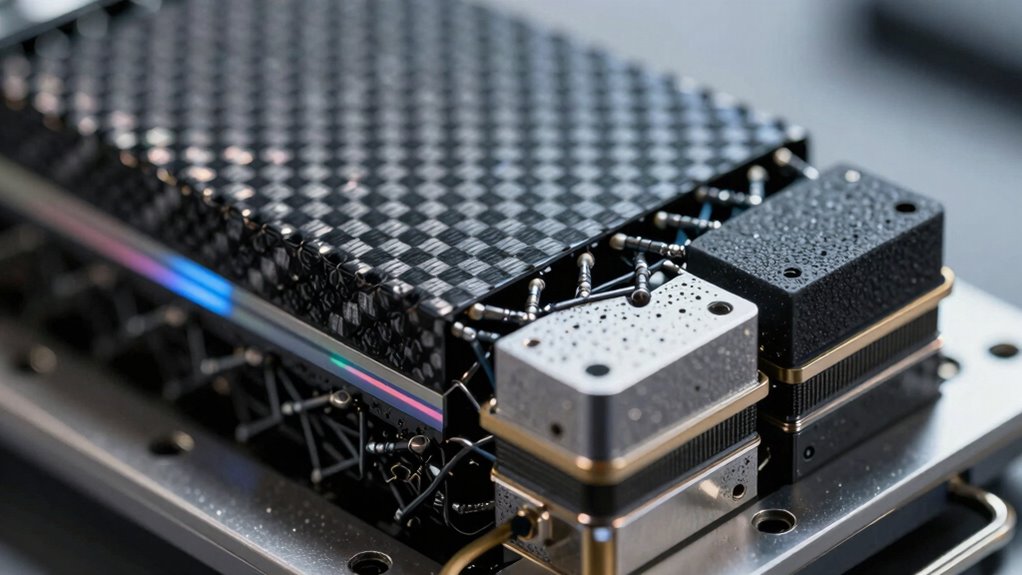

If you’re exploring supercapacitor materials beyond activated carbon, you’ll find that nanostructured options like graphene, metal oxides, and conducting polymers are gaining attention. These materials offer higher surface areas and better electrical conductivity, leading to improved performance. Advanced fabrication techniques such as thin-film deposition and electrospinning help optimize electrode structures. Understanding the material-electrolyte interface also plays an essential role. Keep exploring to discover how these innovations can considerably boost energy storage capabilities.
Key Takeaways
- Nanostructured materials like graphene and metal oxides offer higher surface areas and improved electrical conductivity for supercapacitors.
- Conducting polymers provide pseudocapacitance, enhancing energy density beyond activated carbon.
- Advanced electrode fabrication techniques such as chemical vapor deposition enable precise control of nanostructures.
- Ionic liquids and solid-state electrolytes expand voltage windows and improve device stability.
- Optimized material-electrolyte interfaces are crucial for durability and efficient ion exchange in next-generation supercapacitors.
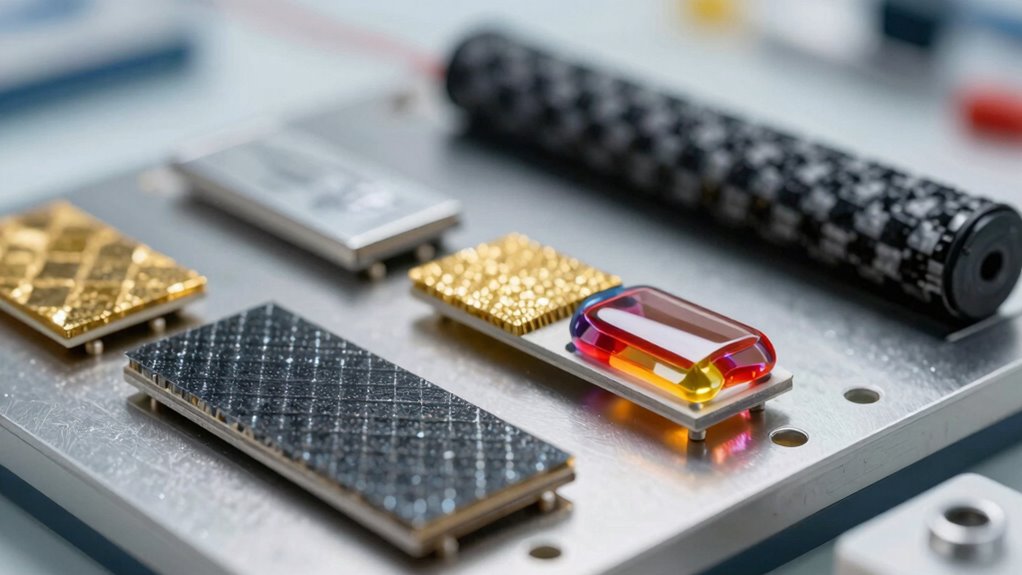
Supercapacitors are energy storage devices that can charge and discharge much faster than traditional batteries, making them ideal for high-power applications. When exploring materials beyond activated carbon, you start to see a shift toward innovative electrode fabrication techniques. Instead of relying solely on porous carbon, researchers are now designing electrodes with nanostructured materials like graphene, metal oxides, and conducting polymers. These advanced materials offer higher surface areas and better electrical conductivity, which directly enhance the supercapacitor’s energy and power density. Your goal in electrode fabrication is to create a structure that maximizes surface contact with the electrolyte, ensuring rapid ion transfer and minimal resistance. Techniques such as thin-film deposition, chemical vapor deposition, or electrospinning are often employed to produce these high-performance electrodes. As you develop these materials, you also need to deem how they interact with the electrolyte, because this relationship critically influences overall device performance. Electrode fabrication techniques are essential for optimizing these nanostructured materials, enabling better control over their morphology and electrical properties. Additionally, understanding the material-electrolyte interface is crucial for achieving a stable and efficient supercapacitor. Electrolyte optimization plays a crucial role in expanding the capabilities of supercapacitors beyond activated carbon. The electrolyte’s composition determines the voltage window, ionic conductivity, and stability of the device. To push the boundaries, you might experiment with ionic liquids, organic electrolytes, or solid-state electrolytes, each offering unique advantages. For instance, ionic liquids can provide wider voltage windows, which translates into higher energy storage capacity. However, their compatibility with electrode materials must be carefully managed. When optimizing electrolytes, you focus on balancing ionic mobility with electrochemical stability to prevent degradation over repeated charge cycles. You also seek to enhance the electrolyte-electrode interface, ensuring efficient ion exchange and minimal resistance. Techniques such as adding gel electrolytes or creating hybrid electrolyte systems can improve mechanical stability and extend operational life. Exploring electrolyte stability is also critical for ensuring long-term device performance under various operating conditions. Incorporating advanced materials into electrolyte design can further improve their compatibility and overall supercapacitor performance. Additionally, understanding the material-electrolyte interactions can help in designing more durable and efficient energy storage systems.
graphene supercapacitor electrodes
As an affiliate, we earn on qualifying purchases.
As an affiliate, we earn on qualifying purchases.
Frequently Asked Questions
How Do Supercapacitors Compare to Traditional Batteries in Energy Density?
You’ll find that supercapacitors have lower energy density compared to traditional batteries, meaning they store less energy per unit weight or volume. Their unique electrode architecture allows rapid charge and discharge cycles, but this often limits long-term charge retention. While batteries excel in holding larger amounts of energy over time, supercapacitors shine with quick bursts of power and superior cycle life, making them ideal for specific applications despite their lower energy density.
What Are the Environmental Impacts of Advanced Supercapacitor Materials?
You should consider that advanced supercapacitor materials can have both positive and negative environmental impacts. Eco-friendly synthesis methods reduce harmful waste and energy consumption, making production more sustainable. However, toxicity concerns arise with certain materials, like heavy metals or rare elements, which can harm ecosystems if improperly disposed of. It is crucial to balance innovation with environmentally responsible practices to minimize negative effects and promote sustainable energy storage solutions.
How Scalable Are These Alternative Materials for Commercial Production?
You’ll find that alternative supercapacitor materials are quite scalable, but they face hurdles like manufacturing challenges and supply chain feasibility. Think of it as building a bridge—you need sturdy foundations and reliable materials. While production methods are improving, scaling up requires streamlining processes and securing consistent raw material supplies. With ongoing innovation, these alternatives are becoming more feasible for commercial use, but widespread adoption still needs careful planning and investment.
What Are the Cost Implications of Using Non-Activated Carbon Materials?
Using non-activated carbon materials affects your supercapacitor costs primarily through material sourcing and manufacturing expenses. These alternative materials often cost more due to complex extraction or synthesis processes, increasing manufacturing costs. You might also face limited supplier options, affecting pricing stability. While some materials could offer better performance, their higher costs may challenge commercial viability unless you find scalable, cost-effective sourcing and manufacturing solutions to balance performance gains with overall expenses.
How Do These Materials Affect Supercapacitor Lifespan and Cycling Stability?
Using non-activated carbon materials can enhance supercapacitor lifespan and cycling stability due to their superior material durability and electrochemical stability. These materials resist degradation better over repeated charge-discharge cycles, maintaining performance longer. You’ll notice fewer capacity losses and improved reliability, especially in demanding applications. Their stable structure ensures consistent energy storage, making your supercapacitors more durable and effective over time, ultimately providing better long-term performance and cost savings.
Conclusion
As you explore supercapacitor materials beyond activated carbon, remember that innovation fuels progress—like a beacon guiding you through uncharted waters. New materials such as metal oxides, conducting polymers, and novel composites are transforming energy storage, making your journey more exciting. Keep pushing the boundaries, because in this quest for better energy solutions, you’re not just a traveler—you’re the pioneer shaping the future. Embrace the challenge—your breakthroughs await just beyond the horizon.