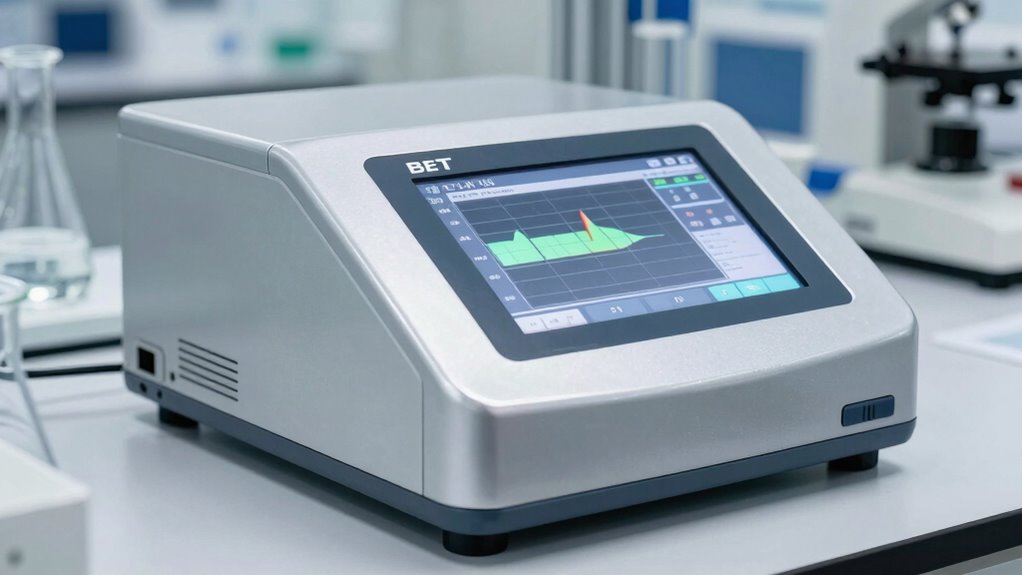

BET surface area analyzers measure the pore structure and surface properties of reactive solids, helping you understand their performance and behavior. By analyzing adsorption and desorption isotherms, you can identify pore sizes, surface heterogeneity, and overall surface area. This data guides you in optimizing materials for catalysts, energy storage, or environmental cleanup. If you keep exploring, you’ll gain deeper insight into how these measurements can improve your material design and application.

Prime made for students and young adults
- Fast, free delivery for dorm and study essentials
- Prime Video and Amazon Music included
- Member-only deals
Key Takeaways
- BET surface area analyzers measure the total surface area of solids, revealing insights into their reactivity and pore structures.
- They help identify pore size distribution, crucial for understanding how solids interact with gases and liquids.
- BET analysis guides the optimization of reactive solids for catalytic, environmental, and energy applications.
- The measurement indicates surface heterogeneity and internal architecture, influencing material performance and stability.
- BET data supports industry standards and assists in designing materials with tailored reactivity and functionality.
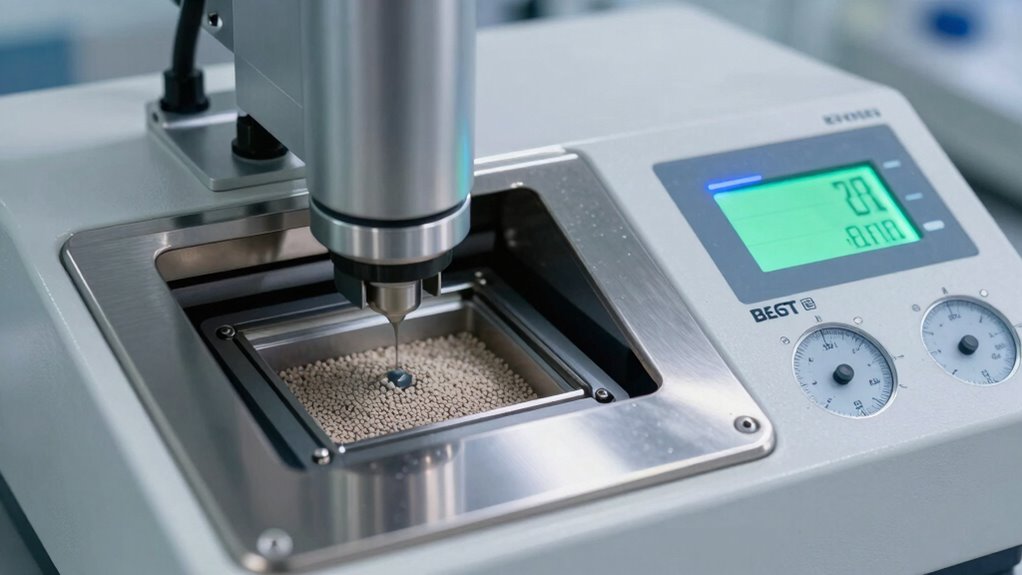
Understanding pore size analysis is equally essential when working with porous solids. The BET method provides not just surface area data but also clues about the distribution of pore sizes within your material. By analyzing the adsorption and desorption isotherms, you can determine whether your sample has micropores, mesopores, or macropores, which directly influence how a substance interacts with its environment. For instance, smaller pores may enhance a material’s ability to adsorb gases or liquids, making it more reactive or selective. Conversely, larger pores might facilitate faster diffusion, impacting catalytic efficiency or filtration performance. Additionally, the adsorption isotherm pattern can reveal information about the pore structure and surface heterogeneity of your material. Understanding the pore architecture is crucial for optimizing material performance in various applications. Recognizing the importance of surface heterogeneity can help in designing more effective materials tailored to specific needs. Knowledge of pore size distribution further refines your understanding of how your material will behave under different conditions, allowing for more precise tailoring of its properties. Moreover, the distribution of pore sizes can influence how a material responds to environmental stressors, affecting its durability and longevity.
In practical terms, BET surface area analyzers allow you to tailor materials for specific functions by understanding their pore architecture. If you’re developing catalysts, knowing the surface area helps optimize active sites, while pore size analysis informs you about potential diffusion limitations. This knowledge becomes especially critical when designing materials for environmental cleanup, drug delivery, or energy storage, where surface interactions drive performance. The precision of adsorption techniques ensures you’re not just guessing but making data-driven decisions based on quantitative measurements.
Furthermore, BET analyzers are versatile, accommodating a variety of sample types and conditions. They enable you to compare different materials quickly, identify structural changes after treatments, or monitor aging effects. By combining surface area measurements with pore size analysis, you get an all-encompassing picture of your material’s internal architecture. This holistic understanding empowers you to improve existing products or innovate new ones, ensuring your materials perform at their best in their intended applications. Ultimately, mastering the use of BET surface area analyzers enhances your ability to engineer reactive solids that meet the demanding standards of modern technology and industry.
As an affiliate, we earn on qualifying purchases.
Frequently Asked Questions
How Often Should BET Surface Area Analyzers Be Calibrated?
You should calibrate your BET surface area analyzer at least once every six months, depending on usage frequency. Regular calibration guarantees accurate measurements and is a vital part of instrument maintenance. If you notice inconsistent or unusual results, perform calibration sooner. Keeping to a routine calibration schedule helps maintain the analyzer’s precision and reliability, preventing drift in measurements and extending the instrument’s lifespan.
What Are Common Errors in BET Surface Area Measurements?
You might encounter errors in BET surface area measurements due to inadequate sample preparation, like improper degassing or contamination, which affects data interpretation. Be cautious of inconsistent sample handling, which can lead to variability. Also, misreading adsorption isotherms or neglecting to account for hysteresis can cause inaccuracies. To guarantee precise results, always prepare samples properly and carefully analyze the data, minimizing errors that skew your understanding of reactive solids’ surface properties.
Can BET Analysis Measure Pore Size Distribution?
Think of a BET analysis as peering through a window into a pore network, revealing more than just surface area. While it primarily measures surface roughness and overall porosity, it can give insights into pore size distribution indirectly. You can interpret the data to understand pore size variation, but for detailed pore size distribution, specialized techniques like mercury intrusion or BJH analysis are more precise.
How Does Temperature Affect BET Surface Area Results?
Temperature influence markedly affects BET surface area results. As temperature rises, surface area variation can occur because higher temperatures may cause pore walls to expand or lead to desorption of adsorbed gases, reducing measured surface area. Conversely, lower temperatures enhance adsorption, providing more accurate surface area readings. You should control and standardize temperature during testing to guarantee consistent, reliable measurements, as fluctuations can impact the accuracy of your BET analysis.
Are BET Analyzers Suitable for All Types of Solids?
Did you know that BET analyzers work with over 90% of solid types? They’re versatile but aren’t suitable for all solids. Solids compatibility varies, especially with powders that have very low porosity or are sensitive to gases used during measurement. Instrument limitations, like pore size range and sample stability, mean some solids may not give accurate results. Always check if your specific solid fits within the analyzer’s capabilities.
Conclusion
Just as a master painter reveals the true depth of their canvas, BET surface area analyzers disclose the hidden nuances of reactive solids. By understanding this measurement, you gain insight into how materials interact and perform. Remember, like a key that opens a treasure chest, BET analysis opens doors to optimizing your materials’ potential. Embrace this tool, and you’ll discover the unseen world beneath the surface, transforming your approach to material science.
Halloween Picks
halloween
As an affiliate, we earn on qualifying purchases.