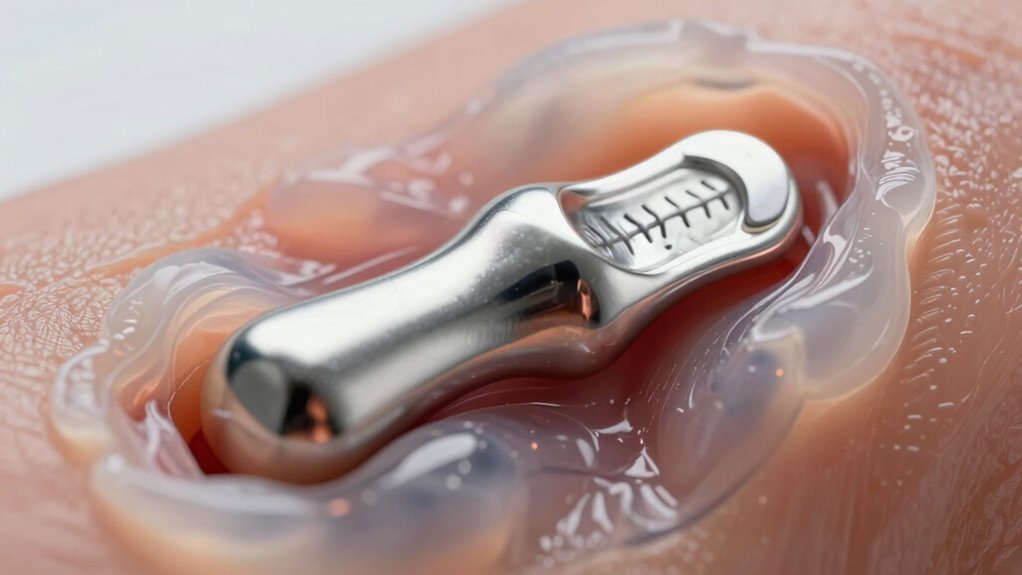

Bioresorbable metals are crucial in medicine because they provide temporary support that naturally dissolves as your body heals, eliminating the need for additional surgeries. Controlling how quickly they degrade helps guarantee they maintain strength during healing and avoid long-term complications. Advances in nanostructure, alloying, and surface chemistry improve their performance and biocompatibility. If you want to find out how these innovations make bioresorbable metals safer and more effective, keep exploring the latest research.
Key Takeaways
- Controlled dissolution prevents premature failure and ensures the implant supports tissue healing throughout recovery.
- Predictable degradation profiles minimize long-term complications and adverse immune responses.
- Proper timing of bioresorption reduces the need for additional surgeries to remove hardware.
- Nanostructure optimization enhances corrosion control, balancing mechanical support with safe degradation.
- Tailoring surface chemistry and alloying improves biocompatibility and ensures safe interaction with the body.
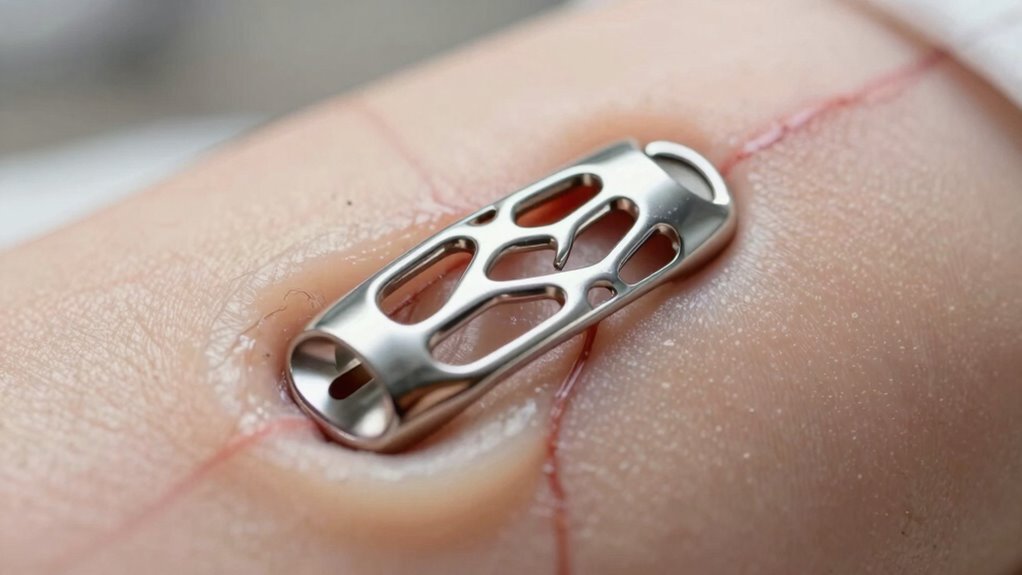
Bioresorbable metals are transforming medicine by offering innovative solutions for temporary implants that naturally dissolve in the body. These metals remove the need for additional surgeries to remove hardware, reducing patient discomfort and recovery time. To maximize their effectiveness, researchers focus on nanostructure optimization, which involves refining the metal’s internal architecture at the nanoscale. By controlling grain size and creating nanostructured surfaces, you can markedly improve the mechanical properties of these metals, making them strong enough to support tissues during healing but capable of degrading safely afterward. Nanostructure optimization also influences how the metals interact with biological tissues, ensuring they remain stable long enough to serve their purpose while dissolving at the appropriate rate.
Biocompatibility enhancement plays a critical role in making these metals suitable for medical use. You want to guarantee that the implants do not trigger adverse immune responses or toxicity. Achieving high biocompatibility involves surface modifications and alloying techniques that reduce corrosion rates and prevent harmful byproducts. When the metal’s surface is optimized to promote cellular adhesion and tissue integration, your implants become more effective and safer. These improvements not only support the healing process but also prevent complications like inflammation or allergic reactions. By carefully tailoring the metal’s surface chemistry and structure, you help the material interact harmoniously with the body’s natural environment. Additionally, understanding the corrosion behavior of bioresorbable metals helps researchers develop more predictable degradation profiles, ensuring the implants perform as intended throughout the healing process. Incorporating nanostructure optimization can significantly influence these corrosion characteristics, leading to more reliable outcomes. Recognizing the importance of biocompatibility can help ensure these materials are both safe and effective during their therapeutic lifespan. Moreover, ongoing studies in metal alloying techniques aim to further enhance their performance and safety profiles. A comprehensive understanding of degradation mechanisms is essential for designing materials that balance strength and bioresorption effectively.
As an affiliate, we earn on qualifying purchases.
Frequently Asked Questions
How Long Do Bioresorbable Metals Typically Last in the Body?
Bioresorbable metals typically last from a few months to a couple of years, depending on degradation mechanisms and material stability. You’ll find that factors like the alloy composition and the body’s environment influence how quickly the metal dissolves. As the metal degrades, it gradually loses strength and stability, allowing your body to safely absorb it over time without long-term residue.
Are There Specific Metals Preferred for Bioresorbable Medical Applications?
Think of bioresorbable metals as the reliable friends of medicine, with magnesium and zinc often taking the spotlight. You prefer these metals because they balance material degradation and mechanical strength well, ensuring implants support your body only as long as needed. Magnesium, in particular, is appreciated for its biocompatibility and predictable degradation rate, making it an ideal choice for temporary medical applications where controlled disappearance is vital.
What Are the Safety Concerns Associated With Bioresorbable Metals?
You should be aware that safety concerns with bioresorbable metals include biocompatibility issues, such as potential toxicity from metal ions released during degradation. Additionally, environmental impact is a concern if large quantities of these metals aren’t properly managed after use. Ensuring the metals break down safely without harming tissues or ecosystems is essential. Proper material design and regulation help mitigate these risks, making these metals safer for medical applications.
How Do Bioresorbable Metals Compare Cost-Wise to Traditional Implants?
Bioresorbable metals tend to be more cost-effective over time compared to traditional implants, mainly due to their potential to reduce surgery and follow-up costs. While initial prices might be higher, their cost sustainability improves with market adoption, which encourages mass production and innovation. As more healthcare providers adopt these materials, manufacturing costs decrease, making bioresorbable metals a more economically viable option for patients and medical institutions alike.
Can Bioresorbable Metals Be Used in All Types of Medical Devices?
Imagine you need a temporary bone fixation device; bioresorbable metals could be an option. While they’re versatile, they aren’t suitable for all medical devices due to concerns about material durability and patient compatibility. You’ll find they work well in certain implants like stents, but for long-term, load-bearing applications, traditional materials may still be better. So, their use depends on the specific device requirements and patient needs.
Conclusion
Imagine a future where your medical implants seamlessly dissolve when no longer needed, eliminating the need for removal surgeries. Bioresorbable metals make this possible by safely disappearing inside your body, reducing complications and improving recovery. While some skeptics doubt their long-term stability, ongoing research suggests these metals could revolutionize medicine. If proven true, controlled disappearance could truly transform patient care, making treatments safer, more efficient, and less invasive—truly a game-changer in healthcare.