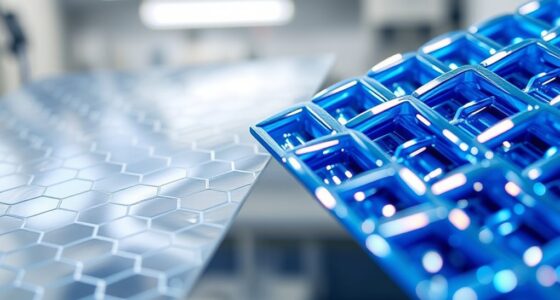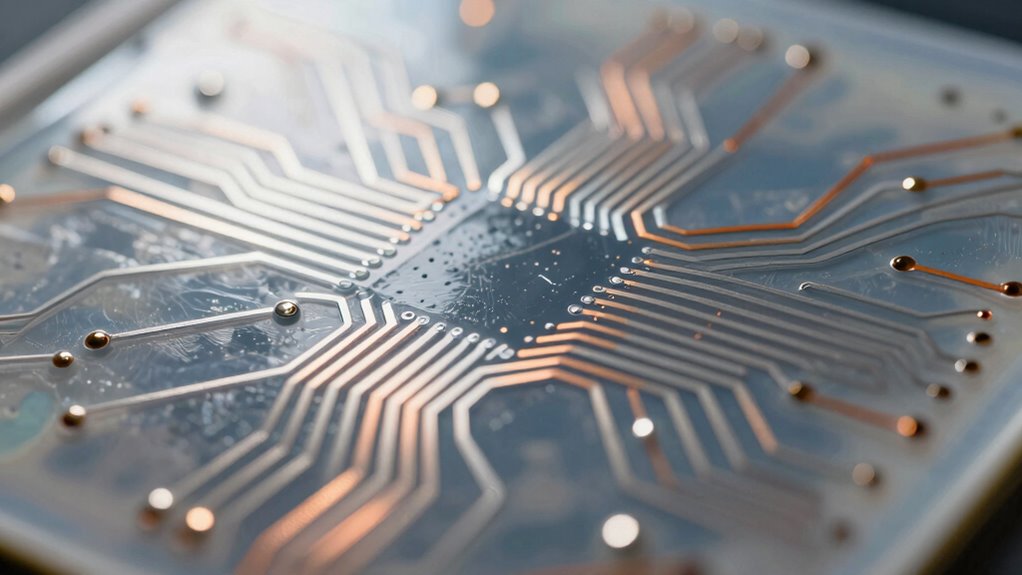

Understanding the chemistry behind conductive inks helps you grasp how tiny nanoparticles, like silver or carbon, stay evenly dispersed and form reliable electronic pathways. Factors like particle size, surface modifications, and formulation stability influence conductivity, adhesion, and durability. Surfactants and polymers enhance nanoparticle stability and bonding to surfaces, ensuring long-lasting performance even in flexible or complex applications. Keep exploring, and you’ll uncover the key principles that make printed electronics work seamlessly.

Prime made for students and young adults
- Fast, free delivery for dorm and study essentials
- Prime Video and Amazon Music included
- Member-only deals
Key Takeaways
- Nanoparticle stability in conductive inks prevents aggregation, ensuring consistent electrical properties and long-term durability.
- Particle size and distribution directly influence ink conductivity, print quality, and stability.
- Chemical interactions between ink components and substrates affect adhesion, electrical performance, and formulation stability.
- Surface modifications enhance nanoparticle adhesion and compatibility with various substrates, improving mechanical and electrical integrity.
- Optimized chemistry in conductive inks enables reliable performance in flexible electronics, sensors, and wearable devices.
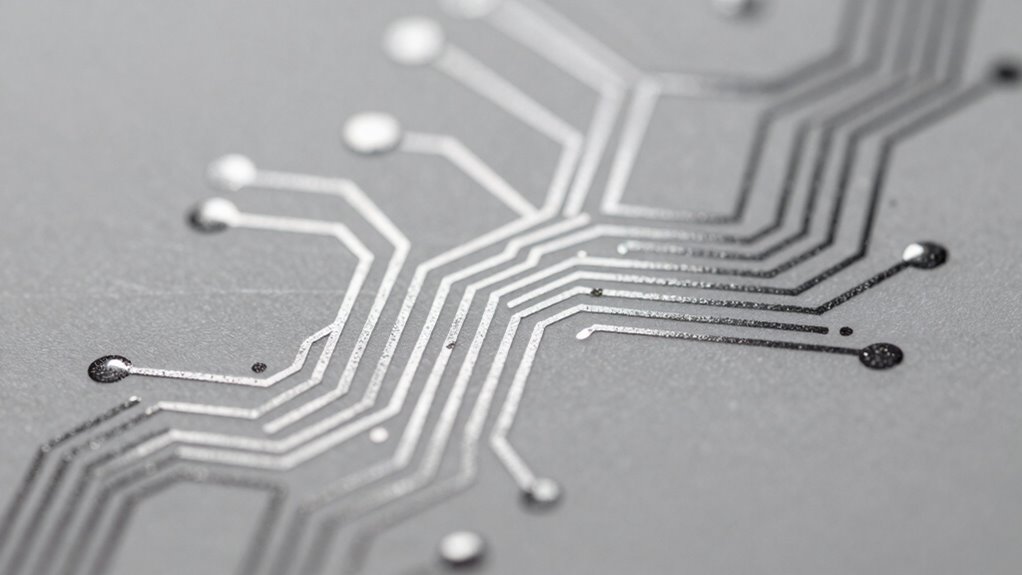
Conductive inks are specialized materials that enable the transfer of electrical signals onto various surfaces, making them indispensable in flexible electronics, sensors, and wearable devices. Their effectiveness depends heavily on the chemistry that keeps them functional and dependable during use. One key aspect is nanoparticle stability, which guarantees that the tiny particles within the ink stay evenly dispersed and don’t clump together. When nanoparticles are stable, the ink maintains consistent conductivity over time and through multiple printing cycles. This stability is achieved through the use of surfactants, stabilizers, or surface modifications that prevent particles from aggregating, guaranteeing the ink remains homogenous and conductive. nanoparticle stability is particularly crucial in ensuring the long-term durability of printed electronics, especially in environments subject to mechanical stress or exposure to moisture. Additionally, controlling the particle size and distribution during formulation enhances the overall performance of the conductive ink, ensuring reliable operation in practical applications. Proper formulation also involves understanding the chemical interactions between ink components and substrates, which can significantly influence the final electrical and mechanical properties. Developing inks with optimized rheological properties is essential for achieving precise printing and consistent layer formation, especially on complex or textured surfaces.
Alongside nanoparticle stability, adhesion enhancement plays a fundamental role in the success of conductive inks. When you print on diverse surfaces—like plastics, textiles, or glass—you want the ink to bond securely without peeling or cracking. Achieving strong adhesion involves formulating the ink with binders or polymers that interact effectively with the substrate. This guarantees the conductive traces stay intact during bending, stretching, or washing, which is essential for wearable electronics and flexible devices. Proper adhesion also helps maintain electrical integrity over time, especially in dynamic environments. The chemistry behind adhesion enhancement often involves tailoring the ink’s surface chemistry to match the substrate’s properties, creating a molecular bond that’s both strong and flexible. Additionally, advancements in surface chemistry now enable the development of inks that combine high nanoparticle stability with excellent adhesion, opening doors to more reliable and versatile printed electronics. Whether you’re designing flexible circuits, touch sensors, or smart textiles, understanding these underlying chemical principles helps you choose or develop inks that perform effectively under your specific application requirements.
conductive ink for printed electronics
As an affiliate, we earn on qualifying purchases.
As an affiliate, we earn on qualifying purchases.
Frequently Asked Questions
How Do Conductive Inks Compare to Traditional Wiring in Durability?
Conductive inks are generally less durable than traditional wiring, especially regarding material adhesion and long-term wear. They can crack or peel over time if the ink’s conductivity isn’t maintained or if the substrate isn’t ideal. However, advances in ink formulations improve conductivity and adhesion, making printed electronics more reliable. Still, for high-stress environments, traditional wiring often outperforms conductive inks in durability.
Are Conductive Inks Environmentally Friendly and Recyclable?
Sure, conductive inks are eco-friendly—if you ignore their recycling challenges. They often boast eco-friendly formulations, reducing harmful waste, but recycling printed electronics with these inks isn’t always straightforward. You might think they’re completely green, yet disposing of or reusing printed circuits can be tricky. So, while they seem environmentally promising, the truth is that recycling challenges still hinder their full eco-friendly potential.
What Are the Limitations of Conductive Inks in High-Temperature Applications?
You’ll find that conductive inks struggle with high-temperature applications because they often lack sufficient high-temperature stability, which can cause the ink to degrade or lose conductivity. Material compatibility also becomes an issue, as some inks aren’t compatible with substrates exposed to heat, leading to delamination or cracking. To overcome these limitations, you need formulations specifically designed for high-temperature stability and compatibility with diverse materials, ensuring durability in demanding environments.
How Do Different Substrate Materials Affect Ink Performance?
Imagine your substrate as a stage where your ink performs; its material determines how well your ink shines. You need to contemplate substrate compatibility, ensuring the ink adheres and conducts effectively. Surface treatment acts as a gentle whisper, preparing the stage for ideal performance. Different substrates—glass, plastic, or paper—each influence ink flow and conductivity, making proper selection and treatment essential for reliable printed electronics.
Can Conductive Inks Be Used for Flexible or Wearable Electronics?
Yes, conductive inks work well for flexible or wearable electronics. You’ll want to choose flexible substrates like plastics or textiles, which can bend without damaging the ink. Opt for specialized ink formulations that remain conductive and adhere properly when flexed or stretched. By tailoring both the substrate and ink properties, you can create durable, flexible electronic components perfect for wearable tech and other bendable devices.
Conclusion
As you explore the world of conductive inks, think of them as the brushstrokes that paint the future of electronics. Their chemistry transforms simple inks into electric highways, forging connections where once there were gaps. By mastering this art, you hold the power to craft flexible, innovative devices that dance to the tune of your creativity. Embrace this vibrant frontier, and let your ideas spark a new wave of printed innovations.
Halloween Picks
halloween
As an affiliate, we earn on qualifying purchases.