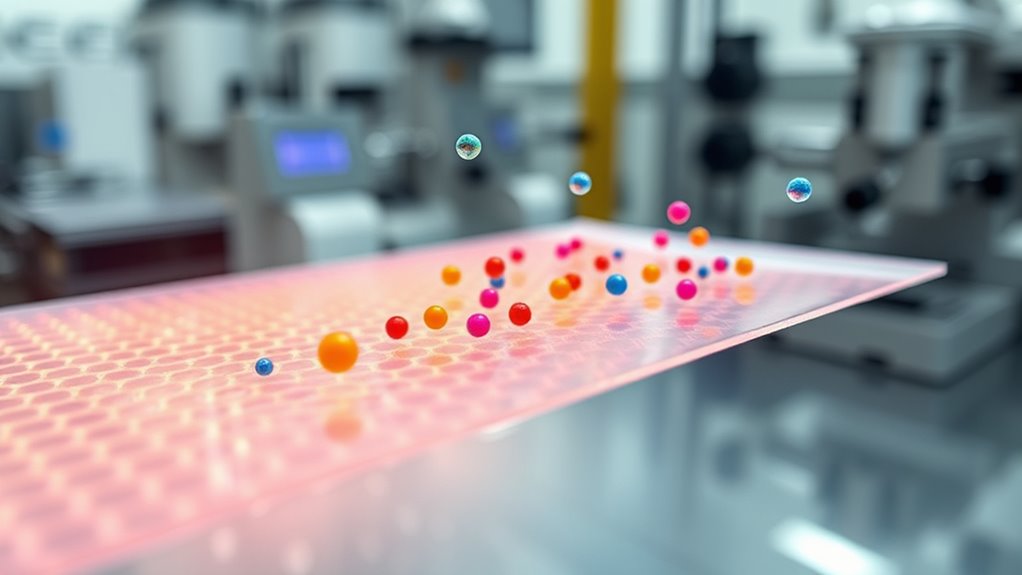

When choosing gas-separation membranes, you’ll find that higher selectivity improves the membrane’s ability to distinguish between gases, while higher permeability allows more gas to pass through faster. However, these properties typically oppose each other—boosting one often reduces the other. Finding the right balance depends on your specific process needs, whether prioritizing purity or flow rate. To understand how to optimize these trade-offs for your application, keep exploring more details.

Prime made for students and young adults
- Fast, free delivery for dorm and study essentials
- Prime Video and Amazon Music included
- Member-only deals
Key Takeaways
- Selectivity measures a membrane’s ability to distinguish and separate specific gases from others.
- Permeability indicates the rate at which gases pass through the membrane material.
- Improving permeability often results in decreased selectivity, creating a performance trade-off.
- Balancing selectivity and permeability depends on application needs and membrane material properties.
- Innovative membrane designs aim to optimize both properties for efficient gas separation systems.
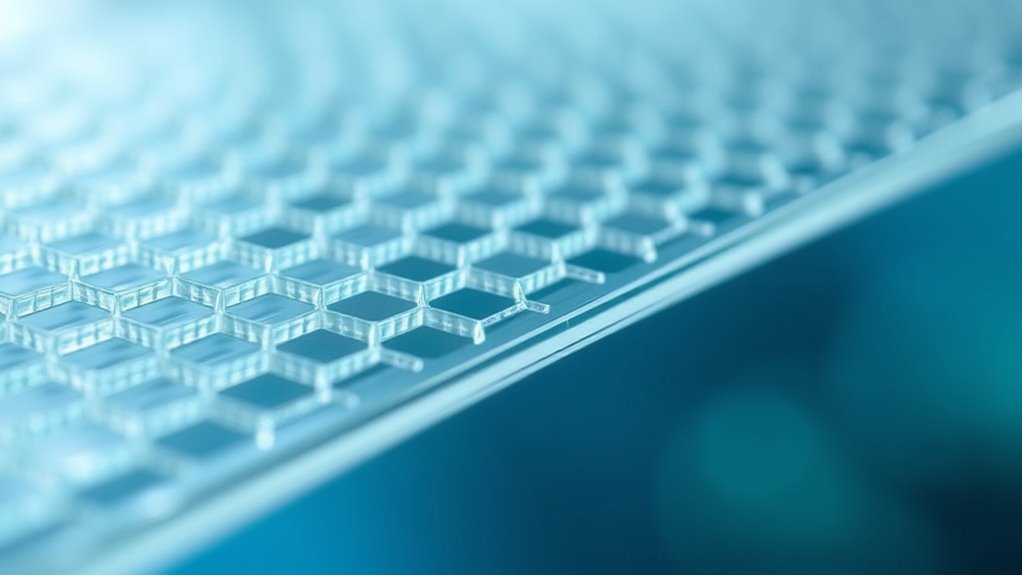
Have you ever wondered how gases are efficiently separated in industrial processes? It all comes down to membranes, which act as selective barriers allowing certain gases to pass while blocking others. The key to their effectiveness lies in the membrane materials used and how well they balance performance trade-offs. When selecting membrane materials, you need to consider how the materials influence both selectivity and permeability—two crucial but often competing properties. High selectivity means the membrane can distinguish between gases with great precision, ensuring that only the desired molecules pass through. Permeability, on the other hand, determines how quickly gases can diffuse across the membrane. Achieving a perfect balance between these two is essential because enhancing one often diminishes the other. For example, a membrane with very high selectivity may have low permeability, leading to slower gas flow rates that aren’t practical for large-scale operations. Conversely, a membrane with high permeability might allow gases to pass too freely, reducing its ability to discriminate between different molecules. This trade-off is fundamental in designing effective gas-separation systems.
Different membrane materials are engineered to optimize this balance. Polymer-based membranes are popular due to their ease of fabrication and tunable properties, but they often face performance trade-offs—improving permeability might sacrifice some selectivity. In contrast, inorganic membranes, such as ceramic or metal-based types, tend to offer better stability and higher selectivity but can be more costly and fragile. Researchers continually explore innovative materials like mixed-matrix membranes, which combine polymers with inorganic particles, aiming to enhance both permeability and selectivity simultaneously. However, even with advanced materials, the performance trade-offs persist, requiring engineers to tailor membranes to specific applications. For instance, natural gas processing demands membranes that prioritize high selectivity for methane over other hydrocarbons, while industrial exhaust treatment might emphasize permeability to handle large volumes efficiently.
Understanding the performance trade-offs involved in membrane design is essential for developing efficient separation systems. Ultimately, understanding the interplay between membrane materials and the performance trade-offs they entail helps you make informed choices in membrane design. It’s about finding that sweet spot where the membrane efficiently separates gases at a practical rate without sacrificing the necessary purity. No single material excels in all areas; instead, the goal is to engineer membranes that align with your specific separation needs. By grasping these fundamental principles, you can better appreciate how the right membrane material and an understanding of performance trade-offs enable efficient, cost-effective gas separation in various industrial processes.
As an affiliate, we earn on qualifying purchases.
Frequently Asked Questions
How Do Temperature Variations Affect Membrane Selectivity and Permeability?
Temperature variations impact membrane selectivity and permeability by affecting thermal stability and molecular diffusion. As temperature rises, permeability generally increases because molecules diffuse faster through the membrane. However, higher temperatures can reduce selectivity if the membrane’s thermal stability isn’t maintained, allowing unwanted gases to pass through. Conversely, lower temperatures slow diffusion, maintaining selectivity but decreasing overall permeability. You should consider these effects when optimizing membrane performance for specific applications.
What Are the Environmental Impacts of Membrane Manufacturing and Disposal?
You should consider that membrane manufacturing and disposal impact the environment through their environmental footprint, including energy use and chemical waste. Recycling methods can help minimize waste and reduce pollution, but they’re not always widely available or effective. By choosing eco-friendly materials and proper disposal techniques, you can lessen the environmental impact, promoting sustainability in the membrane industry and protecting ecosystems from harmful substances.
Can Membranes Be Tailored for Specific Industrial Gas Separation Applications?
You can definitely tailor membranes for specific industrial gas separation applications through membrane customization and application-specific design. By adjusting materials, pore sizes, and surface properties, you guarantee ideal selectivity and permeability for your target gases. This customization enhances efficiency and performance, allowing you to meet unique industrial needs. It’s a strategic way to improve separation processes, reduce energy consumption, and achieve better operational outcomes tailored precisely to your application.
How Do Membrane Fouling and Aging Influence Long-Term Performance?
Fouling and aging are like silent saboteurs that slowly choke your membrane’s performance. They cause decline by blocking pores and degrading materials. To keep your system running smoothly, regular membrane regeneration and fouling mitigation strategies are essential. These steps help remove accumulated contaminants and prolong membrane life, ensuring consistent separation efficiency and preventing costly replacements. Stay vigilant, and your membranes will continue to perform like a well-oiled machine.
What Are the Latest Advancements in Membrane Materials for Higher Efficiency?
You should explore recent nanomaterial innovations and polymer modifications that enhance membrane efficiency. These advancements improve selectivity and permeability, allowing for better separation performance. By integrating nanomaterials like carbon nanotubes or graphene oxide, you can boost membrane durability and flux. Polymer modifications, such as cross-linking or functionalization, further optimize performance. Staying updated on these innovations helps you develop membranes that are more efficient, durable, and suited for complex gas separation tasks.
Conclusion
Think of gas-separation membranes as a finely tuned filter, balancing selectivity and permeability like a tightrope walker. While you can’t have both perfect, understanding their trade-off helps you choose the right membrane for your needs. By optimizing these properties, you’re crafting a gateway that’s both precise and efficient—like a key fitting perfectly into its lock. Mastering this balance guarantees your process runs smoothly, turning complex separation tasks into simple, confident steps.
Fall Picks
fall essentials
As an affiliate, we earn on qualifying purchases.