High-entropy alloys and ceramics are advanced materials made from multiple principal elements in roughly equal amounts, creating complex atomic structures. This atomic stability grants them exceptional strength, corrosion resistance, and thermal performance, ideal for demanding environments. However, manufacturing these materials is challenging, often requiring advanced techniques to guarantee uniformity and prevent defects. If you want to understand how innovative processes help overcome these hurdles, you’ll find more details that could inspire new applications.
Key Takeaways
- High-entropy alloys and ceramics consist of multiple principal elements, resulting in complex atomic structures with unique properties.
- Atomic stability in these materials is crucial for durability, corrosion resistance, and long-term performance.
- Manufacturing challenges include achieving uniform mixing, preventing phase separation, and controlling processing conditions.
- Advanced techniques like rapid solidification and powder metallurgy are used, but scalability remains a hurdle.
- Optimizing atomic stability and processing methods unlocks the potential for high-performance applications in aerospace, nuclear, and industrial sectors.
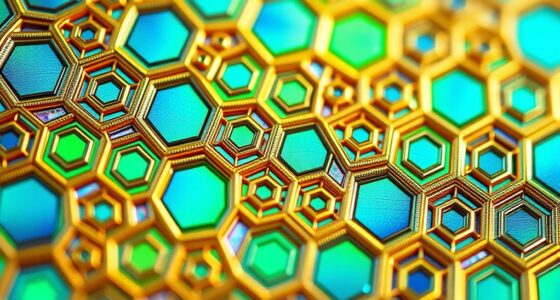
High-entropy alloys and ceramics are innovative materials that challenge traditional notions of composition and structure. Instead of relying on one or two primary elements, these materials are made from multiple principal elements, often five or more, mixed in roughly equal proportions. This complex composition leads to unique properties, but it also presents significant challenges. One of the key factors influencing their potential is atomic stability. Because these alloys and ceramics contain many different atoms, ensuring that each element remains uniformly distributed and stable at the atomic level becomes critical. Atomic stability directly impacts their durability, corrosion resistance, and overall performance. If the atoms don’t stay evenly mixed or tend to segregate over time, the material’s properties can degrade, defeating the purpose of their complex design. Achieving this stability requires careful control of the alloy’s or ceramic’s composition and processing conditions, which can be quite demanding. Additionally, understanding atomic interactions is essential for predicting and improving stability in these materials.
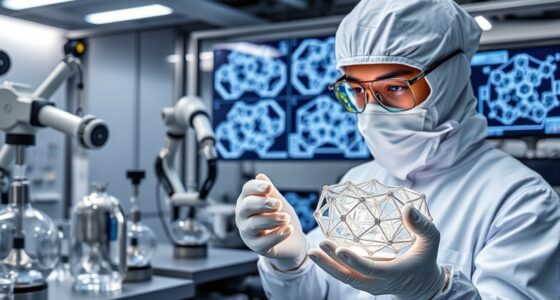
Manufacturing these advanced materials involves overcoming notable challenges. The complexity of their composition makes traditional manufacturing techniques insufficient or inefficient. For high-entropy alloys, melting and solidifying multiple elements simultaneously can lead to issues such as uneven mixing, segregation, or the formation of unwanted phases. Advanced techniques like rapid solidification, powder metallurgy, or high-energy ball milling are often necessary to produce a uniform, defect-free material. These methods can be costly and require specialized equipment, which increases the difficulty and limits scalability. For ceramics, the challenge is even greater. The high melting points and chemical incompatibilities among the constituent elements complicate synthesis. Precise control over temperature, atmosphere, and cooling rates is essential to prevent phase separation or unwanted reactions. Additionally, consolidating these powders into dense, strong ceramics without introducing cracks or porosity demands meticulous processing.
Despite these manufacturing challenges, the potential benefits of high-entropy alloys and ceramics motivate ongoing research. Their atomic stability can lead to materials with exceptional strength, corrosion resistance, and thermal stability. These properties make them attractive for aerospace, nuclear, and industrial applications where conventional materials fall short. However, to fully realize their promise, you need to address manufacturing hurdles by developing innovative processing techniques, optimizing compositions, and gaining a deeper understanding of atomic interactions. As you progress in this field, you’ll find that balancing atomic stability with manufacturability remains the key to *unveiling* the full potential of high-entropy materials.
Frequently Asked Questions
What Are the Most Common Applications of High-Entropy Ceramics?
You’ll find high-entropy ceramics mainly used in biomedical implants and thermal barrier coatings. Their unique properties make them ideal for implants, as they offer excellent biocompatibility and durability. In thermal barrier coatings, they provide superior thermal insulation and resistance to corrosion. These applications benefit from the ceramics’ stability under extreme conditions, helping to improve the lifespan and performance of medical devices and high-temperature components.
How Do High-Entropy Alloys Compare in Cost to Traditional Alloys?
You might find that high-entropy alloys generally have higher manufacturing costs compared to traditional alloys, mainly due to their complex production processes. However, their enhanced properties often lead to longer-lasting, more reliable components, which can offset initial expenses over time. This cost comparison suggests that, while they may require a bigger upfront investment, the overall value and performance benefits can make them a smart choice in demanding applications.
Can High-Entropy Materials Be Recycled or Reused Effectively?
Yes, you can recycle high-entropy materials, but recycling challenges exist due to their complex composition. You need effective sorting and processing methods to separate the various elements. To improve sustainability, focus on developing innovative recycling strategies that address these challenges. This way, you can reuse these materials more efficiently, reducing waste and making their lifecycle more sustainable, ultimately supporting eco-friendly practices in material management.
What Are the Environmental Impacts of Producing High-Entropy Ceramics?
Producing high-entropy ceramics impacts the environment mainly through resource extraction, which can deplete natural resources and cause habitat disruption. A thorough life cycle assessment reveals energy-intensive manufacturing processes that generate emissions and waste. To minimize these effects, you should prioritize sustainable sourcing, improve manufacturing efficiency, and explore recycling methods. By doing so, you reduce environmental footprints and promote more eco-friendly production of high-entropy ceramics.
How Do Temperature Fluctuations Affect the Stability of High-Entropy Alloys?
Temperature fluctuations can considerably impact the thermal stability of high-entropy alloys. When temperatures change rapidly, they may induce phase transformations that compromise alloy integrity, leading to weakening or embrittlement. You need to monitor these fluctuations closely, as they can trigger unwanted phase changes, reducing the alloy’s durability. Maintaining consistent temperatures helps preserve the alloy’s stability, ensuring it performs reliably under varying thermal conditions.
Conclusion
You might think high-entropy alloys and ceramics are too complex for practical use, but their unique properties actually make them highly versatile. By embracing their complexity, you discover materials that are stronger, more durable, and better suited for extreme conditions. Don’t dismiss them as too advanced—your innovations could benefit greatly from these cutting-edge materials. Once you understand their potential, you’ll see how they can transform industries and push the boundaries of what’s possible.