
Using incorrect temperature settings in your refrigerated centrifuge can quietly sabotage your experiments by causing sample degradation or inconsistent results, often without obvious signs. Even slight deviations from ideal temperatures can compromise biological materials like DNA, proteins, or cells, leading to unreliable data and wasted time. Proper temperature control is vital for reliable separation and preserved sample integrity. To avoid these hidden pitfalls, understanding how to optimize your device is essential—more tips are just ahead.
Key Takeaways
- Incorrect temperature settings can cause sample degradation, leading to unreliable or compromised experimental results.
- Fluctuations or improper calibration may silently damage sensitive biological samples during centrifugation.
- Overly cold or unstable temperatures disrupt sample integrity, affecting separation quality and reproducibility.
- Poor temperature control increases the risk of enzyme activity loss and cellular component damage.
- Consistent, accurate temperature management is essential to prevent quietly wrecking centrifuge runs and wasting resources.
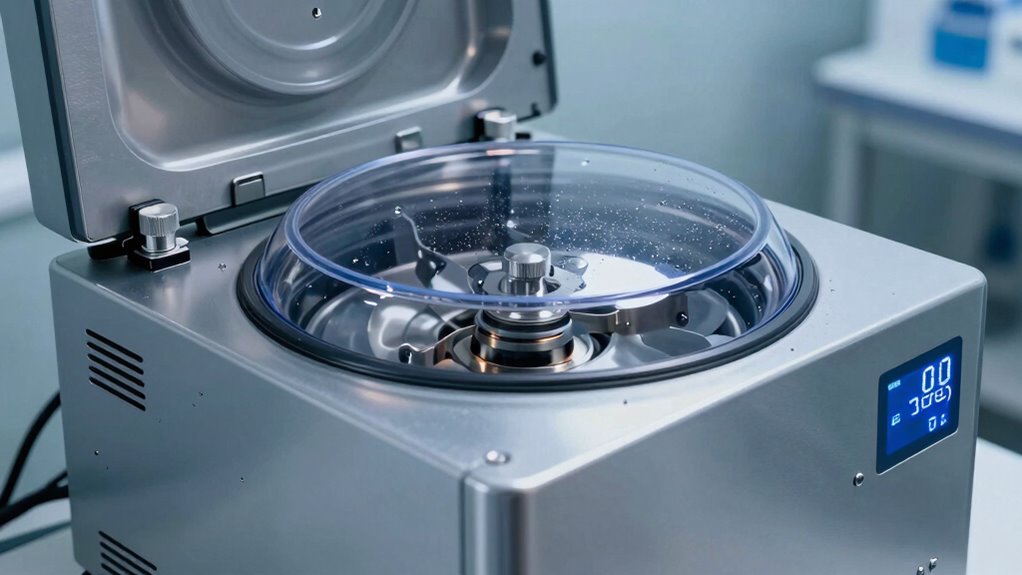
Have you ever wondered how scientists separate samples quickly and accurately while keeping them cool? It all comes down to the clever design and operation of refrigerated centrifuges. These machines are essential in laboratories for isolating components like DNA, proteins, or cells without compromising their integrity. The key to their efficiency lies in their ability to maintain temperature stability during high-speed spins. When you set the temperature correctly, the centrifuge runs smoothly, ensuring reliable results. But if the temperature is off, even slightly, it can quietly wreck the entire process—delaying experiments, damaging samples, and wasting valuable resources. That’s why understanding how temperature settings impact performance is so critical.
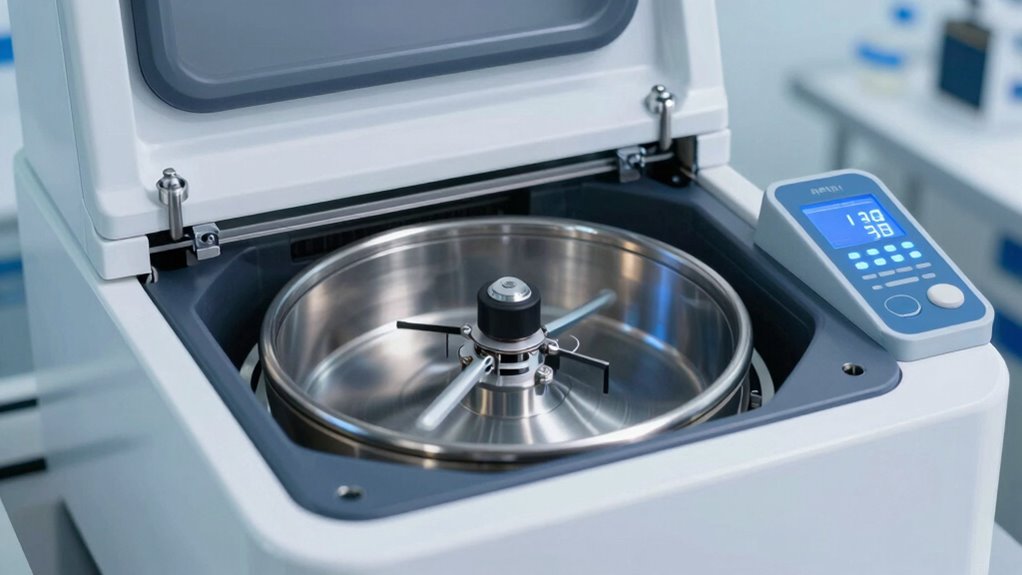
Refrigerated centrifuges are engineered with insulation and cooling systems that work in tandem to keep samples at precise temperatures, often ranging from just above freezing to room temperature. This temperature stability isn’t just about convenience; it’s about preserving the biological activity of delicate samples. When samples are kept consistently cool, enzymes don’t degrade, and cellular components remain intact. This consistency directly translates to more accurate, reproducible results. If the temperature fluctuates during operation, it can trigger unwanted reactions or sample degradation, leading to unreliable data and potential setbacks in research projects. Moreover, advancements in energy-efficient cooling mechanisms continue to improve the sustainability of these devices, reducing their environmental footprint.
Energy efficiency is another essential aspect of these centrifuges. Modern models incorporate advanced cooling mechanisms that minimize power consumption while maintaining perfect temperature stability. By optimizing the cooling cycle and reducing unnecessary energy expenditure, these machines not only save you money on electricity bills but also lessen environmental impact. Energy-efficient refrigerated centrifuges typically feature smart controls and insulation that keep the system running smoothly without overworking the compressor or cooling fans. This balance ensures the equipment uses just enough energy to keep samples cool without waste.
When you’re setting up a centrifuge run, it’s tempting to focus solely on speed and duration. However, neglecting the importance of the temperature setting can lead to issues that are hard to detect immediately. Proper temperature control ensures your samples stay stable throughout the process, leading to cleaner separations and fewer repeat runs. Plus, energy-efficient designs mean you’re doing your part in conserving resources.
In short, understanding how temperature stability and energy efficiency influence the operation of refrigerated centrifuges is essential. They quietly work behind the scenes to ensure your samples are protected, your results are accurate, and your lab runs smoothly. When you respect and optimize these factors, you maximize the centrifuge’s performance and safeguard your valuable research.
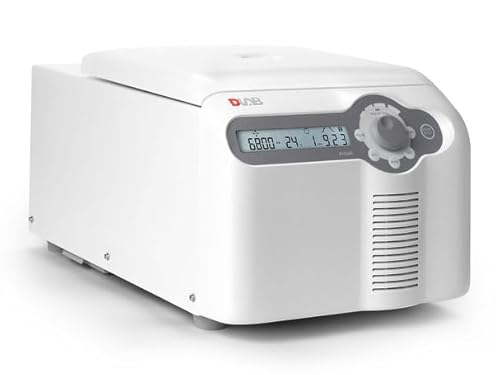
DLAB 9013111121 High Speed Refrigerated Micro-Centrifuge, with Automatic Chamber Lock, Customizable Programs
DLAB 9013111121 High Speed Refrigerated Micro-Centrifuge, with automatic chamber lock, customizable programs, adjustable acceleration/deceleration and other upgrades, with…
As an affiliate, we earn on qualifying purchases.
As an affiliate, we earn on qualifying purchases.
Frequently Asked Questions
How Does Temperature Affect Centrifuge Sample Integrity?
You need to pay close attention to temperature settings because they directly impact sample stability. If the temperature fluctuates, your samples may degrade or become inconsistent, risking inaccurate results. Maintaining a stable, appropriate temperature guarantees your samples stay intact throughout centrifugation. Avoiding temperature fluctuations is vital for reliable data, so double-check your settings and monitor the environment to keep your samples in ideal condition.
What Safety Precautions Are Necessary When Setting Temperatures?
You need to guarantee temperature stability by double-checking the settings before starting your centrifuge. Always wear appropriate personal protective equipment to safeguard user safety, especially when handling potentially hazardous samples. Keep the lid secure and avoid abrupt temperature changes that could cause sample disruption or equipment damage. Regularly calibrate your device and follow manufacturer instructions to prevent accidents and maintain ideal performance. Prioritize safety and precision in every run.
Can Temperature Settings Be Customized for Different Protocols?
You can customize temperature settings for different protocols, and it’s often essential for ideal results. Investigate the truth of this by reviewing sample protocols, which frequently specify precise temperatures. Adjusting the temperature allows you to control sample conditions, ensuring consistency and accuracy. Always verify the recommended settings for each protocol, and remember to log your adjustments to maintain proper documentation and avoid compromising future runs.
How Often Should Temperature Calibration Be Performed?
You should perform temperature calibration at least every six months to prevent temperature drift, which can affect your centrifuge’s accuracy. Regular calibration guarantees consistent performance, especially if you notice fluctuations or if the device is frequently used. Keep an eye on temperature stability and schedule calibrations more often if environmental conditions change or if your runs demand high precision. Consistent calibration helps maintain reliable, accurate results over time.
What Are the Signs of Temperature Malfunctions During Operation?
You’ll notice temperature malfunctions if your centrifuge’s samples thaw or freeze unexpectedly, or if the display shows inconsistent readings. During operation, keep an eye out for unusual noises or vibrations. Regular equipment maintenance and user training help you identify these issues early. If you observe these signs, stop the run, check calibration, and consult the manufacturer’s guidelines to prevent damage and guarantee reliable results.
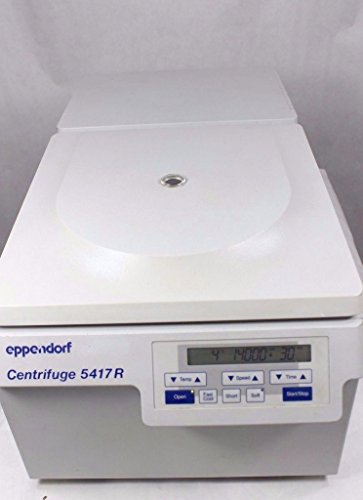
Refrigerated Eppendorf 5417R Benchtop Lab Centrifuge
Temperature range from –9°C to 40°C
As an affiliate, we earn on qualifying purchases.
As an affiliate, we earn on qualifying purchases.
Conclusion
Remember, the temperature setting in your refrigerated centrifuge isn’t just a number; it’s the silent force behind your results. It can preserve, it can destroy, it can make or break your experiments. Pay attention, double-check, and never overlook its power. Because in science, as in life, the smallest details can quietly wreck your runs or quietly make them succeed. Stay vigilant, stay precise, and let your careful choices lead to consistent success.

LAB FISH Professional Gel Heating Machine, 1ml/2.5ml/5ml Capacity Dry Bath Incubator Plate, PRP PPP Maker Heater with Precise Temperature Control for Plasma Gel Processing
【Precise & Stable Heating】 Delivers laboratory-grade temperature control from ambient+5°C to 100°C with excellent stability of ±0.5°C and…
As an affiliate, we earn on qualifying purchases.
As an affiliate, we earn on qualifying purchases.

Ohaus Frontier 5306 Mini Centrifuge Machine, Laboratory Benchtop Centrifuge for Sample Separation, Dual Safety Switch, Quiet Operation, Simple Controls, 2 Rotor Options, 6000 RPM
Compact Design: Compact and versatile benchtop mini centrifuge for laboratory applications, suitable for quick liquid separation and everyday…
As an affiliate, we earn on qualifying purchases.
As an affiliate, we earn on qualifying purchases.