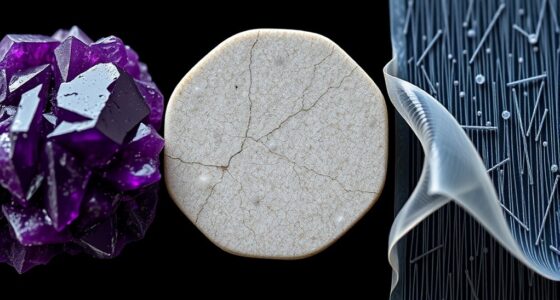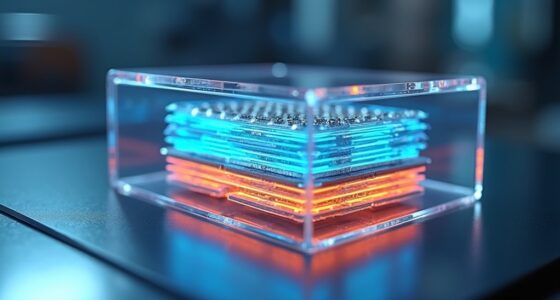
High-temperature polymers like PEEK and PEI are designed to endure extreme heat without losing strength or durability. You’ll find them in demanding fields like aerospace, electronics, and automotive industries due to their high thermal stability and excellent mechanical properties. Advanced synthesis methods help improve their performance and environmental profiles, making them more sustainable. If you want to discover how innovations are shaping these materials’ future, keep exploring the key developments and applications.
Key Takeaways
- High-temperature polymers like PEEK and PEI offer exceptional thermal stability and mechanical strength for demanding applications.
- Advanced synthesis techniques enable precise control over polymer structure, enhancing performance and durability.
- Environmental considerations include energy-intensive production and efforts toward greener, more sustainable manufacturing methods.
- Innovations such as copolymers and composites improve properties like chemical resistance and processability.
- Future developments focus on balancing high performance with sustainability through eco-friendly materials and recycling techniques.

High-temperature polymers are specialized materials designed to withstand extreme heat without degrading or losing their mechanical properties. When working with these advanced materials, understanding how they’re made and their environmental footprint becomes paramount. Advanced synthesis methods play a significant role in optimizing these polymers, allowing manufacturers to produce materials like PEEK and PEI with precise control over their structure and performance. These methods often involve complex chemical processes, such as step-growth polymerization or high-temperature melt processing, which enable the creation of polymers with high thermal stability and excellent mechanical strength. By refining these synthesis techniques, scientists can enhance the properties of high-temperature polymers, making them more suitable for demanding applications like aerospace, electronics, and automotive components. Additionally, ongoing research aims to develop greener production techniques for these polymers to reduce environmental impact.
High-temperature polymers like PEEK and PEI are optimized through advanced synthesis methods for demanding industrial applications.
However, as you explore these advanced materials, you should also consider their environmental impact. The production of high-temperature polymers typically involves energy-intensive processes, and some manufacturing steps may generate hazardous waste or emissions. For instance, the synthesis of PEEK often requires high-temperature reactions and the use of solvents or catalysts that can pose environmental risks if not managed properly. This calls for a focus on greener production methods, such as using alternative catalysts, reducing solvent use, or developing recycling techniques to minimize waste. You might also look into life cycle assessments to understand the full environmental footprint of these polymers—from raw material extraction to end-of-life disposal or recycling. As industries push for more sustainable practices, researchers are actively exploring biodegradable or more environmentally friendly variants of high-performance polymers, aiming to balance performance with ecological responsibility.
In addition to environmental considerations, advancements in synthesis methods have led to the development of copolymers and composites that further extend the capabilities of high-temperature polymers. These innovations not only improve thermal stability but also enhance properties like chemical resistance and processability, broadening their applications while potentially reducing environmental impact through longer-lasting materials. It is also noteworthy that self-reinforcing structures are being investigated to improve the mechanical performance and lifespan of these polymers, reducing the need for frequent replacement and waste generation. It’s important for you to stay informed about these advancements because they directly affect how you might select, process, and dispose of these materials in your work or projects.
Ultimately, the future of high-temperature polymers hinges on striking a balance between technological performance and environmental responsibility. By leveraging advanced synthesis methods and prioritizing sustainability, you can contribute to the development of materials that meet the demanding needs of modern industries while minimizing their ecological footprint. This ongoing evolution promises to deliver high-performance polymers that are both effective and environmentally conscious, aligning innovation with sustainability goals.
Frequently Asked Questions
How Do High-Temperature Polymers Compare to Metals in Strength?
High-temperature polymers often match or even surpass metals in strength while offering better polymer durability and corrosion resistance. Unlike metals, they’re lightweight and flexible, which lets you design more adaptable products. Although metals typically have higher tensile strength, polymers resist fatigue and maintain their integrity under extreme conditions. So, if you need strength combined with flexibility and durability, high-temperature polymers are a smart choice over traditional metals.
Are There Eco-Friendly Options Within High-Temperature Polymers?
Yes, eco-friendly options exist within high-temperature polymers. You can choose biodegradable polymers designed to break down more easily, reducing environmental impact. Recycled high-performance materials are also available, allowing you to reuse and repurpose existing polymers instead of producing new ones. These options help you maintain high performance while minimizing your ecological footprint, making sustainable choices more feasible in demanding applications.
What Are the Latest Advancements in High-Temperature Polymer Manufacturing?
You might worry about manufacturing challenges, but recent advancements make it easier. By integrating nanotechnology, manufacturers improve polymer properties and performance. Innovations in manufacturing processes, like additive manufacturing and continuous production methods, boost efficiency and reduce waste. These developments enable you to produce high-temperature polymers more sustainably and precisely, opening new application possibilities. Staying updated on these technological strides guarantees you leverage cutting-edge methods for superior, eco-conscious high-temperature polymer production.
How Do High-Temperature Polymers Perform in Extreme Chemical Environments?
You’ll find high-temperature polymers excel in extreme chemical environments because they offer exceptional chemical resistance and thermal stability. They resist degradation from aggressive chemicals, making them ideal for demanding applications. Their ability to maintain structural integrity under high heat ensures reliable performance, even in harsh conditions. This combination of chemical resistance and thermal stability means you can depend on these polymers for longevity and safety in challenging environments.
What Are the Cost Differences Between High-Temperature Polymers and Traditional Materials?
You’ll find that high-temperature polymers generally cost more than traditional materials due to higher manufacturing costs and specialized production processes. Their market pricing reflects these expenses, making them a premium choice for demanding applications. While their initial costs are higher, you often save in the long run through better performance, reduced maintenance, and longer service life, which can offset the higher upfront investment.
Conclusion
Think of high-temperature polymers like mighty fortress walls, standing strong against the relentless heat of battle. PEK, PEI, and their friends are your guardians, resisting the fiery onslaught while maintaining their integrity. As you explore these materials, remember they’re the unwavering shields in your technological arsenal, defying the odds and protecting your innovations. With these polymers, you build a future as resilient and enduring as a fortress that withstands any challenge thrown its way.