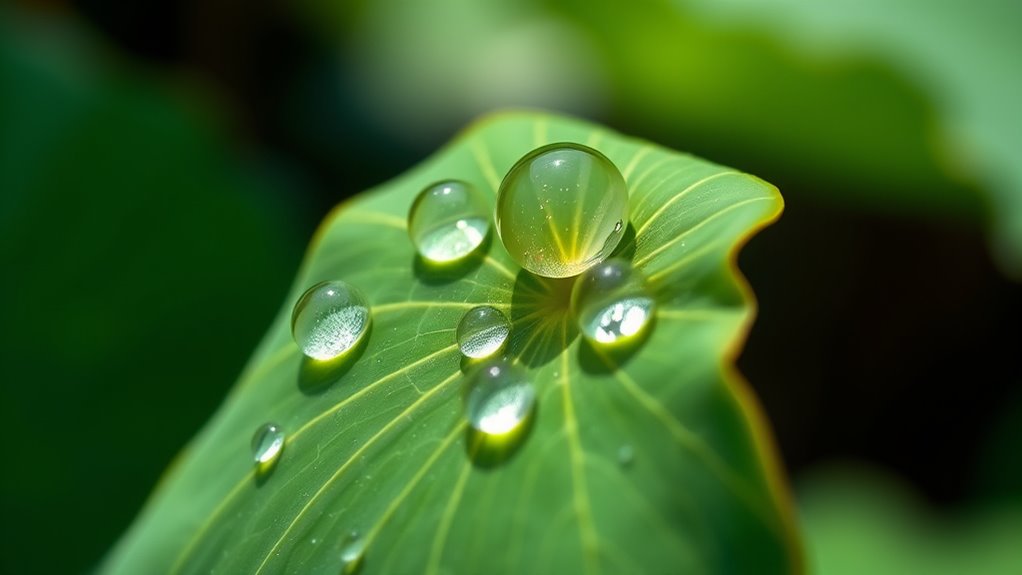

Superhydrophobic coatings replicate lotus leaves’ natural ability to repel water by combining micro- and nanoscale structures with low surface energy, causing water to bead up and roll off easily. This creates a protective layer that resists dirt, moisture, and corrosion, while also offering self-cleaning properties. Durability and proper surface preparation are key to long-term effectiveness. If you explore further, you’ll uncover how advances in nanotechnology improve these coatings and their real-world applications.
Key Takeaways
- Lotus leaves achieve superhydrophobicity through micro- and nanoscale structures that trap air, preventing water adhesion.
- Low surface energy materials mimic the lotus leaf’s natural water-repelling properties in coatings.
- The durability of lotus-inspired coatings depends on robust structural design and chemical composition.
- Proper surface preparation enhances the adhesion and effectiveness of lotus-inspired superhydrophobic coatings.
- Advances in nanotechnology are improving the longevity and environmental resilience of lotus leaf-inspired coatings.

Superhydrophobic coatings are innovative materials designed to repel water and other liquids, offering remarkable protection against corrosion, dirt, and moisture. Their effectiveness hinges on their ability to create a surface with extremely low surface energy. When you apply these coatings, you’re essentially reducing the surface energy of the material, making it difficult for water droplets to spread out and adhere. Instead, water beads up and rolls off effortlessly, carrying dirt and contaminants away in the process.
This low surface energy is a critical factor in achieving superhydrophobicity, mirroring the natural water-repellent properties of lotus leaves. The micro- and nanoscale structures on these coatings trap air, preventing water from making direct contact with the surface, therefore enhancing their water-repelling capabilities. These structures also contribute to the self-cleaning effect, which is a key advantage of superhydrophobic surfaces.
However, surface energy isn’t the only concern when it comes to superhydrophobic coatings; coating durability plays an equally *important* role. You want a coating that not only repels water effectively but also remains intact over time, even under harsh environmental conditions. The durability of these coatings depends on their chemical composition and the robustness of their physical structure.
If the coating wears off or degrades easily, its water-repelling properties diminish, exposing the underlying material to moisture and potential damage. To address this, researchers develop formulations that balance low surface energy with strong adhesion to substrates and resistance to abrasion, UV exposure, and chemical attack. When you select a superhydrophobic coating, consider its expected lifespan and how well it can withstand the specific conditions of your environment.
Applying a superhydrophobic coating with high durability involves proper surface preparation to *guarantee* strong adhesion and uniform coverage. Surface energy plays a *key* role here; a surface with high surface energy may require pre-treatment to improve coating adhesion and prolong its lifespan. Additionally, incorporating nanostructured materials can significantly enhance both the durability and water-repelling capabilities of the coatings.
As the coating interacts with environmental factors—such as rain, dust, or chemicals—its ability to maintain low surface energy and structural integrity determines its long-term performance. You’ll want to choose coatings that have been tested for durability, especially if they’re intended for outdoor or industrial use. Advances in nanotechnology and material science continue to improve both the surface energy characteristics and durability of superhydrophobic coatings, making them more practical and reliable for a wide range of applications. Exploring innovative coating formulations can further enhance their lifespan and effectiveness in various environments.
Frequently Asked Questions
How Durable Are Superhydrophobic Coatings Over Time?
You might wonder about the durability of superhydrophobic coatings over time. Typically, their coating longevity depends on wear resistance, which can vary based on application and environment.
While some coatings maintain their properties for months or even years, others may degrade quickly with abrasion or exposure to harsh conditions.
To guarantee long-lasting performance, choose coatings specifically designed for high wear resistance and regular maintenance to extend their effectiveness.
Are Superhydrophobic Coatings Environmentally Friendly?
You might wonder if superhydrophobic coatings are eco-friendly. While these coatings reduce water use and contamination, some contain chemicals that pose environmental risks.
Eco-friendly alternatives are emerging, but recycling challenges remain, as many coatings are difficult to break down or reuse.
You should consider these factors when choosing coatings, balancing performance with environmental impact to make a more sustainable choice.
Can Superhydrophobic Coatings Be Applied to Textiles?
Imagine your favorite shirt turning into a water-repellent fortress—that’s what superhydrophobic coatings can do for textiles! You can apply these coatings through textile treatment processes to achieve fabric waterproofing, making your clothes resistant to rain and spills.
With this technology, your fabrics become almost invincible against water, keeping you dry and comfortable. So yes, superhydrophobic coatings can definitely be applied to textiles for superior fabric waterproofing.
What Are the Cost Implications of Using These Coatings?
When considering the cost analysis of superhydrophobic coatings, you’ll find that expenses vary based on application methods and material quality. They can be more costly upfront compared to traditional treatments, but benefits like durability might offset initial costs over time.
Market availability influences pricing too; if these coatings are readily accessible, costs tend to decrease, making them a more viable option for textiles.
How Do Superhydrophobic Coatings Affect Surface Breathability?
Imagine a surface cloaked in a water-repelling armor, yet still breathable. Superhydrophobic coatings reduce surface porosity, creating a barrier that prevents moisture from penetrating.
This can hinder moisture regulation, making surfaces less breathable and potentially trapping sweat or humidity underneath. While they repel water effectively, you might notice decreased airflow and comfort, especially on fabrics or materials where breathability is essential for user comfort and ideal performance.
Conclusion
By mimicking lotus leaves, you can create superhydrophobic coatings that repel water effectively. Imagine applying this technology to protect your car from rain or stains, keeping it spotless with minimal effort. For instance, a hypothetical coating on a building’s exterior could prevent water damage and reduce maintenance costs. Embracing these lessons from nature means you can develop smarter, more durable surfaces that stay dry and clean, revolutionizing how you protect your belongings in wet environments.