
Acoustic imaging cameras find leaks quickly because they interpret sound waves with high precision and turn them into clear visual images that reveal hidden issues. They’re highly sensitive, allowing you to detect even faint sounds from leaks or structural problems. By reducing noise and optimizing signal clarity, these cameras provide accurate, real-time images that pinpoint trouble spots fast. Keep exploring to discover how calibration and data analysis further boost their effectiveness.
Key Takeaways
- Proper sensor calibration enhances image clarity, enabling quick detection of leaks behind walls or underground.
- Advanced sound wave interpretation differentiates leak signals from background noise for faster identification.
- Noise reduction techniques improve image accuracy, reducing false positives in noisy environments.
- Sensitive sensors and optimized calibration improve defect detection speed and accuracy.
- Real-time data visualization reveals hidden issues promptly, accelerating leak detection and decision-making.
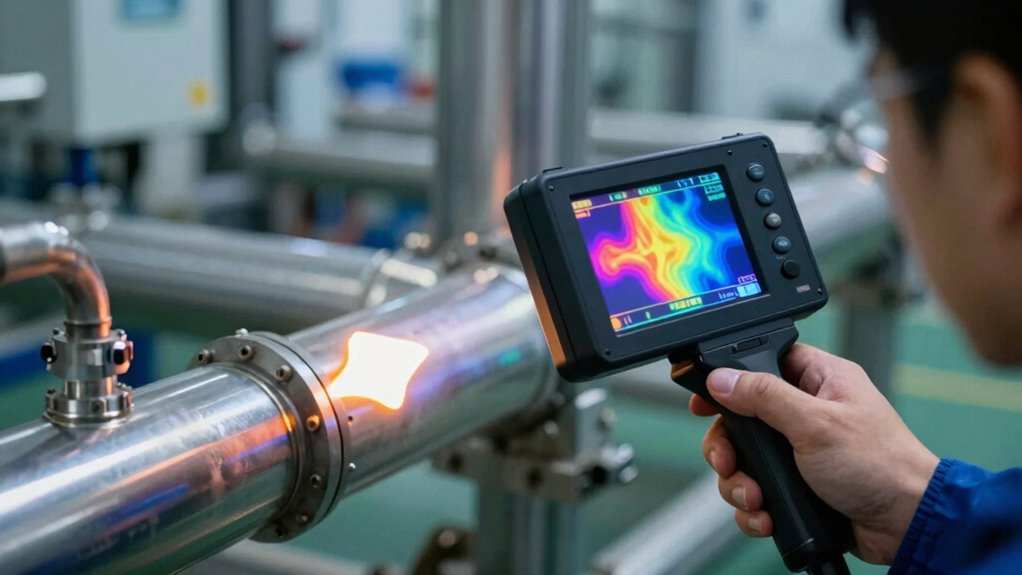
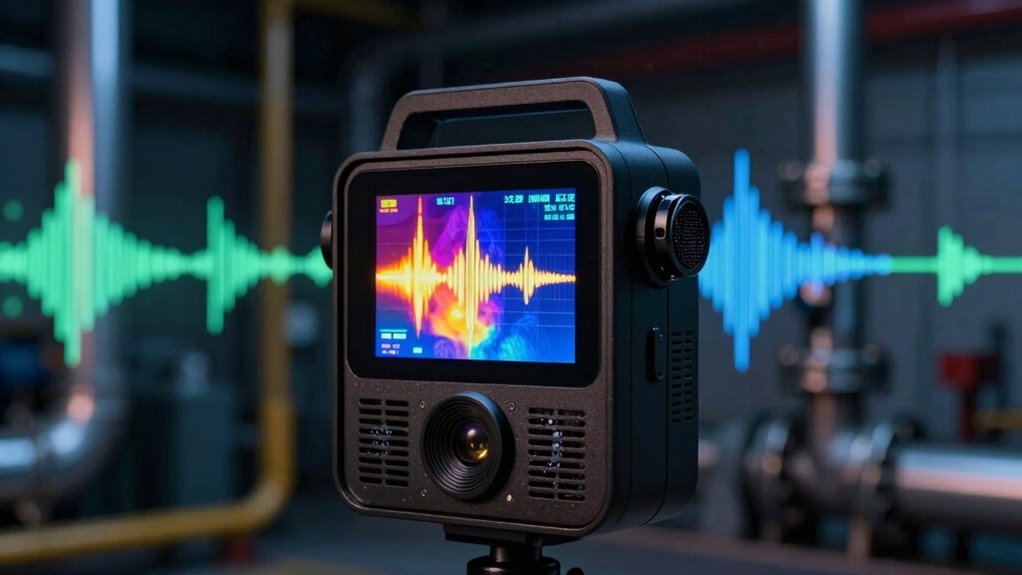
One key aspect of making acoustic imaging cameras highly effective is sensor calibration. Proper calibration ensures that the sound sensors accurately interpret the echoes and produce precise images. When the sensors are properly calibrated, the device captures sound waves and translates them into visual data. This data visualization helps you easily identify anomalies like leaks, blockages, or structural weaknesses that might otherwise go unnoticed. For example, if you’re inspecting a pipeline, the camera can reveal a leak as a distinct visual anomaly, even if it’s hidden behind walls or underground. The clarity of these images accelerates your decision-making process, saving time and reducing the need for invasive inspections. Since acoustic imaging cameras rely heavily on data visualization, understanding the images they produce is essential. The images are often displayed on a screen, showing sound intensity and flow patterns in real-time. With experience, you’ll recognize how different sounds correlate with specific issues, making leak detection faster and more accurate. Developing a good understanding of sensor calibration and its impact on image quality enhances the effectiveness of leak detection. Paying attention to sound wave interpretation can further improve your ability to distinguish between normal and problematic signals, especially as advancements in data processing techniques continue to evolve. Additionally, mastering noise reduction methods can significantly improve the accuracy of the images by minimizing background interference. Recognizing how sensor sensitivity affects the clarity of the images can also help optimize inspection accuracy.
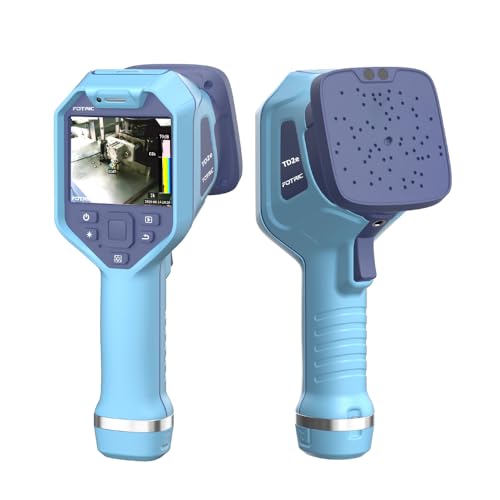
FOTRIC TD2e Acoustic Imaging Camera,64 MEMS Digital Microphones,Acoustic Imager for Compressed Air Leaks, Vacuum Leaks, Vibration Problems Detection,2k~100kHz Frequency Range, 3.5" Touch Screen,5MP
- High-Sensitivity Microphone Array: 64 MEMS microphones with beamforming
- Wide Frequency Range: 2kHz to 100kHz ultrasonic detection
- Real-Time Acoustic Imaging: Overlay sound sources on optical image
As an affiliate, we earn on qualifying purchases.
As an affiliate, we earn on qualifying purchases.
Frequently Asked Questions
How Do Acoustic Imaging Cameras Differentiate Between Various Leak Types?
You use acoustic imaging cameras for leak detection by analyzing sound waves emitted from different leak types. The cameras detect specific sound wave patterns and frequencies associated with various leaks, allowing you to differentiate them. By interpreting the sound wave analysis, you can identify whether a leak is a small crack, large pipe rupture, or another issue, making the process faster and more accurate than traditional methods.
What Maintenance Is Required for Acoustic Imaging Cameras?
You need to perform regular maintenance procedures to keep your acoustic imaging camera running smoothly—think of it as giving your high-tech detective a spa day! This includes cleaning the sensor, checking cables, and updating software. Calibration requirements are essential; you should calibrate the camera periodically to guarantee accurate leak detection results. By following these steps, you’ll maintain peak performance and extend your camera’s lifespan, guaranteeing it continues to find leaks faster than ever.
Are Acoustic Imaging Cameras Effective in All Weather Conditions?
Acoustic imaging cameras are generally effective, but weather limitations can impact their performance. Heavy rain, snow, or extreme temperatures may reduce their sensitivity or cause equipment issues. However, high-quality models are built for durability, ensuring they withstand tough conditions. You should consider the environment where you’ll use them and choose cameras designed for outdoor use, so you get reliable leak detection regardless of weather.
How Long Does It Take to Train Operators to Use These Cameras?
Training to use acoustic imaging cameras typically takes a few days to a week, depending on your background and the complexity of the equipment. During this time, you’ll focus on operator training and skill development, learning to interpret sound patterns and visualize leaks accurately. Hands-on practice and guided instruction help you become proficient quickly, ensuring you can confidently identify leaks and improve maintenance efficiency in a short period.
What Is the Typical Cost Range for Acoustic Imaging Camera Systems?
Back in the day, you’d find acoustic imaging cameras ranging from $10,000 to $50,000, depending on features. Today, cost comparison shows prices vary widely, so your budget considerations are crucial. Entry-level models are more affordable, while advanced systems with better resolution and features cost more. Think about what you need—investing wisely guarantees you get a reliable tool to quickly spot leaks without breaking the bank.
Conclusion
Imagine pinpointing leaks as small as a pinhole in seconds—acoustic imaging cameras make that possible. With over 90% accuracy, they drastically reduce detection time compared to traditional methods. This means less downtime, lower costs, and faster repairs. You’ll be amazed at how these cameras transform leak detection into a quick, precise process, saving you hours—and money—while protecting your infrastructure. It’s a game-changer you won’t want to miss.