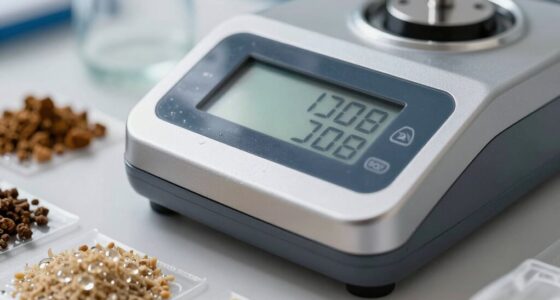
Uniformity within your dry block calibrator is more important than its specs because it directly affects calibration accuracy. Even temperature distribution ensures all sensors experience the same conditions, reducing measurement errors. High specs don’t guarantee consistent results if the heat isn’t evenly spread. You should prioritize a calibrator with proven uniform temperature performance for reliable, stable results. To discover how to choose the best device for your needs, keep exploring these critical factors.
Key Takeaways
- Uniform temperature across the block ensures consistent calibration conditions for all sensors, reducing measurement errors.
- Even heat distribution prevents calibration inconsistencies caused by temperature gradients within the device.
- Stability and uniformity in temperature lead to more reliable, repeatable calibration results over multiple uses.
- Relying solely on specs can be misleading; real-world performance depends on actual temperature uniformity.
- Effective temperature control and design are crucial for maintaining uniformity, which directly impacts calibration accuracy.

Have you ever wondered how calibration of temperature measurement devices is achieved with accuracy and efficiency? The answer often lies in the quality of the equipment used, such as dry block calibrators. These devices are essential tools for ensuring your temperature measurements are both precise and reliable. But beyond the technical specs on a datasheet, what truly matters is the device’s ability to maintain temperature stability and deliver consistent calibration accuracy over time.
When you’re working with dry block calibrators, you need to focus on how well the device can sustain uniform temperature throughout the calibration process. Temperature stability isn’t just about reaching a set point; it’s about maintaining that temperature steadily without fluctuations. Even minor variations can lead to inaccuracies in your measurements, which can compromise the entire calibration process. A calibrator with excellent temperature stability ensures that your temperature sensors and instruments are tested against a consistent reference point, leading to more trustworthy results.
Consistent temperature stability in dry block calibrators ensures reliable, accurate sensor calibration without fluctuations.
Calibration accuracy is equally important. It’s tempting to rely solely on the specifications listed in datasheets, but real-world performance often tells a different story. A calibrator that claims high accuracy but fluctuates during operation can cause calibration errors that ripple through your quality control process. Consequently, you should prioritize devices that demonstrate not only high initial accuracy but also the ability to preserve that accuracy over multiple uses and varying conditions. The best dry block calibrators are designed to minimize drift and provide a stable environment, making your calibrations more dependable.
The key to effective calibration lies in understanding that uniformity within the device is paramount. If the temperature isn’t uniform across the block, you risk calibrating sensors at different points of reference, which leads to inconsistent results. Uniform heat distribution ensures that every part of the device being calibrated experiences the same temperature, reducing the chance of error and improving overall calibration accuracy. Additionally, the design of the calibrator should facilitate temperature distribution that is even and predictable, further enhancing calibration reliability. Proper temperature control mechanisms are vital for maintaining this uniformity and ensuring that calibration results are reliable.
In essence, selecting a dry block calibrator isn’t just about matching specs to your needs. It’s about evaluating how well the device can deliver stable, uniform, and accurate results in practice. When temperature stability and uniformity are prioritized, calibration becomes more straightforward, reducing the margin of error and increasing confidence in your measurements. Remember, in calibration, consistency beats complexity—so choose a dry block calibrator that emphasizes stability and uniformity for the most reliable results.

Dry Block High Temperature Calibrators (Range: 50 to 650°C) with Thermocouples (T, J, K, N, R, S) for Calibration Labs,Thermal Plants, Metallurgical Plants | Temperature calibrator | Model: AI-DBC-02
Dry Block Temperature Calibrator Range: 50 to 650°C | Accuracy: ±0.6°C | Bath Stability: ±0.05°C | Stabilization Time:…
As an affiliate, we earn on qualifying purchases.
As an affiliate, we earn on qualifying purchases.
Frequently Asked Questions
How Often Should Dry Block Calibrators Be Recalibrated?
You should recalibrate your dry block calibrator at least once a year, but calibration frequency depends on your usage and required accuracy. Regular checks help guarantee temperature stability and uniformity, which are vital for precise measurements. If you notice inconsistent readings or frequent use, consider recalibrating more often. Proper calibration maintains reliability, prevents errors, and assures your calibrator delivers accurate, stable temperatures over time.
What Maintenance Is Required to Ensure Uniform Temperature Distribution?
Ever wonder how you can guarantee your dry block calibrator maintains temperature stability? Regular maintenance involves checking calibration procedures, inspecting for dirt or damage, and verifying that insulation is intact. You should also regularly calibrate the device to detect any temperature inconsistencies. Keeping the calibration procedures up-to-date and performing routine inspections help prevent uneven temperature distribution, ensuring reliable and accurate results every time.
Can Dry Block Calibrators Be Used for Multiple Temperature Ranges Simultaneously?
Yes, dry block calibrators can be used for multiple temperature ranges simultaneously if they’re designed with adjustable blocks or inserts. However, maintaining temperature consistency across all ranges requires careful calibration procedures to guarantee uniformity. You should regularly verify calibration accuracy for each range, as temperature fluctuations can affect results. Proper calibration procedures help you maintain reliable measurements, even when switching between different temperature settings.
How Does Ambient Temperature Affect Calibration Accuracy?
Ambient fluctuations can greatly impact calibration accuracy because they influence temperature stability around your dry block calibrator. When ambient temperature varies, it can cause the calibrator’s temperature to drift, leading to inconsistent results. To maintain accuracy, guarantee the calibration environment remains stable and minimizes external influences. This way, you improve the reliability of your calibrations, as consistent ambient conditions help the calibrator maintain uniformity and precise temperature control.
Are There Common User Mistakes That Compromise Uniformity?
Think of your calibrator as a well-tuned orchestra—each part must play in harmony. If you skip user training or neglect calibration protocols, you’re like a conductor ignoring the sheet music, leading to discord. Common mistakes like uneven placement or inconsistent temperature settings can sabotage uniformity. To keep things running smoothly, follow proper calibration protocols and guarantee thorough user training, turning chaos into a symphony of precise, reliable results.

SECRUI Digital Hygrometer Thermometer for Room Temperature Humidity Meter Indoor Thermometer Accuracy Calibration LCD Temperature Sensor with Maximum and Minimum Records, TH1, White
[Excellent Result] The SECRUI KR-TH1 room temperature monitor will help you and your family live in the best…
As an affiliate, we earn on qualifying purchases.
As an affiliate, we earn on qualifying purchases.
Conclusion
Think of dry block calibrators as the heart of your precision tools—if their warmth isn’t steady, your measurements suffer. Focusing on uniformity isn’t just about hitting specs; it’s about ensuring every reading is as reliable as the steady beat of a well-tuned drum. When you prioritize consistent temperature distribution, you’re building a foundation of trust in your measurements. Remember, in calibration, uniformity isn’t just a feature—it’s the backbone of accuracy.
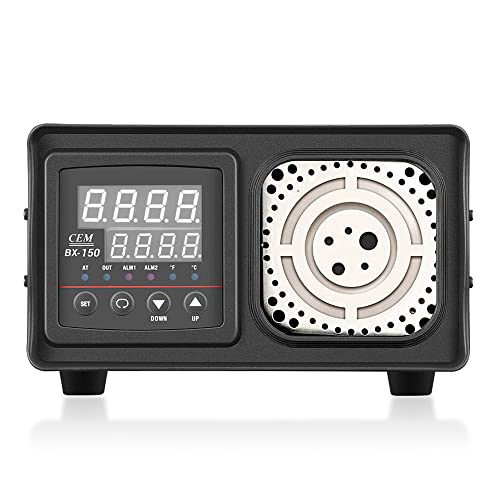
CEM Dry Block Calibration BX150 Handheld Dry-Well Hi-Temperature Calibrator, Block A, 33°C to 300°C(91.4 to 572℉) Temperature Range, 115V
The calibrator can operate at very high temperature . Precautions must be taken to prevent personal injury or…
As an affiliate, we earn on qualifying purchases.
As an affiliate, we earn on qualifying purchases.
CEM Dry Block Calibration BX150 Handheld Dry-Well Hi-Temperature Calibrator, Block A, 33°C to 300°C(91.4 to 572℉) Temperature Range, 115V
The calibrator can operate at very high temperature . Precautions must be taken to prevent personal injury or…
As an affiliate, we earn on qualifying purchases.
As an affiliate, we earn on qualifying purchases.