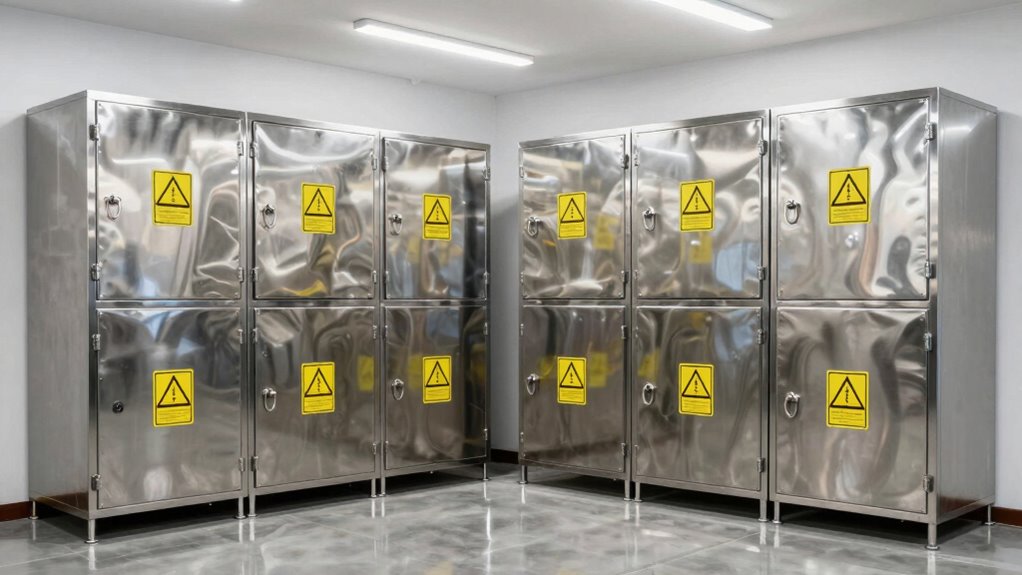

When searching for a corrosive drum storage cabinet, safety, capacity, and compliance are key factors. The Durham 1090M-293T stands out as the best overall for its large capacity and robust construction. The Justrite Acid Corrosive Storage Cabinet offers excellent chemical resistance for smaller volumes, while the DENIOS 2-Drum Poly Safety Cabinet provides versatile multi-drum storage for more complex needs. Buyers often face tradeoffs between size, security features, and budget. Continue reading for a detailed comparison of these options and more, helping you find the perfect fit for your chemical storage needs.

Prime made for students and young adults
- Fast, free delivery for dorm and study essentials
- Prime Video and Amazon Music included
- Member-only deals
Key Takeaways
- Capacity ranges from small 4-gallon cabinets to large 90-gallon units, affecting choice based on volume needs.
- Self-closing doors improve safety but may add cost and complexity compared to manual models.
- Material quality varies; poly and steel options each offer different chemical resistance and durability.
- Larger cabinets tend to be more expensive and bulky but offer greater storage flexibility.
- Specialized safety features like spill containment and ventilation significantly impact overall safety and compliance.
| Durham 1016S-293T Corrosive Storage, 16 Gallon, Self Close |  | Best Overall for Versatile Small-Scale Storage | Capacity: 16 gallons | Material: All welded double wall steel | Finish: Textured blue powder coat | VIEW ON AMAZON | See Our Full Breakdown |
| Justrite Acid Corrosive Storage Cabinet |  | Best for Heavy-Duty, Industrial-Grade Storage | Material: 18-gauge steel | Latching System: 3-point stainless steel bullet latch | Finish: Powder-coat | VIEW ON AMAZON | See Our Full Breakdown |
| Durham 1090M-293T Corrosive Storage Cabinet, 90 Gallon, Manual |  | Best for Large-Scale Storage of Corrosives | Capacity: 90 gallons | Material: All welded steel | Finish: Blue powder coat | VIEW ON AMAZON | See Our Full Breakdown |
| Durham 1004M-293T Corrosive Storage, 4 Gallon, Manual |  | Best Compact for Limited Space or Small Quantities | Capacity: 4 gallons | Construction: All welded double wall steel | Finish: Blue powder coat | VIEW ON AMAZON | See Our Full Breakdown |
| Durham 1012S-293T Corrosive Storage Cabinet, 12 Gallon, Self-Closing |  | Best for Moderate Capacity, Industrial Use | Capacity: 12 gallons | Material: All welded steel | Finish: Blue powder coat | VIEW ON AMAZON | See Our Full Breakdown |
| DENIOS 2-Drum Poly Chemical Safety Cabinet, 61 x 42 x 78 inches, Yellow |  | Best for Outdoor and Large-Scale Storage | Dimensions: 61″ x 42″ x 78″ | Capacity: 2 drums or 1 IBC tote | Material: Polyethylene | VIEW ON AMAZON | See Our Full Breakdown |
| Durham 1030M-293T Corrosive Storage, 30 Gallon, Manual |  | Best for Secure Indoor Corrosive Storage | Capacity: 30 gallons | Material: All welded double wall steel | Finish: Blue powder coat | VIEW ON AMAZON | See Our Full Breakdown |
| corrosive drum storage cabinet | Capacity | Material | Finish |
|---|---|---|---|
| Durham 1016S-293T Corrosive St | 16 gallons | All welded double wall steel | Textured blue powder coat |
| Justrite Acid Corrosive Storag | — | 18-gauge steel | Powder-coat |
| Durham 1090M-293T Corrosive St | 90 gallons | All welded steel | Blue powder coat |
| Durham 1004M-293T Corrosive St | 4 gallons | — | Blue powder coat |
| Durham 1012S-293T Corrosive St | 12 gallons | All welded steel | Blue powder coat |
| DENIOS 2-Drum Poly Chemical Sa | 2 drums or 1 IBC tote | Polyethylene | — |
| Durham 1030M-293T Corrosive St | 30 gallons | All welded double wall steel | Blue powder coat |
More Details on Our Top Picks
Durham 1016S-293T Corrosive Storage, 16 Gallon, Self Close
This model stands out for its all-welded double wall steel construction paired with a textured blue powder coat, combining durability with corrosion resistance. Its leak-proof base and adjustable shelves make spill management straightforward, while the secure 3-point lock system enhances safety. Compared to the Durham 1004M-293T, which has a smaller capacity and manual operation, this cabinet offers a balance of size and security suitable for many small to medium labs. The ventilation bunged air vents add safety without complicating access. However, the steel’s weight could pose handling challenges, especially when fully loaded, and it lacks interior lighting, which can hinder visibility in low-light settings.
Pros:- Durable all-steel construction with textured blue finish
- Leak-proof base and spill containment features
- Adjustable shelves for flexible storage
- Secure 3-point locking system
Cons:- Heavy weight may complicate repositioning
- No interior lighting for low-light environments
Best for: Small laboratories, industrial facilities, or maintenance teams needing reliable, versatile corrosive storage with easy access and security.
Not ideal for: Users requiring lightweight, portable options or those with limited space, as this model’s steel construction makes it heavy and bulky.
- Capacity:16 gallons
- Material:All welded double wall steel
- Finish:Textured blue powder coat
- Locking System:Recessed paddle latch with 3-point lock
- Ventilation:Bunged air vents
- Shelves:Support shelves with 2″ wide louvers, adjustable on 4″ centers
- Base:2″ deep leak-proof
- Grounding:Electrical ground
Our verdict“This cabinet offers a well-rounded, secure storage solution ideal for small-scale corrosive liquid management where durability and safety are priorities.”
Justrite Acid Corrosive Storage Cabinet
This cabinet excels in environments demanding maximum safety with features like flame arresters, dual vents, and a corrosion-resistant powder-coat finish. Its 18-gauge steel construction ensures robustness, making it suitable for storing acids, bases, and other corrosives in high-demand settings like industrial labs or manufacturing plants. When compared to the Durham 1090M-293T, which has a larger capacity but less specialized safety features, the Justrite offers higher compliance standards and fire testing, though it may be heavier and costlier. The removable polyethylene trays and SpillSlope galvanized steel shelves facilitate spill management, but its weight could limit mobility, and the price might be prohibitive for smaller operations.
Pros:- Heavy-duty 18-gauge steel with corrosion-resistant finish
- Includes spill containment with removable polyethylene trays
- Fire-tested and FM Approved for safety compliance
- Features flame arresters and dual vents
Cons:- Heavy and difficult to move without assistance
- Price may be high for smaller operations
Best for: Industrial facilities or labs needing compliant, fire-tested, and spill-safe acid storage with robust features.
Not ideal for: Small-scale applications or budget-conscious users seeking lightweight, inexpensive solutions, as this cabinet is heavy and potentially costly.
- Material:18-gauge steel
- Latching System:3-point stainless steel bullet latch
- Finish:Powder-coat
- Sump Capacity:2 inches
- Shelves:Galvanized SpillSlope steel, removable polyethylene trays
- Made in:USA
- Additional features:Flame arresters, dual vents, Haz-Alert labels
Our verdict“This cabinet is best suited for industrial settings requiring compliance, fire safety, and robust spill containment, despite its higher cost and weight.”
Durham 1090M-293T Corrosive Storage Cabinet, 90 Gallon, Manual
This 90-gallon model is designed for large-volume corrosive storage with all-welded steel durability and leak-proof plastic trays. Its size and capacity outperform smaller cabinets like the Durham 1016S-293T, making it suitable for facilities with extensive corrosive inventories. The all-welded steel construction ensures durability, while the adjustable shelves provide some flexibility. However, its significant weight and size can make handling and placement challenging, especially in confined spaces. The manual operation and higher cost are additional considerations for those seeking straightforward or budget-friendly options. Its focus on capacity makes it less suited for small-scale or temporary storage needs.
Pros:- Heavy-duty all-welded steel construction
- Includes leak-proof plastic trays
- Adjustable shelves for customizable storage
- Designed for large-volume storage
Cons:- Heavy and difficult to relocate
- Costly compared to smaller cabinets
Best for: Large industrial labs or facilities with high-volume corrosive chemical storage needs.
Not ideal for: Small laboratories or environments with limited space, as its bulk and weight may be impractical.
- Capacity:90 gallons
- Material:All welded steel
- Finish:Blue powder coat
- Number of shelves:2
- Included components:Plastic trays
- UPC:714334080033
- Additional features:Adjustable, sturdy shelves
Our verdict“This cabinet is a fit for large-scale corrosive storage where capacity and durability outweigh portability concerns.”
Durham 1004M-293T Corrosive Storage, 4 Gallon, Manual
This smaller cabinet is built for tight spaces and small quantities of corrosives, featuring all-welded steel and leak-proof plastic trays. Its 4-gallon capacity makes it ideal for laboratories or maintenance areas where space is at a premium, and only minimal corrosive liquids need storage. Compared to larger models like the Durham 1012S-293T, it offers less capacity but excels in portability and ease of placement. The sturdy construction and secure lock add safety, but the limited capacity might be restrictive for some, and manual operation means regular upkeep is necessary. Its compact size is both an advantage and a limitation depending on storage needs.
Pros:- Sturdy all-welded steel construction
- Leak-proof trays for spill safety
- Secure lockable latch
- Ventilation louvers for safety
Cons:- Limited to 4 gallons capacity
- Manual operation might require maintenance
Best for: Small laboratories, maintenance closets, or areas with space constraints needing minimal corrosive storage.
Not ideal for: Large facilities or operations with extensive chemical inventories, as capacity is too limited.
- Capacity:4 gallons
- Construction:All welded double wall steel
- Finish:Blue powder coat
- Tray Material:Plastic
- Locking System:Recessed paddle latch with 3-point lock
- Ventilation:Bunged air vents
Our verdict“This cabinet provides a practical, space-saving solution for small-scale corrosive storage in tight environments.”
Durham 1012S-293T Corrosive Storage Cabinet, 12 Gallon, Self-Closing
This 12-gallon cabinet offers a strong all-welded steel design with leak-proof plastic trays, making it suitable for industrial settings that require secure storage of hazardous liquids. Its self-closing door enhances safety, and the adjustable shelves provide some flexibility for different corrosive chemicals. Compared to the 16-gallon Durham 1016S-293T, this model is slightly smaller but shares many of the same safety features, including ventilation louvers and lockable latch. The weight of 154 pounds can be a drawback for relocation, and the limited shelf count may restrict organization options for larger inventories. It strikes a balance between capacity and safety for medium-scale applications.
Pros:- All welded steel construction for durability
- Leak-proof plastic trays included
- Self-closing door enhances safety
- Adjustable shelves for flexibility
Cons:- Heavy and potentially difficult to move
- Limited to 12 gallons capacity
Best for: Industrial or laboratory environments needing reliable, moderate-capacity corrosive storage with safety features.
Not ideal for: Small spaces or users needing high capacity, as its size and weight could be limiting.
- Capacity:12 gallons
- Material:All welded steel
- Finish:Blue powder coat
- Number of shelves:1
- Included components:Plastic trays
- Dimensions:18″D x 23″W x 36.38″H
- Weight:154 pounds
Our verdict“This cabinet offers a safe, durable, and moderately sized storage option for industrial or laboratory use where security is a priority.”
DENIOS 2-Drum Poly Chemical Safety Cabinet, 61 x 42 x 78 inches, Yellow
This polyethylene cabinet stands out for its durability and weather resistance, making it ideal for outdoor storage of large quantities of corrosive liquids. Unlike steel cabinets that may rust over time, the DENIOS polyethylene construction offers superior corrosion resistance, especially in harsh environments. It supports two 55-gallon drums or an IBC tote, providing ample capacity for industrial settings. However, its size and weight can pose challenges when relocating, often requiring multiple people to move it safely. Compared with steel options like Durham’s steel models, this cabinet excels outdoors but sacrifices some ease of mobility. Its weatherproof design makes it a prime choice for outdoor chemical storage, though it’s limited to two drums or a single IBC.
Pros:- Exceptional corrosion and weather resistance due to polyethylene construction
- Capable of holding large drums or IBC totes securely
- Ideal for outdoor environments, resisting harsh weather
Cons:- Heavy and bulky, difficult to move without assistance
- Limited to two drums or one IBC, not suitable for small or multiple chemical types
Best for: Facilities needing weatherproof, corrosion-resistant storage for large corrosive drums outdoors
Not ideal for: Indoor laboratories or small-scale storage needs, where mobility and smaller size are priorities
- Dimensions:61″ x 42″ x 78″
- Capacity:2 drums or 1 IBC tote
- Material:Polyethylene
- Color:Yellow
Our verdict“This cabinet is best suited for outdoor storage of large corrosive drums where weather resistance outweighs mobility concerns.”
Durham 1030M-293T Corrosive Storage, 30 Gallon, Manual
The Durham 1030M-293T offers a robust steel construction with a corrosion-resistant blue powder coat, making it well-suited for indoor storage of corrosive liquids. Its all-welded double wall design enhances safety, and the leak-proof yellow trays provide containment for spills, setting it apart from simpler steel cabinets that lack such features. The adjustable shelves add flexibility for organizing various containers, and the recessed 3-point lock ensures security. Compared to larger models like Durham’s 90-gallon cabinet, this 30-gallon unit excels in smaller, controlled environments but may feel restrictive for higher-volume needs. Its weight can make repositioning cumbersome, so it’s best suited for permanent placement in chemical labs or maintenance rooms.
Pros:- Durable all-steel, corrosion-resistant construction
- Leak-proof trays for spill containment
- Secure 3-point locking system
Cons:- Heavy and potentially difficult to move once installed
- Limited to storing 30 gallons, not suitable for large-volume storage
Best for: Laboratories or maintenance facilities needing secure, corrosion-resistant storage for smaller quantities of corrosives
Not ideal for: Outdoor storage or scenarios requiring high capacity, as it’s designed for indoor use and limited volume
- Capacity:30 gallons
- Material:All welded double wall steel
- Finish:Blue powder coat
- Locking system:Recessed lockable paddle latch with 3-point lock
- Ventilation:Bunged air vents on each side
- Shelves:Supports 2″ wide louvers, adjustable on 4″ centers
Our verdict“This steel cabinet is ideal for secure indoor storage of corrosive liquids in smaller volumes where safety and containment are priorities.”

How We Picked
The products in this roundup were selected based on their safety features, chemical resistance, capacity, and build quality. We prioritized cabinets that meet industry standards for corrosive storage and offer reliable containment and security. Cost was also a factor, balancing affordability with essential safety features. The ranking reflects a combination of capacity, safety features, ease of use, and overall value, ensuring that each option serves a distinct need—from small-volume storage to large, industrial-grade solutions.| corrosive drum storage cabinet | Finish |
|---|---|
| Durham 1016S-293T Corrosive St | Textured blue powder coat |
| Justrite Acid Corrosive Storag | Powder-coat |
| Durham 1090M-293T Corrosive St | Blue powder coat |
| Durham 1004M-293T Corrosive St | Blue powder coat |
| Durham 1012S-293T Corrosive St | Blue powder coat |
| DENIOS 2-Drum Poly Chemical Sa | — |
| Durham 1030M-293T Corrosive St | Blue powder coat |
Factors to Consider When Choosing Corrosive Drum Storage Cabinet
Choosing the right corrosive drum storage cabinet requires understanding your specific chemical handling needs and safety requirements. Factors like capacity, material, safety features, and compliance standards should influence your decision. Making the wrong choice can lead to safety hazards, regulatory issues, or inefficient use of space. The following sections outline key considerations to help you select a cabinet that balances safety, functionality, and budget.Capacity and Size
The storage capacity must match your volume of corrosive materials. Small 4- to 12-gallon cabinets suit labs or small workshops, while larger units exceeding 30 gallons serve industrial settings. Oversized cabinets can be cumbersome and expensive, so accurately estimate your needs. Keep in mind that larger cabinets often require more space and may need special installation considerations for safety compliance.
Material and Chemical Resistance
Material choice impacts durability and safety. Polyethylene or polypropylene cabinets excel at resisting acids and other corrosives, while steel units can offer greater structural strength but may require special coatings or linings. Consider the types of chemicals stored to select a material that withstands prolonged contact without degradation. Failing to match material to chemical type can lead to leaks, contamination, or structural failure over time.
Safety Features and Compliance
Look for safety features such as self-closing doors, spill containment, and ventilation. These elements help prevent accidents and meet regulatory standards like OSHA and NFPA. Cabinets with spill trays or secondary containment are especially valuable in minimizing environmental hazards. Be aware that some features add to the cost, but the safety benefits often justify the investment, particularly in high-risk environments.
Security and Locking Mechanisms
If chemical security is a concern, choose cabinets with lockable doors. This prevents unauthorized access and potential misuse. However, adding locks can complicate access during emergencies, so weigh security needs against accessibility. For sensitive materials, lockable cabinets are a wise investment, but for general storage, simpler models may suffice.
Mobility and Installation
Consider whether the cabinet needs to be moved frequently or fixed in place. Smaller units are portable, but large, heavy cabinets may require specialized installation. Ensure your workspace can accommodate the cabinet’s size and weight, and verify that it can be positioned safely, away from sources of heat or ignition. Proper placement enhances safety and compliance with storage regulations.
Frequently Asked Questions
What size corrosive drum storage cabinet should I choose?
The appropriate size depends on your volume of corrosive materials. For small quantities, a cabinet holding 4 to 12 gallons often suffices, especially in laboratory settings. For larger inventories, 30 gallons or more might be necessary, but remember that bigger units require more space and may be more expensive. Always consider future storage needs to avoid outgrowing your cabinet quickly.
Are poly or steel cabinets better for corrosive chemicals?
Polyethylene or polypropylene cabinets excel at resisting acids and other corrosives, making them suitable for chemical environments with aggressive substances. Steel cabinets offer greater durability and structural strength but may need special linings or coatings to prevent corrosion. Your choice should align with the specific chemicals stored and the environment’s conditions to maximize safety and longevity.
What safety features are essential in a corrosive drum storage cabinet?
Self-closing doors, spill containment trays, and ventilation are key safety features. Self-closing doors reduce the risk of accidental exposure, while spill trays contain leaks and prevent environmental contamination. Ventilation helps control fumes and maintain safe air quality. Prioritizing these features ensures compliance and minimizes accident risks in your storage area.
Is a lockable cabinet necessary for corrosive storage?
Lockable cabinets are advisable if security or unauthorized access is a concern, especially in shared or public spaces. They prevent theft, misuse, or accidental exposure. However, in emergency situations, quick access is vital; so, consider how locks might impact response times. For high-value or hazardous chemicals, locking mechanisms provide an extra layer of safety and control.
How important is compliance with safety standards for these cabinets?
Compliance with standards such as OSHA, NFPA, and local regulations is vital to ensure safe storage practices and avoid legal issues. Properly certified cabinets are tested for spill containment, chemical resistance, and fire safety. Non-compliant cabinets can lead to fines or hazardous accidents, so verify certifications before making a purchase. Being compliant also helps in passing inspections and maintaining safe work environments.
Conclusion
The best overall choice for most users is the Durham 1090M-293T, offering a balance of capacity, safety features, and durability. For those on a budget or with smaller storage needs, the Durham 1016S-293T provides reliable performance at a lower cost. Industrial facilities or larger operations should consider the DENIOS 2-Drum Poly Safety Cabinet for its multi-drum capacity and safety features. Beginners or those new to chemical storage will find the Durham 1004M-293T easy to handle, while professionals requiring maximum security and compliance should look at premium options with advanced safety features. Your choice hinges on your specific volume, safety, and security needs, but each of these options provides a solid foundation for safe corrosive chemical storage.