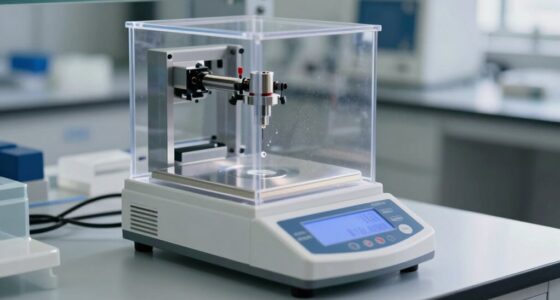
To measure chloride and sulfate ions using ion chromatography, start by preparing your samples carefully—filter, dilute if necessary, and adjust pH to prevent interference. Calibrate your system with high-quality standards across the expected concentration range, and verify accuracy with quality control samples. Regular calibration and proper sample handling guarantee reliable results. Following precise procedures maximizes the system’s effectiveness, and continued attention will reveal how to optimize the analysis process for accurate, reproducible data.
Listen free for 30 days with Audible
Thousands of audiobooks and originals — cancel anytime.
As an affiliate, we earn on qualifying purchases.
Key Takeaways
- Proper sample filtration and dilution prevent interference and system overload during chloride and sulfate ion analysis.
- Calibration with high-purity standards across expected concentration ranges ensures accurate ion quantification.
- Regular validation with quality control samples confirms calibration accuracy and method reliability.
- Maintaining system calibration and consistent sample preparation improves reproducibility and measurement precision.
- Well-prepared samples and calibrated systems enable reliable detection of chloride and sulfate in environmental or industrial samples.

Ion chromatography is a powerful technique for accurately measuring chloride and sulfate ions in various samples. When you’re preparing your samples for analysis, proper sample preparation is essential to guarantee reliable results. You’ll want to start by filtering your samples to remove any particulate matter that could clog the column or interfere with the detection process. Dilution may be necessary if the ion concentrations are too high, preventing overload of the chromatography system. Additionally, you should consider adjusting the pH of your samples if needed, as extreme pH levels can impact ion separation. Consistency in sample preparation helps improve reproducibility and accuracy, which are key in quantitative analysis. Keep your samples stored properly, ideally refrigerated, to prevent any degradation or contamination that could skew your results. Incorporating diverse and creative sample containers can also help enhance the overall efficiency of your sample handling process.
Calibration techniques play a critical role in guaranteeing your ion chromatography system provides accurate measurements. You need to establish a calibration curve using standard solutions with known concentrations of chloride and sulfate ions. These standards should be prepared carefully, using high-purity reagents and accurate volumetric techniques to guarantee their concentrations are precise. When running your standards, make sure to cover the expected range of your samples to create a robust calibration curve. As you analyze your standards, record the detector response for each concentration and plot these values to generate a calibration curve. This curve then allows you to interpolate the concentration of chloride and sulfate ions in your unknown samples. Regular calibration checks with fresh standards are essential to account for any drift in the system over time, maintaining the accuracy of your measurements.
You should also validate your calibration by analyzing quality control samples with known concentrations, ensuring your system’s responses are consistent and reliable. During routine analysis, always run blanks to check for contamination or carryover between samples. Proper calibration and sample preparation not only improve accuracy but also enhance the overall efficiency of your ion chromatography analysis. By meticulously preparing samples and maintaining a rigorous calibration protocol, you guarantee your results are both precise and reproducible, giving you confidence in your data whether you’re assessing environmental samples, water quality, or industrial products. With attention to detail in these initial steps, you maximize the capabilities of your ion chromatography system and obtain trustworthy, high-quality measurements of chloride and sulfate ions.
ion chromatography standards for chloride and sulfate
As an affiliate, we earn on qualifying purchases.
As an affiliate, we earn on qualifying purchases.
Frequently Asked Questions
What Are the Detection Limits for Chloride and Sulfate?
You can typically expect detection sensitivity for chloride and sulfate to reach around 1 to 5 micrograms per liter, depending on your instrument and method setup. Your quantification thresholds usually fall within this range, allowing you to detect even trace levels. To guarantee accuracy, always verify your calibration and method parameters, and remember that optimized conditions can improve detection limits for both chloride and sulfate in your ion chromatography analysis.
How Long Does an Analysis Typically Take?
Analysis typically takes about 20 to 30 minutes, but it can vary depending on your sample prep and instrument calibration. If you prepare samples carefully and guarantee your instrument is well-calibrated, the process speeds up. Sometimes, additional steps like filtering or diluting samples add time, so it’s wise to plan for a bit of extra time. Proper preparation ensures accurate, timely results without unnecessary delays.
Can Multiple Samples Be Analyzed Simultaneously?
Yes, you can analyze multiple samples simultaneously through sample multiplexing, which increases your instrument throughput. By preparing and running several samples at once, you save time and improve efficiency. Most ion chromatography systems support multiplexing options, allowing you to process larger batches quickly. Just guarantee your instrument’s capacity and method settings are optimized to handle multiple samples without compromising accuracy or resolution.
What Are Common Interferences in Ion Chromatography?
Interferences in ion chromatography often stem from matrix effects that disrupt accurate detection, making it vital to focus on sample preparation. You might encounter issues like overlapping peaks or suppression of signals, which can lead to misinterpretation. To minimize these problems, you should optimize sample preparation methods, such as filtration or dilution, ensuring your samples are compatible with the system. Proper handling helps you achieve precise, reliable results despite potential interferences.
How Should Samples Be Stored Before Analysis?
You should store your samples at low temperatures, ideally between 4°C and -20°C, to prevent microbial growth and chemical changes. Proper sample preservation is essential to maintain analyte stability before analysis. Make sure the samples are tightly sealed in clean containers to avoid contamination and evaporation. Avoid repeated freeze-thaw cycles, as they can alter chloride and sulfate levels. Store samples promptly and analyze them soon after collection for the most accurate results.
Conclusion
By mastering ion chromatography for chloride and sulfate analysis, you unveil the secret to precise, reliable results that can transform your understanding of water quality. This technique is so powerful, it’s like having a superpower in your laboratory arsenal. With consistent practice, you’ll confidently identify and quantify these ions, ensuring your data is as accurate as a lighthouse guiding ships safely to shore. Embrace this method, and watch your analytical skills soar to new heights!
Fall yard work Picks
leaf blowers
As an affiliate, we earn on qualifying purchases.