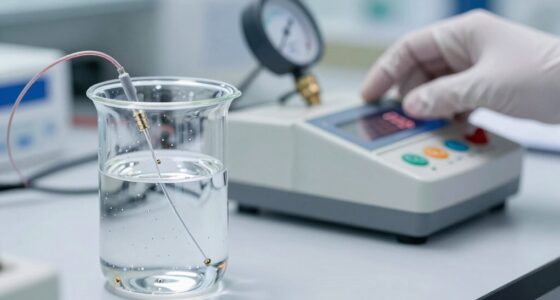
Storing your pH electrode improperly, like letting it dry out or keeping it in distilled water or air, can cause inaccurate results and damage the sensor. When the internal components dry or the glass membrane dehydrates, it leads to unreliable measurements and shortens the electrode’s lifespan. To avoid this, always store your electrode in a proper solution designed for it. Keep reading to discover how proper storage can guarantee accurate, dependable performance over time.
Key Takeaways
- Storing pH electrodes dry or in distilled water causes internal components to dry out, leading to inaccurate readings.
- Using improper storage solutions, like air or unsuitable liquids, damages the internal reference and glass membrane.
- Neglecting proper storage accelerates electrode aging, increasing calibration errors and measurement inaccuracies.
- Inadequate storage practices reduce electrode lifespan and reliability, making readings less trustworthy.
- Proper storage in specialized solutions maintains electrode hydration and ensures precise, consistent pH measurements.

Proper storage of pH electrodes is essential to guarantee accurate readings, yet many users make a common mistake that can lead to misleading results. If you don’t store your electrode correctly, you risk calibration errors that can compromise your measurements and shorten the electrode’s lifespan. This mistake often goes unnoticed but has a significant impact on your testing accuracy over time.
When you leave your pH electrode in a dry or inappropriate environment, the delicate glass membrane and internal components can dry out or become damaged. This deterioration causes the electrode to respond inconsistently, making calibration more difficult and less reliable. The result? Your measurements become skewed, and you may not realize the error until it’s too late. Proper storage ensures the electrode remains hydrated and maintains its sensitivity, which is critical for precise pH readings.
Many users mistakenly store their electrodes dry or in standard laboratory solutions that don’t support their best condition. The best practice is to keep electrodes moist by storing them in a storage solution specifically designed for pH electrodes or in a buffer solution with a pH close to 4.0 or 7.0. Avoid storing electrodes in distilled water or in air, as this can cause the internal reference junction to dry out, leading to increased calibration errors and reduced electrode lifespan. Proper storage conditions help maintain the integrity of the internal reference and glass membrane, which are indispensable for accurate, consistent measurements.
Neglecting proper storage can also accelerate the aging process of your electrode. It’s a common misconception that electrodes can be stored dry for extended periods without consequence. In reality, this practice can cause the internal reference to dry out or become contaminated, making calibration more difficult and reducing the overall lifespan of your electrode. When electrodes are stored correctly, you extend their usefulness and ensure they deliver precise results when you need them most. Additionally, using appropriate storage solutions can significantly improve the longevity and performance of your electrodes.
To maximize your electrode’s performance, always rinse it thoroughly after use and store it in the proper solution. Regularly check for signs of wear or damage, and replace it when necessary. Remember, a well-maintained, properly stored pH electrode will give you more reliable readings, reduce calibration errors, and last longer. Ignoring storage guidelines might save you a moment, but it will cost you accuracy and money in the long run. Proper storage isn’t just a recommendation; it’s an essential part of maintaining your electrode’s accuracy and longevity.
Frequently Asked Questions
How Often Should I Calibrate My pH Electrode?
You should calibrate your pH electrode at least once a week to guarantee accurate readings. Regular calibration helps prolong the electrode’s lifespan and maintains precise measurements. If you use it more frequently or in harsh conditions, consider calibrating more often. Proper calibration frequency prevents drift and keeps your electrode functioning at its best, avoiding the common mistake of neglecting calibration, which can lead to unreliable results.
What Is the Ideal Storage Solution for pH Electrodes?
You should store your pH electrode in a storage solution specifically designed for electrode longevity, like a pH 4. or 7. buffer or a specialized storage solution. This prevents the glass membrane from drying out and maintains its accuracy. Avoid storing it in distilled water, which can damage the electrode. Proper storage guarantees reliable readings and extends the electrode’s lifespan, saving you time and money on replacements.
How Can I Tell if a pH Electrode Is Damaged?
Your pH electrode might be dead if its readings are wildly inconsistent or stuck at a single value, like a broken record. Check its electrode lifespan—most last about a year—and confirm proper storage techniques. Signs of damage include slow response, erratic readings, or a glass bulb that looks cracked or cloudy. If in doubt, calibrate regularly and replace if performance doesn’t improve. Don’t gamble with faulty readings!
Does Temperature Affect pH Electrode Storage Requirements?
Yes, temperature affects pH electrode storage requirements because of temperature sensitivity. You should always store your electrode in proper storage conditions, typically in a buffer solution at room temperature, to prevent calibration issues. Extreme temperatures or rapid temperature changes can damage the electrode’s membrane or cause inaccurate readings. Always check the manufacturer’s recommendations for storage to guarantee your pH electrode remains accurate and functional over time.
Are There Differences Between Glass and Gel pH Electrodes?
You’ll find differences between glass and gel pH electrodes in their electrode materials, which impact measurement accuracy. Glass electrodes use a glass membrane that’s sensitive and can be affected by rough handling or storage issues, risking inaccurate readings. Gel electrodes have a gel-filled interior that’s more stable and less affected by storage conditions, offering more consistent measurement accuracy. Choose the right type based on your specific measurement needs and environment.
Conclusion
Remember, a pH electrode’s accuracy hinges on proper storage—neglect it, and your readings deceive you. It’s easy to think calibration alone suffices, but ignoring storage can turn precise measurements into lies. Just like a well-maintained tool produces reliable results, a stored electrode safeguards your data’s integrity. Don’t let a simple mistake undermine your work—because in the world of pH testing, what you neglect today can distort your truth tomorrow.