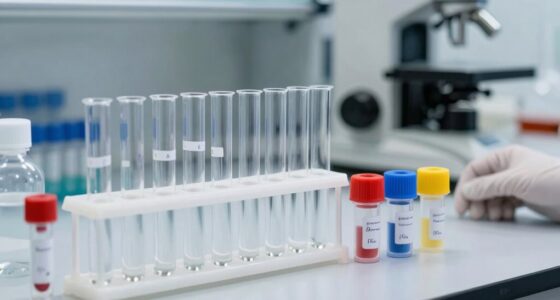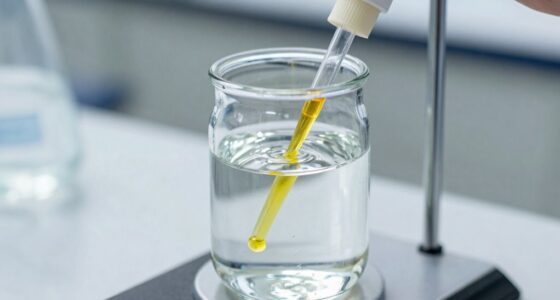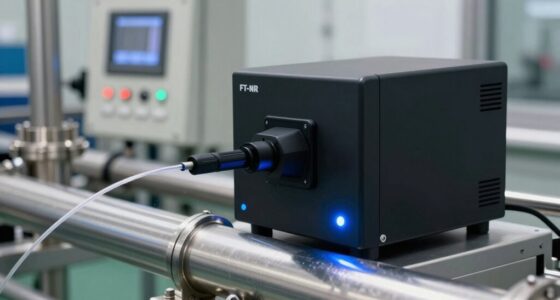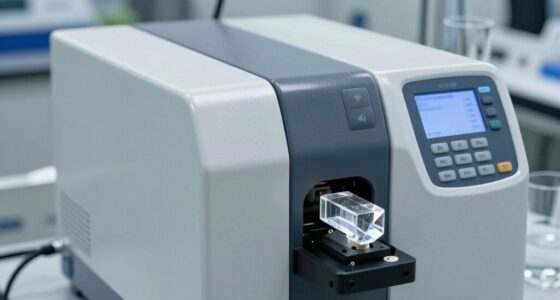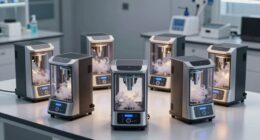
Total Organic Carbon analyzers help you keep water supplies safe by accurately measuring organic contaminants that can affect water quality. They work by oxidizing organic compounds and detecting the resulting carbon dioxide, guiding treatment processes effectively. Proper calibration guarantees consistent, reliable results essential for compliance and safety. Regular maintenance and accurate record-keeping support peak performance. To understand how these systems can enhance your water treatment, continue exploring the vital role they play in maintaining clean, safe water.

Get school and study supplies delivered free — and shop member deals
- Fast, free delivery on millions of items
- Access to Prime Big Deal Days deals on October 6–7
- Prime Video, Amazon Music and more included
Key Takeaways
- TOC analyzers detect organic contaminants, ensuring water remains safe and clean for consumption and use.
- Regular calibration of TOC analyzers maintains measurement accuracy, supporting effective water treatment processes.
- Proper sample collection and pre-treatment reduce interference, leading to more reliable organic carbon measurements.
- Consistent record-keeping of calibration and maintenance ensures ongoing water quality monitoring and regulatory compliance.
- TOC analysis helps identify contamination sources, guiding filtration and disinfection efforts to keep water supplies safe.
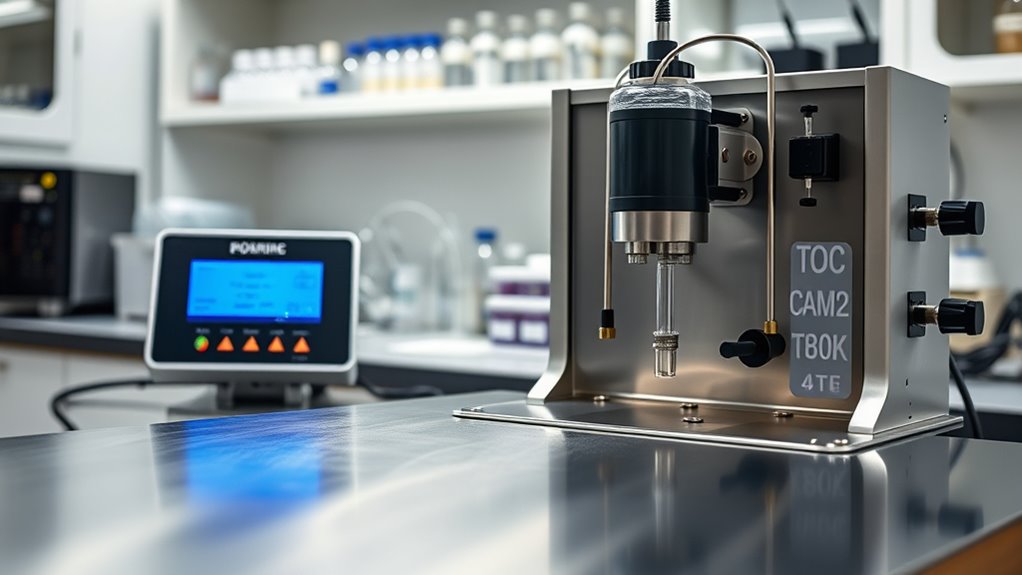
Total Organic Carbon (TOC) analyzers are indispensable tools for measuring the amount of organic carbon in water samples. If you’re responsible for maintaining water quality, understanding how these analyzers work is essential. They play a fundamental role in water purification processes, helping guarantee that contaminants don’t compromise the safety of drinking water or industrial applications. Accurate measurements are key to effective treatment, and that’s where proper instrument calibration comes into play.
Regular calibration guarantees your TOC analyzer provides reliable, consistent results, which is critical for compliance and effective water management. When you’re working with water purification systems, you need to detect and quantify organic compounds efficiently. TOC analyzers do this by oxidizing organic carbon in water samples and measuring the resulting carbon dioxide. Calibration procedures are designed to ensure that your device remains accurate over time.
This process helps identify the levels of organic contamination, guiding decisions about filtration, disinfection, or other treatment steps. But to get trustworthy data, you must keep your instrument properly calibrated. Calibration involves using standard solutions with known carbon concentrations, allowing you to adjust your analyzer’s readings and account for any drift or inaccuracies.
Over time, components can wear or become contaminated, which can impact measurement precision. Routine calibration checks aren’t just recommended—they’re essential to maintain the integrity of your results. You also need to pay attention to water purification practices that complement your TOC analysis.
Pre-treatment steps, such as filtration and chemical dosing, can reduce background interference, leading to more accurate readings. Additionally, maintaining a clean sampling environment minimizes contamination that could skew results. Ensuring your water samples are representative and free from extraneous substances helps you make better decisions based on the data you collect.
Calibration isn’t a one-time activity; it’s an ongoing process. You should set a schedule based on your usage and the manufacturer’s recommendations. For example, many labs calibrate their TOC analyzers weekly or before each batch of testing. Proper color accuracy in calibration standards also ensures that your measurements are precise and reliable.
Also, keep detailed records of calibration procedures, standards used, and results. This documentation helps identify trends or issues that might affect measurement accuracy and supports regulatory compliance. Maintaining calibration records is vital for audits and quality assurance.
Total Organic Carbon (TOC) water analyzer
As an affiliate, we earn on qualifying purchases.
As an affiliate, we earn on qualifying purchases.
Frequently Asked Questions
How Often Should TOC Analyzers Be Calibrated?
You should follow the calibration frequency recommended by your instrument’s manufacturer, typically every 1 to 3 months. Incorporating this into your maintenance schedule guarantees accurate measurements.
Regular calibration helps catch drift and maintain precision, so don’t skip this step.
Keep records of calibration dates and procedures, and adjust the frequency if you notice deviations in your results.
Consistent calibration is key to reliable TOC analysis.
What Maintenance Is Required for Long-Term Accuracy?
Think of your TOC analyzer as a finely tuned instrument that needs regular upkeep. To keep it accurate, you should perform routine sensor calibration and monitor reagent replacement schedules.
These actions are like oiling a machine, ensuring it runs smoothly over time. Regularly check and replace reagents, and recalibrate sensors as recommended, to prevent drift and maintain long-term precision in your water quality measurements.
Can TOC Analyzers Detect Specific Organic Compounds?
You might wonder if TOC analyzers can detect specific organic compounds. While they primarily measure total organic carbon, spectroscopic methods like UV or fluorescence can help identify particular compounds.
Organic fingerprinting techniques analyze unique spectral patterns, enabling you to distinguish different organics. So, although TOC analyzers give you total levels, combining them with spectroscopic methods allows you to detect and identify specific organic compounds effectively.
Are Portable TOC Analyzers Available for Field Testing?
You won’t believe it—portable TOC analyzers are now available for field testing, making water quality checks as easy as a walk in the park. These compact devices are designed for on-the-spot analysis, giving you quick and reliable results right at the water source.
With portable TOC analyzers, you can conduct field testing anytime, anywhere, ensuring safe water without the need for bulky equipment or lab delays.
How Do TOC Levels Impact Water Treatment Processes?
You should understand that high TOC levels indicate more organic compounds in water, which can hinder water treatment processes. Elevated organic compounds can lead to the formation of disinfection byproducts, impacting water quality negatively.
By monitoring TOC levels, you can optimize treatment methods, reduce harmful contaminants, and guarantee safe, clean water.
Keeping TOC in check helps maintain effective water treatment and protects public health.
Conclusion
By choosing the right Total Organic Carbon Analyzer, you safeguard your water’s purity and health. While technology ensures safety, it’s your vigilance that truly keeps water clean. In a world filled with unseen threats, these analyzers serve as your silent guardians. Yet, without your commitment to monitoring, even the best equipment can’t prevent contamination. Remember, safeguarding water isn’t just a task—it’s a responsibility that preserves life’s most precious resource for generations to come.
Fall Picks
fall essentials
As an affiliate, we earn on qualifying purchases.