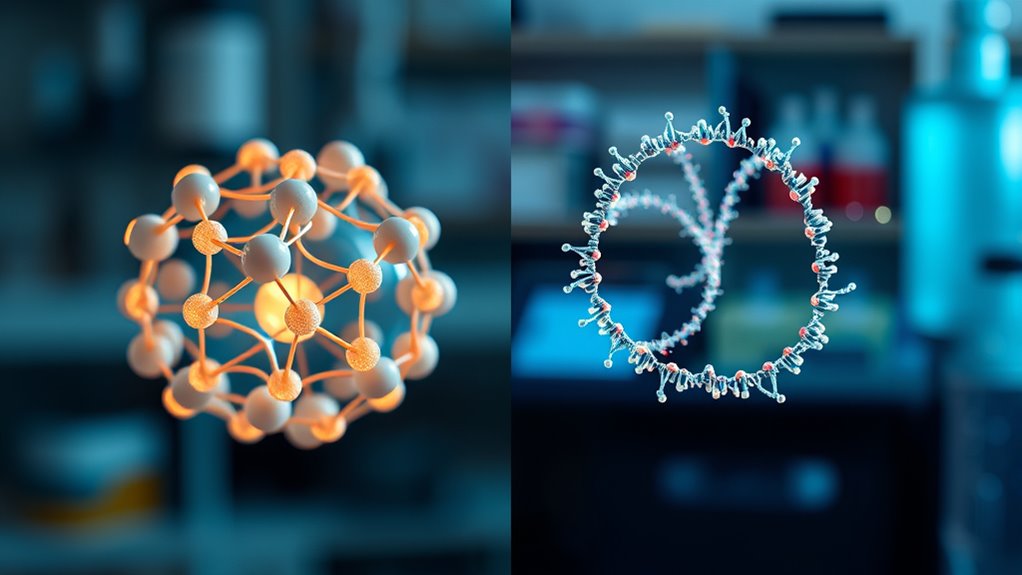

In polymerization, you’ll notice two main mechanisms: step-growth and chain-growth. In step-growth, reactive molecules combine gradually, forming small oligomers before building high-molecular-weight polymers, often requiring specific conditions. Chain-growth starts with an active center that quickly adds monomers, creating long chains rapidly. Understanding these processes helps you control polymer properties. Continue exploring, and you’ll uncover how these mechanisms influence the materials and applications you encounter daily.
Key Takeaways
- Chain-growth polymerization involves rapid chain extension from a single active site, producing high molecular weight polymers quickly.
- Step-growth polymerization occurs through gradual reactions between bifunctional monomers, forming polymers over an extended period.
- Chain-growth mechanisms utilize free radicals or ionic species to initiate polymerization, while step-growth depends on reactive group interactions.
- Chain-growth results in uniform chain lengths and high molecular weights, whereas step-growth yields polymers after extensive oligomer formation.
- Examples include polyethylene for chain-growth and polyesters for step-growth polymerization.
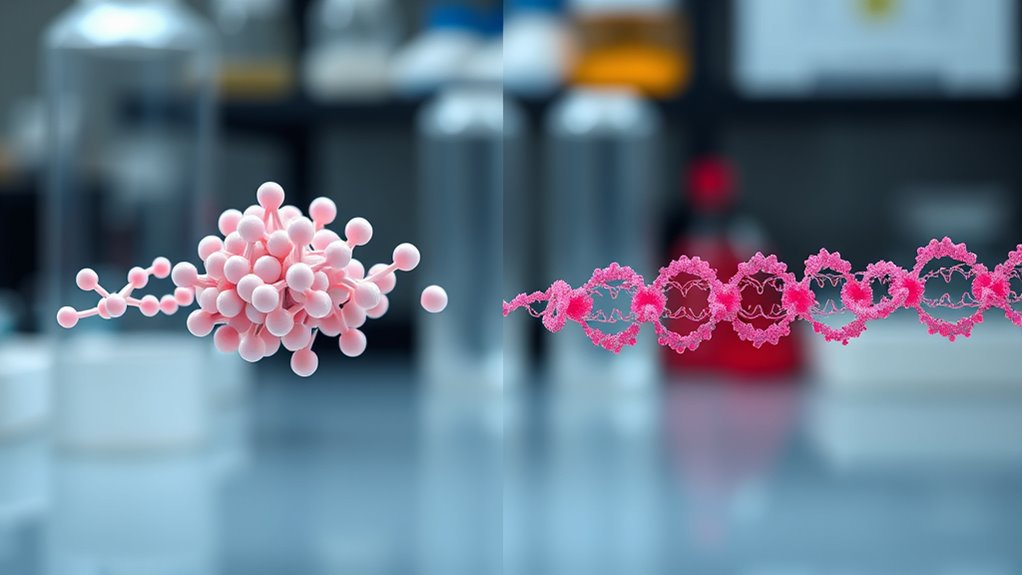
Have you ever wondered how simple molecules transform into complex polymers? The process involves intricate mechanisms that determine the structure and properties of the final material. Two primary pathways drive polymer formation: step-growth and chain-growth polymerization. Each follows a distinct course, influenced by the types of chemical reactions involved and the way monomers link together. Understanding these mechanisms helps you control polymer characteristics for various applications.
In chain-growth polymerization, the process begins with radical initiation or ionic polymerization, where reactive species start the chain reaction. Radical initiation involves generating free radicals—highly reactive atoms or molecules with unpaired electrons—that attack monomers to form active centers. These centers then add successive monomers rapidly, creating long polymer chains. Ionic polymerization, on the other hand, uses charged species—either cations or anions—to initiate the chain. The choice between radical and ionic initiation depends on the monomer’s nature and the desired polymer properties. Radical initiation is more versatile and tolerant of impurities, making it suitable for polymers like polyethylene and polystyrene. Ionic polymerization offers better control over molecular weight and polymer architecture, often used for producing polymers with specific structures, such as polyvinyl chloride (PVC). Once the chain is initiated, the active center propagates by adding monomers in a chain reaction, leading to rapid growth until termination occurs through combination or disproportionation. This mechanism results in polymers with relatively uniform chain lengths and high molecular weights.
Conversely, step-growth polymerization involves the gradual reaction of bifunctional or multifunctional monomers. Instead of rapid chain growth from a single active site, monomers react randomly, forming small oligomers that eventually link into high-molecular-weight polymers. This process is characterized by a consistent decrease in the concentration of reactive groups over time, and it generally requires high monomer purity and specific conditions to proceed efficiently. Examples include the formation of polyesters, polyamides, and polyurethanes. The key distinction here is that in step-growth, any two reactive molecules can react at any time, leading to a more complex and less predictable growth pattern compared to chain-growth mechanisms. As a result, achieving high molecular weight requires extensive polymerization, often involving high monomer conversion rates.
Frequently Asked Questions
How Does Temperature Influence the Polymerization Mechanism?
Temperature effects markedly influence polymerization mechanisms by altering reaction kinetics. When temperature increases, reaction rates generally accelerate, making chain-growth polymerization more efficient due to faster radical formation. Conversely, higher temperatures can favor step-growth mechanisms by promoting chain transfer and termination. You’ll find that controlling temperature allows you to steer the polymerization process, optimizing properties like molecular weight and reaction speed based on your desired outcome.
Can a Polymerization Process Switch From Step-Growth to Chain-Growth?
Imagine you’re watching a sci-fi film where the plot suddenly shifts—your polymerization process can do the same. Yes, a mechanism progression is possible, especially if process conditions like temperature or catalysts change. Such process adaptability allows a polymerization to switch from step-growth to chain-growth, depending on the monomers and reaction environment. This flexibility can optimize material properties, much like a director changing scenes to enhance the story.
What Role Do Catalysts Play in Determining the Mechanism Type?
Catalysts influence mechanism pathways by promoting specific reactions, shaping whether polymerization follows a step-growth or chain-growth route. Your choice of catalyst affects how monomers link, often accelerating chain initiation or stepwise reactions. Catalyst effects include lowering activation energy and guiding the formation of reactive intermediates, which determine the overall mechanism. By selecting the right catalyst, you can control the polymerization process, ensuring it proceeds via the desired mechanism pathway for ideal material properties.
How Do Molecular Weight Distributions Differ Between the Two Mechanisms?
Your molecular weight distribution varies wildly between the two mechanisms! In chain-growth polymerization, you get a broad, uneven range of molecular weights, leading to less polymer uniformity. Meanwhile, step-growth produces a narrow, tightly packed molecular weight distribution, ensuring high uniformity. This difference dramatically impacts material properties, with chain-growth creating more diverse polymers, and step-growth yielding more consistent, predictable products.
Are There Hybrid Mechanisms Combining Features of Both Step- and Chain-Growth?
Yes, hybrid mechanisms blending features of both step-growth and chain-growth exist. You might encounter mechanism merging in complex polymerizations where initial chain-growth steps evolve into step-growth processes or vice versa. These hybrid mechanisms allow for tailored control over molecular weight and architecture, combining advantages of both methods. Understanding these blends helps you design polymers with specific properties, making them useful in specialized applications like advanced composites and biomedical materials.
Conclusion
Understanding polymerization mechanisms is like choosing a path through a lush forest—you can take the steady, deliberate steps of step-growth or the swift, dynamic leap of chain-growth. Each route offers its own unique scenery and pace, shaping the final material’s character. By appreciating these subtle differences, you can better navigate the intricate landscape of polymers, guiding your choices with a gentle touch to craft materials that flourish in their intended applications.