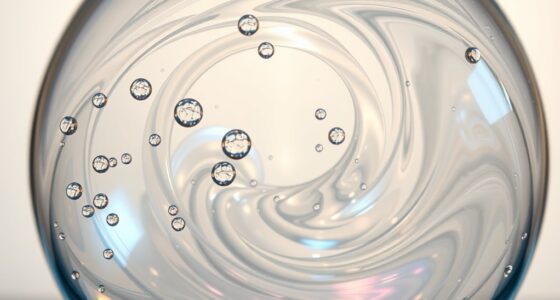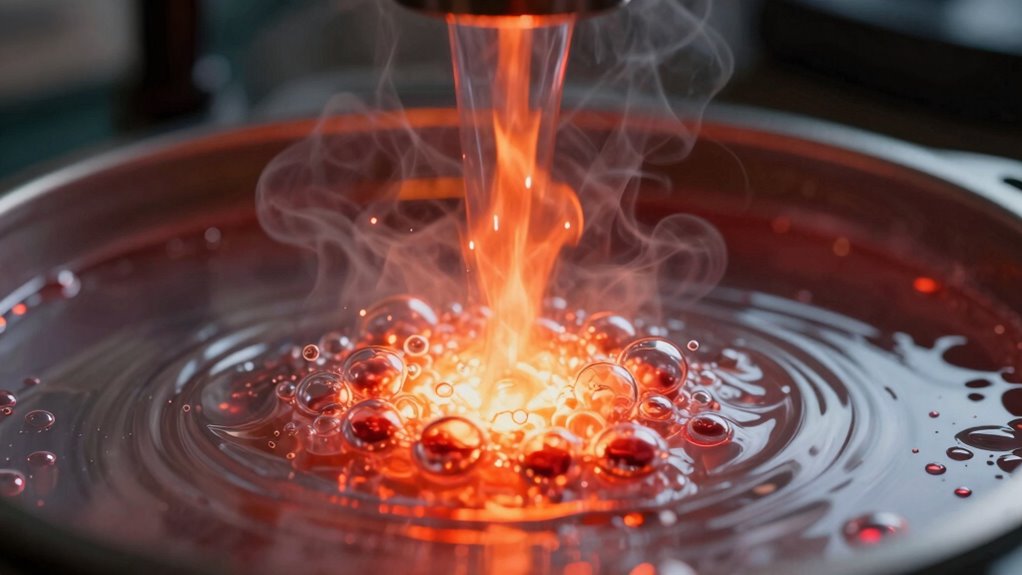

Sonication uses high-frequency sound waves to create cavitation bubbles in liquids. When these bubbles collapse, they release shockwaves that can break particles but also generate intense hot spots with high pressure and temperature. This localized heating explains why your samples can heat up during the process. Managing sonication parameters is key to preventing sample damage, and understanding these effects can help you optimize your results—there’s much more to uncover if you continue exploring.
Key Takeaways
- Sonication uses high-frequency sound waves to create cavitation bubbles that collapse violently, releasing shockwaves.
- Bubble collapse generates localized hot spots with extreme temperatures and pressures.
- These hot spots can cause chemical or physical damage to sensitive samples.
- The energy from cavitation and bubble collapse heats the surrounding liquid, raising sample temperature.
- Proper control of sonication parameters prevents excessive heating and minimizes sample degradation.

Sonication is a technique that uses high-frequency sound waves to agitate particles in a liquid, often to break them apart or induce chemical reactions. When you apply sonication, these sound waves create regions of intense pressure changes within the liquid, leading to cavitation effects. Cavitation occurs when tiny vapor bubbles form and rapidly collapse, releasing energy in the form of shockwaves. These shockwaves generate localized high temperatures and pressures, which can be highly effective for breaking apart particles or facilitating chemical transformations. However, the same cavitation effects that make sonication powerful can also pose risks to your samples. One major concern is sample degradation, especially if the process isn’t carefully controlled.
Sonication induces cavitation, producing shockwaves that can break particles but may also cause sample degradation if uncontrolled.
Sample degradation happens because the collapse of cavitation bubbles produces hot spots—small regions with extremely elevated temperatures and pressures. These hot spots can cause chemical alterations or damage sensitive molecules within your sample. For instance, if you’re working with biological tissues or delicate organic compounds, the intense energy released during cavitation might break chemical bonds or cause oxidation, leading to unwanted modifications. This degradation not only affects the integrity of your sample but can also compromise the accuracy of your analysis or experimental results.
You might notice the heating effects during sonication, especially if you’re operating at high power levels or for prolonged periods. The energy transferred from cavitation bubbles heats the surrounding liquid, raising the temperature of your sample. This heating is often unintended and can accelerate sample degradation, making it essential to monitor temperature closely. Many protocols recommend cooling the sample or using pulsed sonication to mitigate excessive heating. Without proper temperature control, the combination of cavitation effects and heat can lead to loss of activity in biological samples or unwanted chemical reactions, skewing your results.
Understanding how cavitation influences your sample’s stability is *essential* for optimizing sonication conditions. Too much energy can cause degradation, while insufficient energy might not achieve the desired particle size reduction or reaction. Balancing power, duration, and cooling is key to harnessing cavitation benefits without crossing into damaging territory. Additionally, controlling the energy input can help prevent the formation of damaging hot spots. By being mindful of these effects, you can improve your sonication process, ensuring efficient results while preserving the integrity of sensitive samples.
Frequently Asked Questions
How Can I Prevent Sample Overheating During Sonication?
To prevent sample overheating during sonication, you should implement temperature control methods like using a cooling bath or ice packs. Always monitor the temperature closely and adjust sonication time or power settings accordingly. Employ sample protection techniques such as using a temperature probe or pulse sonication to minimize heat buildup. These steps guarantee your samples stay within safe temperature ranges, maintaining integrity and avoiding degradation.
What Are the Safety Precautions for Using High-Intensity Sonicators?
Imagine you’re working with a high-intensity sonicator; safety is vital. Always wear laser safety goggles if lasers are involved, and guarantee proper equipment maintenance to prevent malfunctions. Keep the area clear of unauthorized personnel, and never bypass safety interlocks. Regularly inspect cables and probes for damage. These precautions help protect you from potential hazards, making safe operation and maintaining the equipment’s integrity during intense sonication processes.
How Does Sonication Affect Sensitive Biological Samples?
Sonication can impact sensitive biological samples by causing shear stress, which may damage cell structures or degrade proteins, affecting sample integrity. To mitigate these effects, you should optimize sonication parameters like duration and intensity. Proper sonication optimization ensures effective processing while preserving sample integrity, preventing overexposure that could lead to sample damage, ensuring reliable results, and maintaining biological activity.
Can Cavitation Damage My Sample or Equipment?
Cavitation can be like a storm inside your sonication bath, so yes, it can damage your sample or equipment. You might see sample contamination or equipment corrosion if cavitation gets aggressive. To prevent this, use proper settings, avoid prolonged sonication, and choose suitable vessels. This way, you protect your samples from damage and keep your equipment in good shape, ensuring reliable results.
What Parameters Influence Cavitation Intensity and Distribution?
You can regulate cavitation intensity and achieve sonication uniformity by adjusting parameters like frequency, amplitude, and duration. Lower frequencies tend to produce more intense cavitation, while higher settings increase overall energy. Using proper cavitation control techniques ensures even energy distribution, preventing hot spots and potential damage. Monitoring and fine-tuning these parameters helps you maintain consistent results and protect both your samples and equipment during sonication.
Conclusion
Understanding sonication is like mastering a delicate dance, where cavitation creates tiny storms inside your sample. Just as a chef carefully tempers heat to avoid burning, you must control hot spots to prevent overheating. Remember that even brief pulses can release powerful effects, much like a lightning strike igniting a storm. With this knowledge, you’ll harness sonication’s full potential, ensuring your samples stay intact while achieving your desired results effortlessly.