
You might think maintaining 50% humidity is ideal everywhere, but each room has different needs. For example, your bedroom may benefit from slightly lower humidity to prevent mold, while greenhouses or craft rooms might need more moisture. Proper placement and regular maintenance guarantee your devices work effectively at the right levels. By understanding these nuances, you can create a healthier, more comfortable home environment—keep going to discover how adjusting humidity can make a real difference.
Key Takeaways
- Different rooms have unique moisture needs based on their purpose and environment.
- Maintaining 50% RH may cause over-humidification or dryness depending on the space.
- Proper humidity levels help prevent mold growth in damp areas like basements or bathrooms.
- Lower RH levels are preferable in bedrooms and living rooms to reduce dust mites and mold risk.
- Adjusting humidity targets based on room use improves comfort, health, and structural integrity.
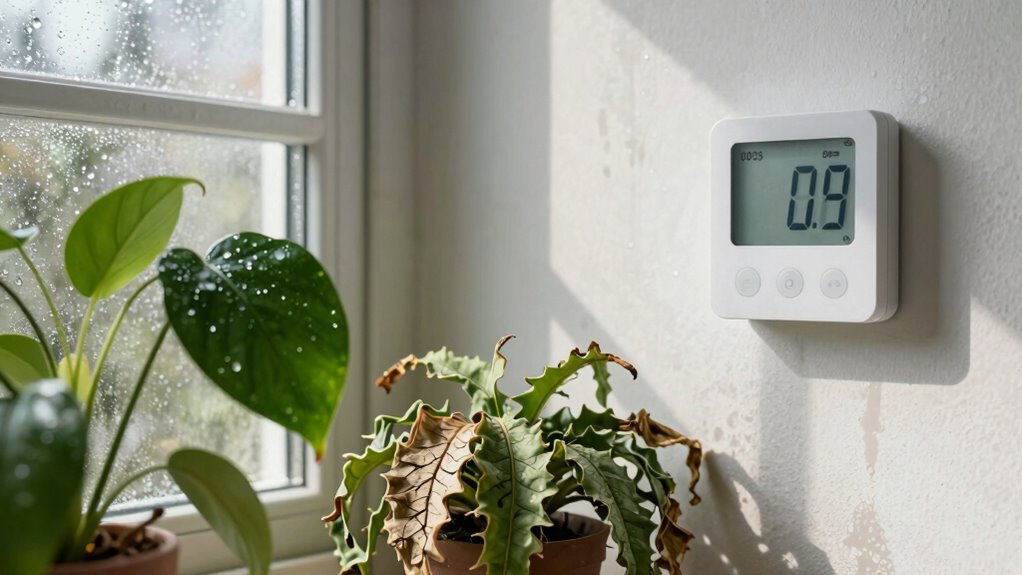
Have you ever noticed how uncomfortable it can be when the air feels either too damp or too dry? That’s because humidity levels aren’t a one-size-fits-all matter. While many people aim for around 50% relative humidity (RH), the ideal level actually varies depending on the room and its purpose. To maintain a comfortable environment, you need to understand how to manage humidity effectively, which involves proper humidifier maintenance and strategic dehumidifier placement.
If you’re using a humidifier, regular humidifier maintenance is essential. Neglecting it can lead to bacteria growth, mold, or mineral buildup that might worsen air quality instead of improving it. Make sure to clean your device frequently, change filters as recommended, and refill it with clean water. This keeps the moisture levels consistent and prevents potential health issues. Remember, a humidifier is most effective when used appropriately; over-humidifying can cause condensation and promote mold growth, especially in areas that don’t need high humidity.
Regular humidifier maintenance prevents mold, bacteria, and mineral buildup, ensuring safe, effective moisture control in your home.
Dehumidifier placement plays a critical role in controlling indoor moisture. Position your dehumidifier in spots prone to excess dampness, like basements, laundry rooms, or bathrooms. Avoid placing it near windows or doors where humidity fluctuates due to drafts. Proper placement ensures efficient operation, allowing the dehumidifier to draw out excess moisture without overworking. You’ll want to monitor humidity levels with a hygrometer and adjust the dehumidifier’s settings accordingly. If a room feels clammy or has visible condensation, it’s a sign that your dehumidifier isn’t doing enough or isn’t ideally placed.
Every room has different needs. For example, bedrooms and living rooms might require lower humidity to prevent mold, while a greenhouse or a craft room might benefit from higher RH levels. Adjusting your humidifier and dehumidifier settings based on these needs ensures comfort and reduces the risk of mold, dust mites, or other issues caused by improper humidity. Also, consider the insulation and ventilation of each space—poor insulation or ventilation can trap moisture, making it harder to maintain ideal RH levels.
Ultimately, managing humidity isn’t just about hitting a specific percentage. It’s about understanding how different rooms and their uses impact what’s comfortable and healthy. Regular humidifier maintenance and strategic dehumidifier placement are your best tools to keep your indoor environment balanced. By paying attention to these details and adjusting accordingly, you’ll find that 50% RH isn’t a universal standard; it’s a flexible target that varies based on your needs and space. Additionally, understanding the importance of proper humidity levels can help prevent long-term issues like mold growth and structural damage.

First Alert Plug in Carbon Monoxide Alarm with Digital Display
- Digital display for CO levels: Shows real-time carbon monoxide levels
- Plug-in with battery backup: Operates on standard outlet and backup power
- Electrochemical CO sensor: Detects carbon monoxide accurately
As an affiliate, we earn on qualifying purchases.
Frequently Asked Questions
How Does Humidity Affect Allergy Symptoms Differently in Various Rooms?
Humidity levels impact your allergy symptoms differently across rooms. In damp areas, higher humidity encourages mold growth, worsening allergies. In bedrooms, elevated humidity promotes dust mite proliferation, triggering symptoms. Conversely, lower humidity can cause dry eyes and throat. You should adjust humidity based on each room’s conditions, aiming for ideal comfort and allergy relief. Proper humidity control minimizes mold and dust mites, helping you breathe easier everywhere in your home.
Can Adjusting Humidity Levels Improve Indoor Air Quality Overall?
Adjusting humidity levels can improve your indoor air quality by reducing mold, dust mites, and bacteria. Use humidity sensors to monitor levels accurately and set them to ideal ranges for each room. Pairing this with air purifiers helps filter out allergens and pollutants. This combined approach creates a healthier environment, minimizes allergy symptoms, and guarantees fresh, comfortable air everywhere in your home.
Are There Specific Health Risks Associated With Incorrect Humidity Levels?
Incorrect humidity levels can be a silent troublemaker, like an invisible fog clouding your health. Too much humidity fuels mold growth and respiratory issues, while too little can dry out your skin and worsen allergies. When humidity isn’t balanced, you risk breathing in mold spores or experiencing dry, itchy skin. Keep humidity in check to protect yourself from these hidden health risks lurking behind the walls and on your skin.
What Are the Best Tools for Measuring Humidity Accurately in Different Spaces?
To measure humidity accurately, you should use a reliable hygrometer, preferably with smart humidity sensors for real-time data. Make sure your hygrometer is properly calibrated regularly to maintain precision. Smart sensors connect to apps for easy monitoring across different spaces, helping you adjust humidity levels effectively. Investing in quality devices ensures you get consistent, accurate readings, so you can optimize comfort and health in every room.
How Does Humidity Influence the Longevity of Household Electronics?
Imagine your electronics turning to rust overnight—that’s how humidity influences their longevity. Excess moisture causes electronic corrosion, degrading components faster than you’d believe. Humidity sensors help you keep conditions ideal, preventing this doom. Low humidity can cause static damage, while high humidity accelerates corrosion. By monitoring and controlling humidity levels, you safeguard your devices, ensuring they last longer and perform better, avoiding costly replacements and frustrating breakdowns.
Conclusion
Remember, aiming for 50% RH isn’t a one-size-fits-all rule—your home’s rooms are like unique snowflakes, each demanding their own perfect climate. Don’t let the idea of a “standard” humidity turn your space into a boring, robotic bunker. Think of humidity control as your secret weapon to transform your home into a cozy, healthy haven—more magical than a fairy tale castle! Embrace the variety, and your comfort will reach legendary levels.