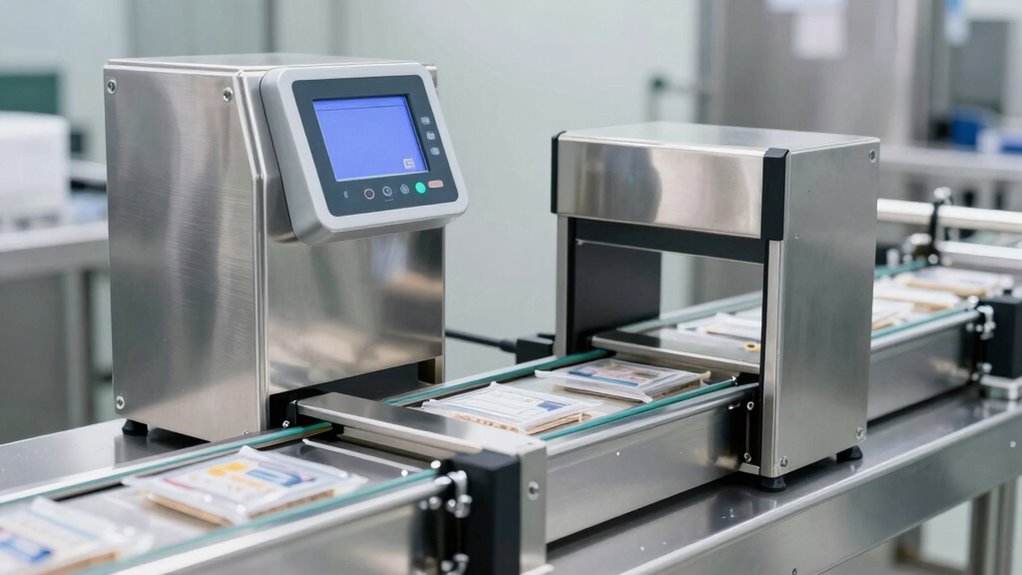

Checkweighers and metal detectors go beyond visual inspection by providing real-time, automated quality checks that guarantee your packaging is accurate and safe. They instantly detect foreign objects, uneven weights, and contamination, helping you maintain compliance, protect your brand, and reduce waste. Automated calibration and sorting keep your production efficient and reliable over time. If you want to discover more about how these tools enhance your QA process and guarantee product integrity, keep exploring.

Get school and study supplies delivered free — and shop member deals
- Fast, free delivery on millions of items
- Access to Prime Big Deal Days deals on October 6–7
- Prime Video, Amazon Music and more included
Key Takeaways
- Checkweighers ensure accurate weight verification, complementing metal detectors for comprehensive contamination and quality control.
- Metal detectors detect invisible foreign metal contaminants, preventing unsafe products from reaching consumers.
- Automated systems enable real-time data analysis, enhancing detection accuracy and facilitating proactive maintenance.
- Combining checkweighers and metal detectors ensures regulatory compliance and builds consumer trust through consistent quality.
- Integrated QA systems improve efficiency and sustainability by reducing waste, minimizing recalls, and supporting environmental responsibility.
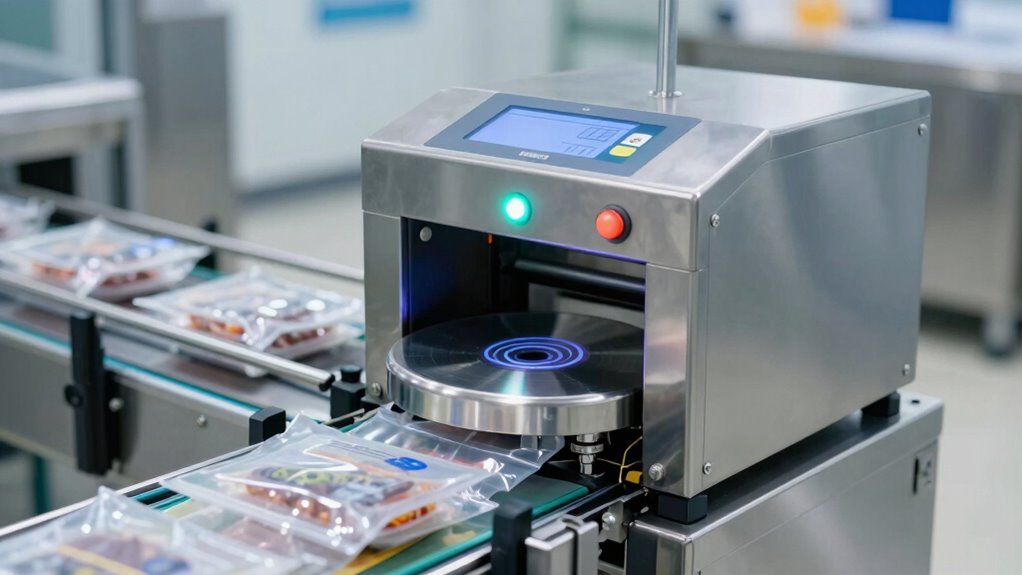
Metal detectors, on the other hand, serve as a critical line of defense against foreign objects. They instantly identify metal contaminants in your products, allowing you to reject affected items before they reach consumers. This not only protects your brand’s reputation but also complies with safety regulations. Combining metal detection with checkweighing enhances your overall quality assurance process, creating a multi-layered approach to product integrity. When a metal detector signals a potential contaminant, you can automatically trigger rejection mechanisms, minimizing the risk of contaminated products slipping through the process. Incorporating automated calibration ensures consistent accuracy over time, reducing manual adjustments and maintaining efficiency. Product sorting becomes more efficient with these advanced tools. You can set specific weight thresholds and metal detection parameters tailored to each product type, enabling your equipment to automatically sort items based on quality criteria. This automation streamlines your production line, reducing manual handling and increasing throughput. For example, products that fall outside the specified weight range are automatically diverted, ensuring only compliant items continue down the line. Similarly, any products flagged for metal contamination are promptly separated, maintaining safety standards without slowing down operations. This level of automation allows you to maintain high productivity levels while upholding rigorous quality standards. Additionally, integrating real-time data analysis can help monitor equipment performance and identify potential issues before they impact production. Proper calibration and maintenance routines are essential for sustaining the accuracy of detection systems over time. Ultimately, integrating checkweighers and metal detectors into your packaging process isn’t just about meeting regulatory requirements; it’s about building trust with your customers. Automated calibration ensures ongoing accuracy, while product sorting and contamination detection keep your products safe and consistent. These technologies work together to reduce waste, prevent recalls, and strengthen your brand’s reputation. Additionally, implementing proper biodiversity practices in your packaging and manufacturing can enhance your company’s environmental responsibility and sustainability efforts. As these technologies evolve, they continue to become more cost-effective, providing long-term savings and improved return on investment. By investing in these tools, you’re not only safeguarding your products but also enhancing your operational efficiency, making your manufacturing process smarter, safer, and more reliable.
checkweigher machine for packaging
As an affiliate, we earn on qualifying purchases.
As an affiliate, we earn on qualifying purchases.
Frequently Asked Questions
How Do Checkweighers Impact Overall Production Speed?
Checkweighers can considerably impact your overall production speed by enhancing throughput optimization. They quickly verify each package’s weight, catching underweight or overweight items instantly. This reduces delays caused by manual checks and minimizes product rework, keeping your line moving smoothly. While they add a step, their efficiency streamlines quality assurance, ultimately boosting your production efficiency by preventing issues before they escalate and maintaining consistent output.
What Maintenance Is Required for Metal Detectors?
Like a vigilant guardian, your metal detector needs regular maintenance. You must perform calibration procedures to guarantee sensitivity stays accurate, preventing false alarms that can slow production. Clean the coil and check for loose connections weekly, and replace worn parts as needed. Regularly testing the system with test samples helps maintain peak performance, reducing false alarms and ensuring consistent product safety. This ongoing care keeps your detection system reliable and efficient.
Are Checkweighers Suitable for All Product Types?
Checkweighers are versatile and suitable for many product types, but their effectiveness depends on product characteristics and equipment compatibility. You should assess factors like product shape, size, and packaging material to guarantee proper operation. While they work well for solid, uniform items, irregular or fragile products might require different solutions. Always verify that your checkweigher model matches your specific product requirements for peak performance and accurate weight checks.
How Do Metal Detectors Differentiate Between Contaminants?
Imagine metal detectors as super-sleuths with laser focus! They differentiate contaminants by analyzing metal properties, such as size, shape, and conductivity, using advanced metal detection technology. When a potential contaminant passes through, the system instantly identifies it based on these characteristics, triggering an alarm or rejection. This rapid contaminant differentiation guarantees your product stays safe, clean, and free from hidden metallic intruders, no matter how small or sneaky they are.
What Are the Latest Technological Advancements in Packaging QA?
You’ll find that the latest advancements in packaging QA include smarter inspection algorithms that adapt to different packaging materials, improving detection accuracy. New technologies incorporate AI-driven systems capable of analyzing complex packaging patterns in real-time. These innovations enhance defect detection and contamination control, ensuring product safety and quality. By integrating cutting-edge inspection algorithms with varied packaging materials, you gain more reliable quality assurance, reducing false positives and streamlining your packaging process.
Conclusion
You now understand how checkweighers and metal detectors elevate packaging quality beyond just visual checks. By catching issues early, you reduce waste and guarantee product safety. Did you know that over 90% of food recalls are due to contamination or mispackaging? Incorporating these advanced tools not only safeguards your brand but also boosts customer trust. Embrace these technologies to stay ahead in quality assurance and protect your consumers effectively.
Fall Picks
fall essentials
As an affiliate, we earn on qualifying purchases.