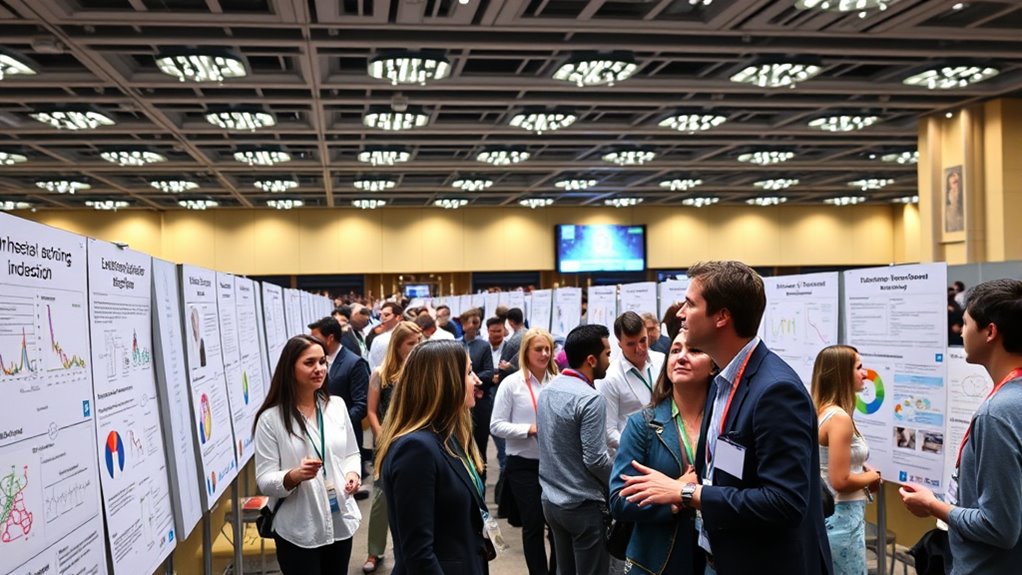

To succeed in networking as a scientist, actively participate in conferences by asking questions and sharing insights, which helps build professional relationships. Use poster presentations to showcase your research and engage with others in an intimate setting, sharpening your science communication skills. Leverage LinkedIn to highlight your expertise, share updates, and connect with potential collaborators. Building genuine relationships and maintaining an active online presence positions you for ongoing success—if you keep exploring, you’ll discover even more effective strategies.
Key Takeaways
- Engage actively at conferences by asking questions and participating in discussions to build professional relationships.
- Design clear, attractive posters to facilitate meaningful interactions and showcase research effectively.
- Use LinkedIn to create a strong profile, share updates, and connect with peers for ongoing collaboration opportunities.
- Approach networking as relationship-building, demonstrating genuine curiosity and enthusiasm for mutual scientific growth.
- Combine in-person interactions with digital engagement to expand professional reach and maintain long-term collaborations.
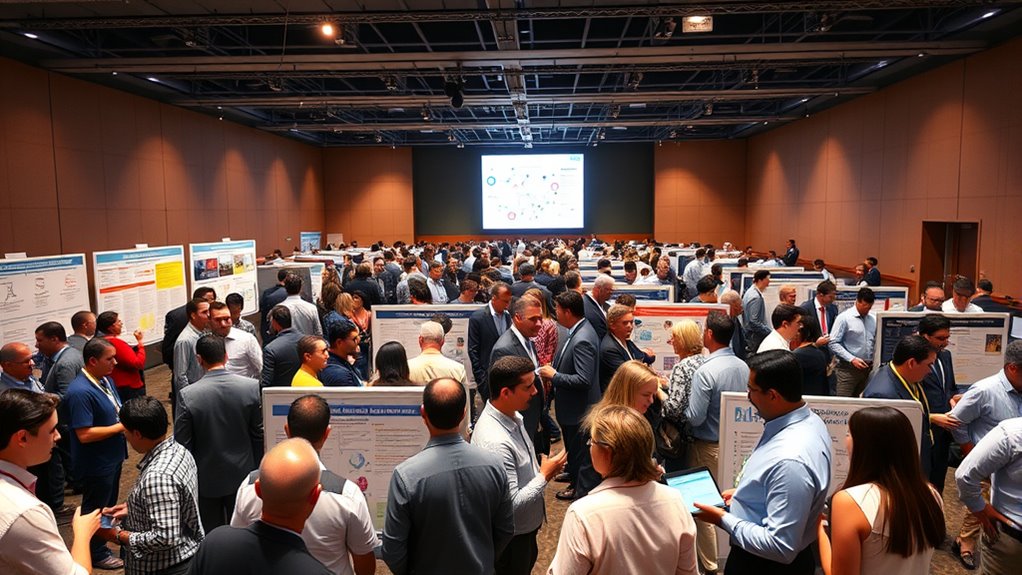
Have you ever wondered how some scientists effortlessly advance their careers and collaborate across disciplines? The secret often lies in effectively leveraging networking opportunities, whether at conferences, through posters, or on platforms like LinkedIn. These avenues open doors to collaborative opportunities that can propel your research forward and expand your professional reach. Attending conferences isn’t just about listening to presentations; it’s about actively engaging with peers, asking questions, and sharing your own insights. When you participate in discussions, you demonstrate your expertise and enthusiasm, making it easier for others to see potential for future collaborations. Presenting posters offers a more intimate setting, allowing you to showcase your work and spark conversations. A well-designed poster draws attention and invites questions, giving you a chance to explain your research clearly and passionately. These interactions are invaluable—they help you refine your science communication skills, which are *vital* for translating complex ideas into accessible language that resonates with diverse audiences. Effective science communication isn’t just about presentations; it’s about making your research understandable and compelling, encouraging others to see the value of your work and consider joint projects. Additionally, understanding the types of cookies used on professional platforms can help you manage your online privacy while maintaining a strong digital presence.
Beyond in-person events, digital platforms like LinkedIn have become essential tools for expanding your network. By building a professional profile that highlights your expertise, research interests, and accomplishments, you make it easier for colleagues and potential collaborators to find you. Regularly sharing updates about your work or commenting thoughtfully on others’ posts increases your visibility and demonstrates your active engagement in your field. LinkedIn also facilitates direct messaging, enabling you to reach out to scientists whose work inspires you or whom you’d like to collaborate with, without the pressures of face-to-face meetings. This online presence complements your conference and poster activities, creating a continuous thread of communication that keeps you connected and informed. Remember, networking isn’t solely about collecting contacts; it’s about cultivating meaningful relationships that foster mutual growth and shared scientific goals. When you approach these interactions with genuine curiosity and openness, you position yourself as a valuable collaborator.
Frequently Asked Questions
How Do I Find the Right Conference for My Research Area?
To find the right conference for your research niche, start by researching events that focus on your specific field. Look for conferences with a strong reputation in your area, as they attract influential scientists and offer valuable networking opportunities. Check past programs and speaker lists to guarantee your research aligns. Don’t hesitate to ask colleagues or mentors for recommendations—they can guide you toward events that will best showcase your work and connect you with the right people.
What Are Effective Ways to Follow up After Networking Events?
Think of follow-up as planting seeds that grow into strong professional trees. You should send personalized email templates, referencing your recent conversation or shared interests, to show genuine engagement. Keep your tone professional yet friendly, and aim to maintain these relationships over time. Regular check-ins, sharing relevant articles, or congratulating them on achievements help nurture connections, turning initial meetings into lasting collaborations.
How Can I Make My Poster Stand Out at Conferences?
To make your poster stand out, focus on a strong visual hierarchy that guides viewers effortlessly through your content. Use contrasting color schemes to highlight key points and draw attention to your main message. Keep your design clean and uncluttered, and guarantee your fonts are readable from a distance. Incorporate visuals like charts or images that complement your message. These strategies help attract interest and communicate your research effectively.
What Linkedin Strategies Are Best for Connecting With Scientists?
To connect with scientists on LinkedIn, focus on building your personal branding by sharing relevant content and insights regularly. Engage actively with your target community by commenting on their posts and participating in discussions. Use personalized connection requests that highlight your shared interests. Consistently sharing your research achievements and industry news helps you stay on their radar and establishes you as a knowledgeable, approachable professional in your field.
How Do I Balance Networking With Research Responsibilities?
Balancing networking with research starts with smart time management and prioritization. Imagine dedicating specific hours weekly for LinkedIn engagement and conference planning, so your research doesn’t suffer. For example, you could set aside mornings for experiments and afternoons for networking activities. By clearly defining your priorities, you maintain focus on your research goals while building meaningful connections, ensuring neither area is neglected.
Conclusion
Think of networking as planting seeds in a vast garden; each connection you make is a drop of water nurturing your future opportunities. By attending conferences, sharing posters, and weaving your story on LinkedIn, you’re building a vibrant ecosystem of collaboration and growth. Stay curious, be genuine, and let your passion blossom. Remember, every handshake and message is a stepping stone—turn these moments into the lush landscape of your scientific journey.