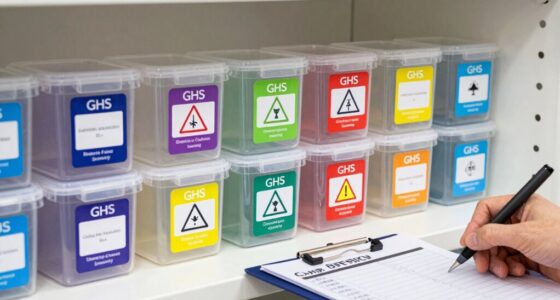

To conduct effective incident investigations in labs, you should use a proven root cause framework that systematically uncovers underlying issues rather than just surface symptoms. By integrating risk evaluation and reviewing safety protocols, you can identify hazards, procedural gaps, and vulnerabilities that led to the incident. This approach helps you develop targeted corrective actions and strengthens your safety culture. Keep exploring how to implement these strategies for safer lab environments.
Key Takeaways
- Implement systematic root cause analysis to identify underlying systemic issues behind lab incidents.
- Integrate risk evaluation to understand hazard influence and prioritize corrective actions.
- Review safety protocols to ensure compliance and identify gaps in training or communication.
- Use incident investigation frameworks to differentiate human error, equipment failure, or procedural flaws.
- Focus on addressing systemic issues to promote continuous safety improvements and prevent future incidents.
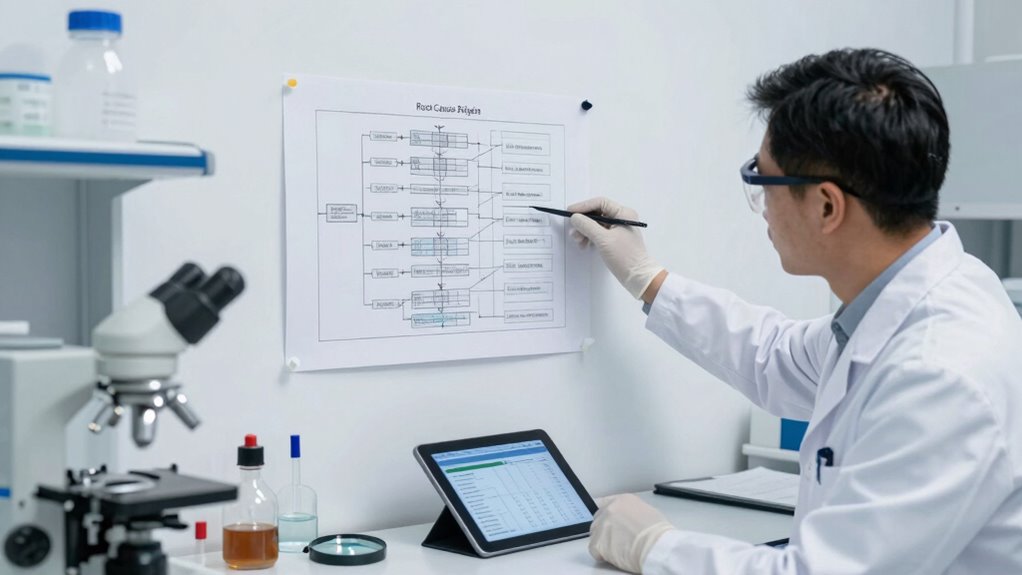
Have you ever wondered how organizations determine the root cause of an accident or safety breach? It all starts with a thorough incident investigation that digs deep beyond surface-level symptoms. To do this effectively, you need to understand the importance of a structured framework that guides you through identifying the core issues. One of the first steps is conducting a detailed risk evaluation. This process helps you evaluate the potential hazards present in your lab environment, enabling you to prioritize areas that need immediate attention. By systematically analyzing risks, you can identify vulnerabilities that might contribute to accidents, such as faulty equipment, procedural lapses, or environmental factors. Risk assessment isn’t a one-time task; it’s an ongoing process that keeps safety protocols current and relevant, ensuring you stay ahead of potential incidents.
Once you’ve evaluated the risks, you should review and reinforce your safety protocols. Safety protocols serve as the backbone of your lab’s safety culture, providing clear instructions on how to prevent accidents and respond promptly if they occur. When an incident happens, your investigation should start with verifying whether existing safety protocols were followed. If they weren’t, this could be a critical clue pointing to gaps in training, communication, or protocol design. If protocols were followed but the incident still occurred, it indicates a need to revisit and improve them. Effective incident investigations don’t just assign blame; they uncover systemic issues that allow hazards to persist. By cross-referencing your findings with established safety protocols, you can determine whether lapses in adherence contributed to the incident.
Furthermore, integrating risk evaluation insights into your investigation allows you to understand the sequence of events that led to the breach. You’ll want to trace each step, assessing how hazards identified during risk assessment played a role. This approach helps you distinguish between human error, equipment failure, or procedural flaws. It also guides you in recommending specific corrective actions, such as updating safety protocols, enhancing training, or modifying hazardous processes. Remember, the goal isn’t just to find what went wrong but to establish a preventive framework that minimizes future risks. A solid root cause analysis rooted in risk evaluation and safety protocols creates a resilient safety culture in your lab, empowering you to prevent incidents before they happen and maintain a safe working environment for everyone involved.
lab incident investigation kit
As an affiliate, we earn on qualifying purchases.
As an affiliate, we earn on qualifying purchases.
Frequently Asked Questions
How Do I Train Staff to Conduct Effective Incident Investigations?
You train staff by emphasizing the importance of thorough incident reporting and fostering a culture of accountability. Use hands-on workshops to teach them how to identify root causes and ask open-ended questions. Encourage team discussions to share insights and lessons learned. Reinforce that everyone’s participation matters, and accountability guarantees safety improvements. Regularly review investigation procedures, provide feedback, and recognize effective incident reporting to build confidence and competence.
What Tools Are Best for Root Cause Analysis in Labs?
Ever wonder what tools can reveal hidden causes in your lab? Start with fishbone diagrams and the 5 Whys to trace issues back to equipment calibration or safety protocol lapses. These intuitive tools help you identify root causes quickly, guiding effective corrective actions. Incorporate checklists and software solutions for thorough analysis. Mastering these tools empowers you to prevent future incidents and maintain a safe, compliant environment—making your lab safer and more efficient.
How Can I Ensure Unbiased Investigation Results?
To guarantee unbiased investigation results, you should focus on thorough data collection and bias mitigation. Gather all relevant information objectively, avoiding assumptions or leading questions. Use diverse perspectives to review findings, and document each step clearly. Implement checklists and standardized procedures to minimize personal biases. Regularly train your team on bias awareness, and review investigations for potential biases, making certain your conclusions are based on facts rather than subjective opinions.
What Are Common Pitfalls in Incident Investigations?
You should watch out for investigation bias, which can skew your findings, and guarantee documentation accuracy to support credible results. Rushing through the process or jumping to conclusions often leads to incomplete or inaccurate records, making it harder to identify root causes. Avoid confirming biases by questioning assumptions and gathering objective evidence. Staying thorough and unbiased helps you uncover true causes and prevent future incidents effectively.
How Often Should Incident Investigations Be Reviewed and Updated?
Like a ship’s captain adjusting the sails, you should review your investigation frequency and update your review schedule regularly, ideally every six to twelve months. This guarantees your incident investigations stay relevant and effective, adapting to new risks or changes in your lab environment. Regular reviews help catch overlooked issues early, keep your safety protocols current, and reinforce a proactive safety culture.
root cause analysis tools for labs
As an affiliate, we earn on qualifying purchases.
As an affiliate, we earn on qualifying purchases.
Conclusion
By applying the root cause framework, you can uncover the real reasons behind lab incidents and prevent future ones. Did you know that 80% of accidents stem from a chain of root causes, not just the immediate issue? By digging deeper, you’ll transform your lab safety culture and reduce recurring incidents. Remember, identifying the true source is your best tool for creating a safer, more reliable environment for everyone involved.
safety protocol review checklist
As an affiliate, we earn on qualifying purchases.
As an affiliate, we earn on qualifying purchases.
hazard risk assessment equipment
As an affiliate, we earn on qualifying purchases.
As an affiliate, we earn on qualifying purchases.