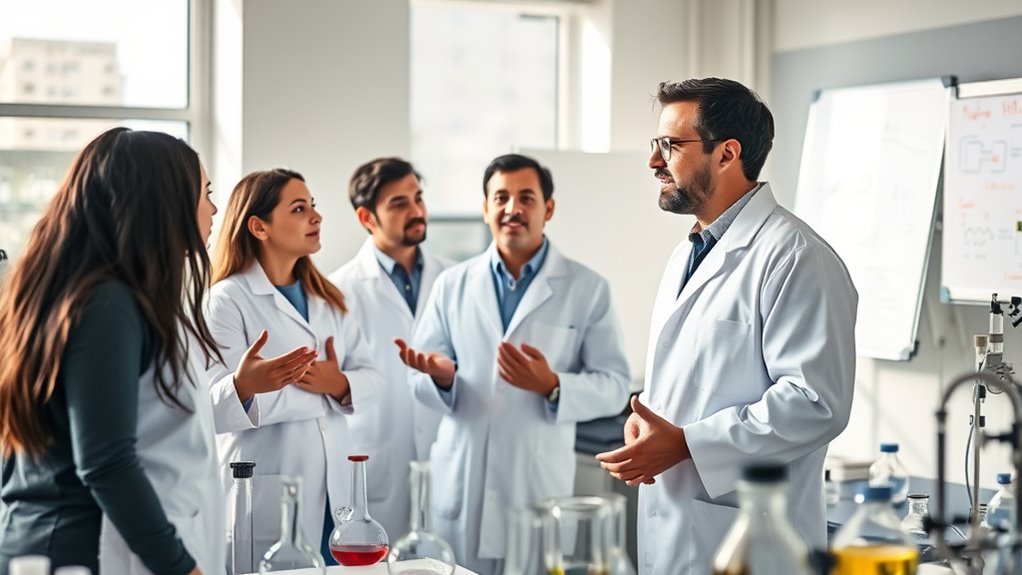

Mastering soft skills like communication, negotiation, and leadership is essential for your success as a chemist. These abilities help you collaborate effectively with diverse colleagues, resolve conflicts calmly, and guide projects confidently. Strong soft skills also build trust and foster a positive work environment, enhancing your professional reputation. Developing these skills takes intentional effort, but once you strengthen them, you’ll navigate complex social dynamics with ease. Keep going to discover strategies that can elevate your career further.

Prime made for students and young adults
- Fast, free delivery for dorm and study essentials
- Prime Video and Amazon Music included
- Member-only deals
Key Takeaways
- Effective communication enables chemists to clearly share complex ideas, data, and results with diverse colleagues and stakeholders.
- Strong negotiation skills help chemists resolve conflicts, secure resources, and reach mutually beneficial agreements in research and project management.
- Demonstrating leadership fosters teamwork, inspires innovation, and guides scientific projects toward successful completion.
- Developing soft skills enhances collaboration, problem-solving, and adaptability in dynamic laboratory and research environments.
- Continuous improvement of communication, negotiation, and leadership skills positions chemists for long-term career growth and professional success.

While technical expertise is indispensable for chemists, developing soft skills is equally important for success in the field. One of the most critical soft skills is effective teamwork. You’ll often find yourself collaborating with colleagues from diverse backgrounds—laboratory technicians, project managers, and other scientists. To succeed, you need to communicate clearly, listen actively, and respect differing perspectives. Effective teamwork ensures that experiments run smoothly, data is accurately interpreted, and project goals are achieved efficiently. When everyone pulls together, you reduce errors and foster a positive working environment. However, teamwork isn’t just about cooperation; it also involves conflict resolution. Disagreements can arise over experimental approaches, data interpretation, or project priorities. Your ability to address these conflicts constructively can make or break your progress. Instead of letting disagreements escalate, focus on understanding each person’s point of view and finding common ground. This might mean mediating discussions or proposing compromises that satisfy all parties. Developing strong conflict resolution skills helps maintain trust and keeps projects moving forward without unnecessary delays. It’s essential to stay calm and objective when disagreements happen, focusing on the shared goal of scientific accuracy and innovation. Moreover, recognizing the importance of soft skills in science can enhance collaboration and overall project success. By approaching conflicts as opportunities to improve and learn, you turn potential setbacks into growth moments. Effective teamwork and conflict resolution are interconnected; they require empathy, patience, and good communication. When you foster an environment where team members feel heard and respected, collaboration becomes more productive, and conflicts are resolved more efficiently. These skills also build your reputation as a reliable, trustworthy professional who can navigate complex social dynamics in the workplace. As a chemist, you’ll encounter situations where your ability to work well with others directly impacts the success of your projects. Whether you’re leading a team or contributing as a team member, mastering these soft skills ensures that your technical knowledge is complemented by strong interpersonal abilities. Ultimately, combining your scientific expertise with effective teamwork and conflict resolution skills makes you a more versatile and valuable professional. It positions you not just as a capable chemist but as a leader who can guide projects through challenges and foster a collaborative environment. Developing these soft skills takes intentional effort, but they are fundamental for long-term success in the ever-evolving world of science.
scientist communication skills training book
As an affiliate, we earn on qualifying purchases.
As an affiliate, we earn on qualifying purchases.
Frequently Asked Questions
How Can Chemists Develop Better Emotional Intelligence?
You can develop better emotional intelligence by practicing emotional awareness, recognizing your own feelings and reactions. Focus on empathy development by actively listening to others, understanding their perspectives, and responding thoughtfully. Engage in self-reflection to identify your emotional triggers and improve your responses. Additionally, seek feedback from colleagues to enhance your awareness of how your emotions impact interactions. Consistently applying these strategies will strengthen your emotional intelligence over time.
What Are Effective Ways to Handle Conflict in the Lab?
Imagine your lab as a delicate chemistry set where a single spark could cause chaos. When conflict arises, prioritize lab safety by staying calm and focusing on resolution. Openly listen to all perspectives, clarify misunderstandings, and seek common ground. Use conflict resolution techniques like mediation if needed. Remember, maintaining professionalism guarantees everyone stays safe, and the experiment continues smoothly—because a calm chemist keeps the lab safe and productive.
How Do Soft Skills Influence Career Advancement in Chemistry?
Your soft skills greatly influence your career advancement in chemistry. By honing networking strategies, you build valuable professional relationships that open doors to opportunities. Effective time management shows your reliability and dedication, making you a standout candidate for promotions. When you communicate clearly and lead confidently, you inspire teams and earn respect. These skills help you navigate challenges, foster collaborations, and ultimately accelerate your growth within the field.
What Training Programs Are Available for Improving Leadership Skills?
You can enhance your leadership skills through various training programs focused on team building and decision making. Look for workshops, online courses, or seminars offered by professional organizations or universities. These programs often include practical exercises that help you develop effective team management and strategic decision-making abilities. Participating actively in such training boosts your confidence, improves collaboration, and prepares you for leadership roles in your chemistry career.
How Can Chemists Improve Their Persuasive Communication Skills?
You can improve your persuasive communication skills by mastering persuasive techniques like storytelling, emphasizing benefits, and addressing objections directly. While technical knowledge is essential, overcoming communication barriers requires active listening, clear language, and confidence. Practice tailoring your message to your audience, ask for feedback, and refine your approach. These strategies help you connect, influence, and build trust more effectively, making your communication genuinely compelling and persuasive.
Conclusion
Just as alchemists sought to transform base metals into gold, developing your soft skills can turn your chemistry expertise into true professional gold. Mastering communication, negotiation, and leadership isn’t just about technical prowess—it’s about forging stronger connections and inspiring others. Remember, even Sherlock Holmes relied on keen observation and sharp social skills. By honing these abilities, you’ll unleash new levels of success and influence, proving that in chemistry and life, the human element truly makes all the difference.
Fall Picks
fall essentials
As an affiliate, we earn on qualifying purchases.