When you burn caramel, the heat causes sugar molecules to break down, releasing volatile compounds and forming carbon. As temperatures rise, these chemical reactions produce a dark, charred residue with a bitter, acrid flavor and unpleasant aroma. Instead of the rich, sweet notes of proper caramel, you get a harsh, burnt taste. To avoid this, understanding the chemical changes helps you control the process—if you’re interested, discover what happens at the microscopic level.
Open a free Amazon Business account
Business pricing, bulk buying and tax-exempt orders.
As an affiliate, we earn on qualifying purchases.
Key Takeaways
- Burning sugar causes chemical decomposition, forming carbon and volatile compounds that alter its properties.
- Overheating turns the caramel dark brown or black, indicating the formation of burnt, charred residue.
- Excess heat destroys desirable flavor molecules, resulting in a bitter, acrid taste and unpleasant aroma.
- The chemical reactions break down the sugar molecules, producing harsh, undesirable compounds.
- Burning transforms the smooth, sweet caramel into a brittle, burnt crust with a harsh flavor profile.
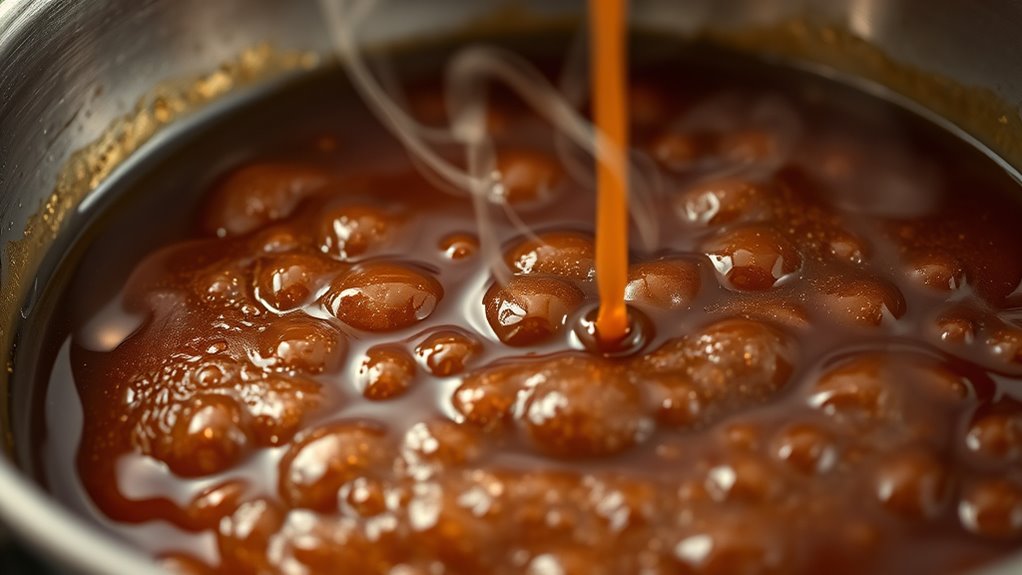
Have you ever wondered what happens when you burn caramel? When you heat sugar past its ideal caramelization point, it undergoes a series of complex chemical changes, fundamentally altering its properties. This process involves sugar chemistry, where heat causes the molecules in sugar—primarily sucrose—to break down and recombine, creating new compounds that define the flavor and color of caramel.
As you heat sugar, it first melts into a clear, golden liquid, but if you keep going, the heat triggers chemical reactions that deepen its hue and change its taste. When you burn caramel, you’re pushing these reactions to an extreme, resulting in a burnt flavor that’s often bitter and acrid. Understanding the science behind caramelization helps explain why these changes occur at the molecular level.
In terms of sugar chemistry, burning caramel is essentially an overextension of the caramelization process. Normally, controlled heating causes sugar molecules to break apart and form new structures like diacetyl and furans, which are responsible for the rich, sweet, and nutty flavors we associate with caramel. But when you burn it, the heat becomes too intense, causing the sugar molecules to decompose further into carbon and various volatile compounds.
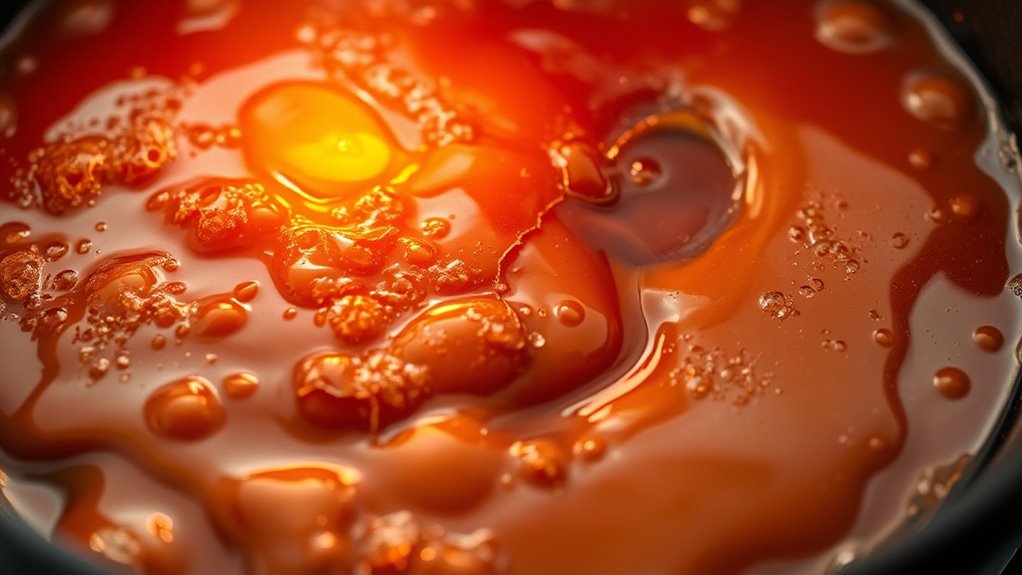
This breakdown produces a blackened, charred substance that’s far from the smooth, rich caramel you want. Instead, it’s a sign that the sugar has reached its limit, transforming into a bitter, burnt residue. The formation of carbon during burning is a clear indicator of the chemical breakdown of sugar molecules, which contributes to the burnt flavor.
Flavor development takes a dramatic turn when you burn caramel. Instead of the complex, inviting aroma of properly caramelized sugar, you get a harsh, acrid smell that signals the breakdown of desirable flavor compounds. The intricate balance of sweetness and nuttiness turns into a sharp, unpleasant bitterness.
This is because the delicate molecules that give caramel its depth are destroyed by excessive heat, leaving behind compounds that taste burnt and unpleasant. The more you continue to heat the sugar, the more these undesirable flavors dominate, masking any residual sweetness and leaving a harsh aftertaste.
candy thermometer for caramelization
As an affiliate, we earn on qualifying purchases.
As an affiliate, we earn on qualifying purchases.
Frequently Asked Questions
Can Burnt Caramel Be Salvaged or Repurposed?
Burnt caramel can often be salvaged or repurposed, depending on how burnt it is. If it has a deep, bitter flavor, you might still use it in small amounts for a smoky caramel flavor in sauces or desserts.
For culinary uses, try blending it into whipped cream or adding it to ice cream for an interesting twist. However, if it’s too bitter, it’s best to start fresh to achieve the perfect caramel flavor.
Does Burnt Caramel Produce Harmful Fumes or Chemicals?
When you burn caramel, you might think it’s harmless, but it can actually produce harmful fumes and chemical hazards. These caramel fumes contain compounds that can irritate your eyes, nose, and throat.
Inhaling them in large amounts isn’t a good idea. So, it’s better to avoid burning caramel, as the smoke and fumes could pose health risks.
Turning a sweet treat into a potential hazard.
How Does Burnt Caramel Affect the Texture of Desserts?
When you burn caramel, it causes a significant texture change in desserts. The burnt caramel becomes harder and more brittle, making your treats less smooth and more crumbly.
The caramel flavor also turns bitter, which can affect the overall taste. You might notice a gritty or uneven surface, especially if the burnt spots aren’t evenly distributed.
This texture change can make desserts less appealing and harder to cut or serve.
Is Burnt Caramel Safe to Taste or Eat?
Think of burnt caramel as a fiery passion that’s hard to ignore. You might wonder if it’s safe to taste or eat.
While a deep caramel flavor can add complexity, burnt caramel can contain compounds that aren’t ideal for culinary safety. It’s best to avoid consuming heavily burnt caramel, as it can taste bitter and may cause discomfort.
When in doubt, trust your senses—safety always comes first in the kitchen.
What Are the Best Methods to Prevent Burning Caramel?
To prevent burning caramel, you should monitor the cooking temperature carefully, keeping it at a steady medium or medium-low heat. Stir the mixture constantly to prevent hotspots and uneven caramel color.
Using a heavy-bottomed pan helps distribute heat evenly. Also, watch for the caramel color; once it reaches your desired hue, remove it promptly.
These steps guarantee your caramel doesn’t burn and achieves that perfect golden finish.
Conclusion
So, next time you hear someone say burnt caramel is just a mistake, think again. When you burn caramel, you’re actually creating complex flavors that can add depth to desserts—if you like a bitter edge. It’s not just ruined; it’s transformed. That blackened, smoky taste isn’t just a flaw. It’s a bold choice, adding a unique character. So, whether you see it as a disaster or a daring flavor, remember: burning caramel is all about perspective.
Flea & tick season Picks
flea and tick prevention
As an affiliate, we earn on qualifying purchases.