Deodorants work by neutralizing odor-causing bacteria and often masking smells with fragrances, helping you stay fresh. Antiperspirants contain ingredients like aluminum compounds that block sweat glands to reduce sweating and keep you dry. Both products may include natural ingredients like aloe vera or charcoal for gentler options, especially if you have sensitive skin. Understanding how they operate can help you choose the right product—keep exploring to learn more about their differences and benefits.
Key Takeaways
- Deodorants neutralize odor-causing bacteria and often contain fragrances to mask body odor.
- Antiperspirants contain aluminum compounds that block sweat ducts to reduce perspiration.
- Natural deodorants use ingredients like baking soda and essential oils to absorb moisture and control odor.
- Both products aim to improve freshness but differ in their primary function—odor control versus sweat reduction.
- Choosing the right product depends on skin sensitivity, moisture needs, and personal preferences.
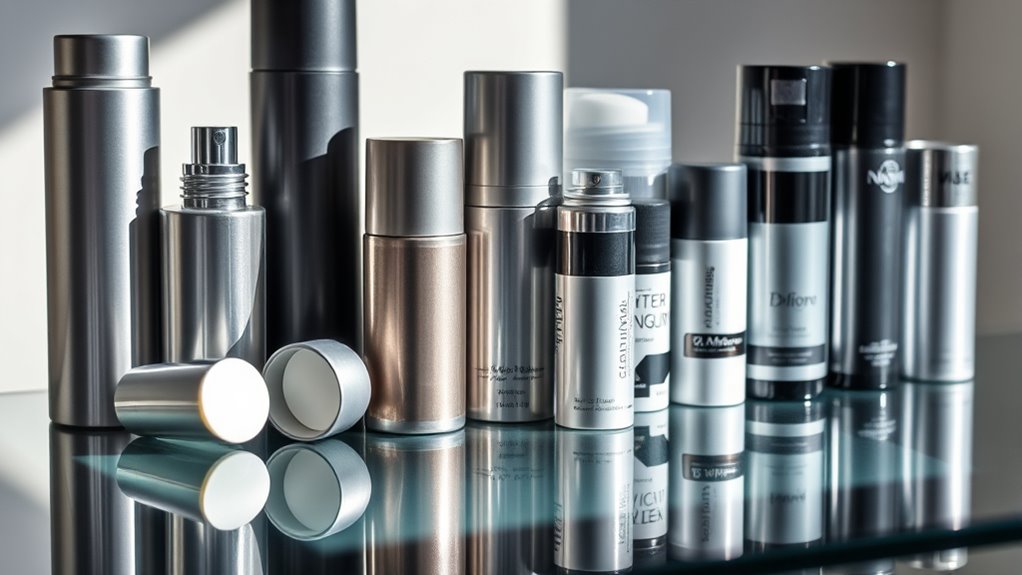
Deodorants and antiperspirants are everyday products designed to help you manage body odor and reduce sweating. When choosing between the two, it’s important to understand how each works and what ingredients they contain. Many people look for options with natural ingredients, especially if they have skin sensitivities. Natural ingredients like aloe vera, coconut oil, witch hazel, and essential oils are popular because they tend to be gentler on your skin and less likely to cause irritation. If you find that your skin reacts badly to certain chemicals or synthetic fragrances, opting for products with natural components can make a significant difference. These ingredients not only smell pleasant but also support healthier skin and reduce the chances of redness or rashes.
Natural ingredients like aloe vera and coconut oil soothe skin and reduce irritation.
Deodorants primarily focus on controlling odor. They contain antimicrobial agents that target the bacteria responsible for producing unpleasant smells. Since bacteria thrive in moist, warm environments—like your underarms—deodorants work by neutralizing odor-causing bacteria or masking the smell with fragrances. If you’re concerned about skin sensitivities, look for deodorants labeled as hypoallergenic or free from artificial fragrances, alcohol, and dyes. These formulations tend to be milder and less likely to trigger reactions. Many natural deodorants use ingredients like baking soda, arrowroot powder, or charcoal to absorb moisture, helping you stay fresh throughout the day without blocking your sweat glands. Additionally, some products incorporate antimicrobial properties to enhance odor control naturally.
Antiperspirants, on the other hand, are designed to reduce sweating itself. They contain active ingredients like aluminum compounds that temporarily block your sweat ducts. While this can be effective in controlling excessive perspiration, some people worry about potential skin sensitivities or health concerns linked to aluminum. If you have sensitive skin or prefer to avoid aluminum, there are mineral-based or natural alternatives that aim to minimize irritation. These products often rely on plant-based extracts and mineral powders to absorb moisture and keep you dry without the use of synthetic chemicals.
Understanding how these products work can guide you in selecting the right one for your needs. If your focus is solely on odor control and you have sensitive skin, choosing a natural deodorant with gentle ingredients may be your best bet. If your main concern is excessive sweating, look for antiperspirants formulated for sensitive skin, which often feature fewer irritants. Always read ingredient labels carefully, especially if you have skin sensitivities, to avoid anything that could cause discomfort. Ultimately, finding the right deodorant or antiperspirant involves considering your skin type, sensitivities, and personal preferences for natural ingredients versus synthetic formulations.
Frequently Asked Questions
Are Natural Deodorants as Effective as Commercial Ones?
Yes, natural deodorants can be as effective as commercial ones, especially if they contain plant-based ingredients and aluminum alternatives. They target odor-causing bacteria without blocking sweat, which some users prefer. While they might need reapplication throughout the day, many find natural options work well for their needs. Choosing the right formula with effective ingredients guarantees you stay fresh and comfortable without relying on synthetic chemicals.
Can Antiperspirants Cause Health Issues Over Time?
Are antiperspirants safe to use long-term? You might wonder if they cause health issues. Some research suggests they could lead to hormonal disruption or skin irritation over time, especially with frequent use. While most people use them without problems, it’s wise to be cautious. If you notice persistent skin irritation or concerns about hormones, consider switching to natural options. Always listen to your body and consult a healthcare professional if needed.
How Do Deodorants Differ From Body Sprays?
You’ll notice that deodorants and body sprays differ mainly in fragrance longevity and spray dispersion. Deodorants target odor, often providing longer-lasting scent with a more concentrated formula, while body sprays offer a lighter, more diffuse spray that disperses quickly. If you want a subtle, invigorating scent that lasts longer, deodorants are your best choice. For quick, widespread freshness, body sprays work well, covering more area fast.
Are There Any Side Effects From Long-Term Use?
Long-term use of deodorants and antiperspirants is generally safe for most people, but some worry about ingredient concerns like aluminum and parabens. Studies show that adverse effects are rare, but a small percentage report skin irritation or allergic reactions over time. To guarantee long-term safety, choose products with fewer synthetic ingredients, and consider consulting your doctor if you notice persistent skin issues or have health concerns.
What Ingredients Should I Avoid in Deodorants?
You should avoid deodorants with aluminum compounds and artificial fragrances. Aluminum compounds can clog sweat glands and may be linked to health issues, while artificial fragrances can cause skin irritation or allergic reactions. Opt for natural or fragrance-free options to reduce these risks. Always read labels carefully, and choose products with natural ingredients to protect your skin and overall health.
Conclusion
So, next time you reach for that deodorant or antiperspirant, remember—you’re basically telling your sweat glands to take a vacation. Ironically, you’re trying to hide the evidence of your body’s natural process, all while hoping no one notices your “fresh” scent. It’s a funny game of concealment, isn’t it? But hey, whether you choose to block or mask, at least you’re doing it with style—and a little bit of irony.