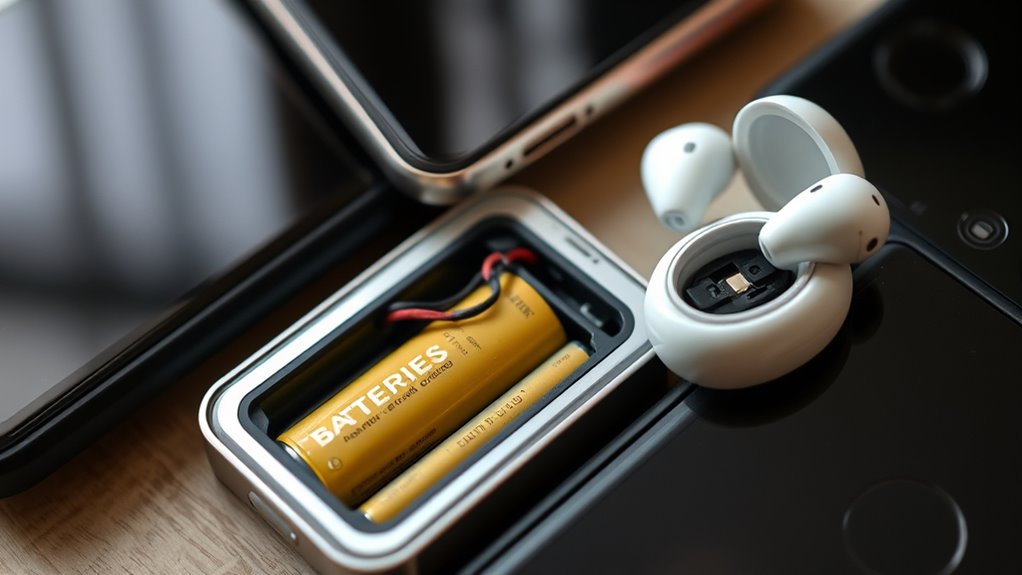

Batteries in gadgets age because the chemical reactions inside them gradually break down over time, reducing their ability to hold a charge. Every time you recharge, chemical wear happens, and this causes capacity loss. Frequent full charges and exposure to heat speed up the process. As the internal structure deteriorates, the battery can’t power your device as long. If you want to understand how to slow this down, more details await you below.
Key Takeaways
- Chemical reactions inside batteries degrade over time, reducing their ability to hold a full charge.
- Each charging cycle accelerates chemical wear, leading to capacity loss with repeated use.
- Partial charges are less damaging but still contribute to battery aging over many cycles.
- External factors like heat speed up chemical degradation and shorten battery lifespan.
- Proper charging habits and avoiding complete drains can slow chemical deterioration and extend battery life.
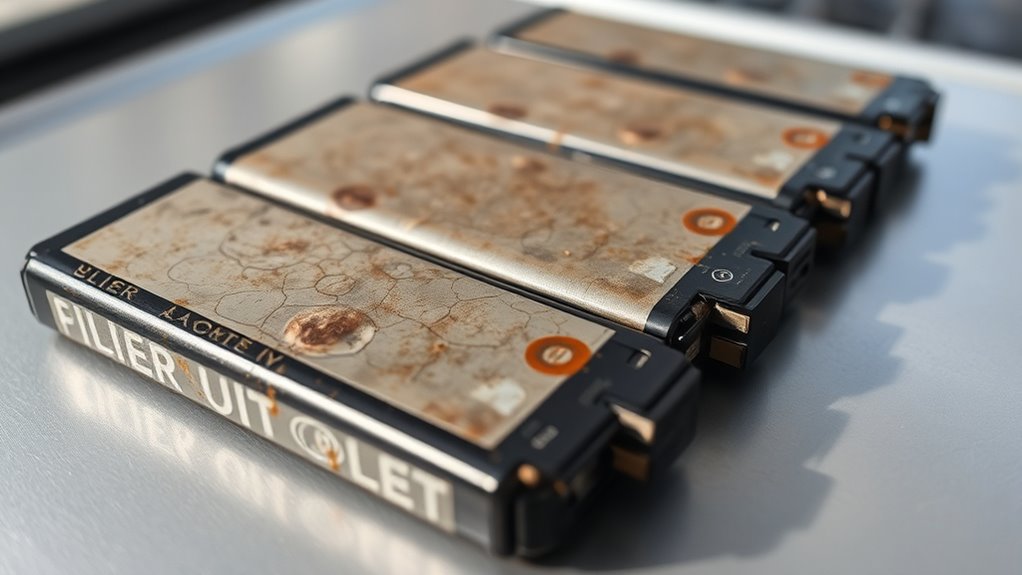
Batteries power the gadgets we rely on every day, from smartphones to laptops and smart home devices. Without them, these devices would be useless, and your daily routines would come to a halt. But over time, you might notice your battery doesn’t last as long or charges as quickly. That’s because batteries age, and understanding why helps you take better care of them. One key factor is battery chemistry. Different types of batteries, like lithium-ion, have specific chemical processes that generate power. These chemical reactions happen repeatedly as you use and recharge your device. Over time, the chemicals degrade, reducing the battery’s capacity to hold a charge. This degradation is inevitable, but how quickly it happens depends on how you treat your device.
Charging cycles play a significant role in battery aging. A charging cycle is completed when you’ve used an amount of battery equal to 100% of its capacity—this could be a full 0% to 100% charge or multiple partial charges adding up to a full cycle. Every time you charge your device, it counts as a cycle, and each cycle accelerates chemical wear inside the battery. For example, if you frequently recharge your phone from 30% to 80%, you’re still using partial cycles, which cause less damage than full charges. But over time, even partial cycles add up and gradually diminish the battery’s ability to hold a full charge.
You might notice your device’s battery life decreasing faster as the number of charging cycles increases. This is because the chemical reactions inside the battery become less efficient, and the battery’s internal structure deteriorates. As a result, your device may shut off unexpectedly or show less screen time between charges. To extend your battery’s lifespan, it helps to avoid letting it drain completely or constantly keeping it at 100%. Instead, keeping your device charged between 20% and 80% can reduce the stress on its chemical components. Additionally, understanding the battery chemistry involved can help you make informed choices about usage and charging habits.
In addition, avoiding excessive heat and using proper charging accessories also helps preserve the chemical integrity of your battery. If you pay attention to these aspects—understanding battery chemistry and managing charging cycles—you can get the most out of your gadgets for longer. Battery aging is a natural process, but with mindful use, you can slow its progress and keep your devices running smoothly for years to come.
Frequently Asked Questions
How Do Temperature Changes Affect Battery Aging?
Temperature changes directly impact your battery aging process. When temperatures fluctuate, thermal expansion occurs, stressing the battery’s materials and accelerating wear. Repeated temperature cycling, where it heats up and cools down, causes internal stress and potential damage. You’ll notice reduced battery life over time, especially if exposed to extreme or frequent temperature shifts. Keeping your device in a stable, moderate temperature helps slow down this aging process and prolongs battery health.
Can Using a Charger Faster Than Recommended Harm Batteries?
Using a charger faster than recommended is like rushing a delicate process—you risk damaging your battery. A high-speed charger can cause more battery stress, leading to faster aging or reduced capacity over time. While quick charging is convenient, it often generates extra heat and strain, which can degrade the battery’s health. Stick to the manufacturer’s recommended charger speed to keep your battery healthier longer.
What Role Do Software Updates Play in Battery Lifespan?
Software updates play a significant role in battery lifespan through battery calibration and firmware optimization. When you install updates, they often improve how your device manages power, helping to calibrate the battery more accurately. This guarantees your battery reports its charge correctly and operates efficiently. Firmware optimizations can reduce unnecessary power drain, extending battery life. Regular updates keep your device running smoothly and help your battery last longer over time.
Are There Differences in Aging Between Lithium-Ion and Other Battery Types?
Sure, lithium-ion batteries age differently than others, like nickel-cadmium or lead-acid, thanks to their unique chemistry. You’ll find that their aging mechanisms involve gradual capacity loss and increased internal resistance, making your gadgets less peppy over time. While lithium-ion batteries tend to be more efficient and hold charge longer, they’re still susceptible to wear and tear, proving that all batteries, no matter the type, eventually hit the wall.
How Do Environmental Factors Influence Battery Degradation?
Environmental factors considerably influence battery degradation. Exposure to extreme temperatures accelerates chemical reactions within the battery chemistry, causing faster wear. Humidity and environmental pollution introduce moisture and contaminants that can corrode internal components, reducing lifespan. You should store your devices in cool, dry places and avoid exposing them to pollutants, as these conditions hasten battery aging. Proper care helps maintain battery health and prolongs its effective use.
Conclusion
So, next time your gadget’s battery suddenly dies like a spoiled diva, remember it’s just aging gracefully—or not so gracefully—like that vintage wine you forgot in the cellar. Batteries wear out, leak, and lose their mojo, turning your sleek device into a paperweight. It’s almost poetic—your high-tech marvel slowly becoming a relic, all thanks to good old chemical fatigue. Embrace the aging process, or just keep buying new gadgets; either way, batteries love a good downfall.