When comparing paper towels and cloths regarding absorbency, you’ll find paper towels excel at quick, heavy spills because of their layered fibrous design, soaking up liquids rapidly. Cloths, especially microfiber or terry fabrics, tend to absorb less initially and often need multiple passes, but they can be improved with advanced materials for better efficiency. To understand how material science impacts absorbency and which option suits your needs best, discover more about the science behind their design and function.
Key Takeaways
- Paper towels have layered fibers optimized for rapid liquid absorption, making them highly effective for quick cleanup.
- Microfiber cloths’ dense fibers trap liquids and dirt efficiently, often outperforming traditional cloths despite lower initial absorbency.
- Thick fabrics like terry cloth absorb more liquid per pass than thinner cloths, but generally require multiple passes to match paper towel efficiency.
- Modern absorbent technologies in microfiber enhance reusability and absorption capacity, offering sustainable alternatives to single-use paper towels.
- Overall, paper towels excel in immediate, heavy spills, while cloths provide sustainable, reusable options with varying absorption efficiencies.
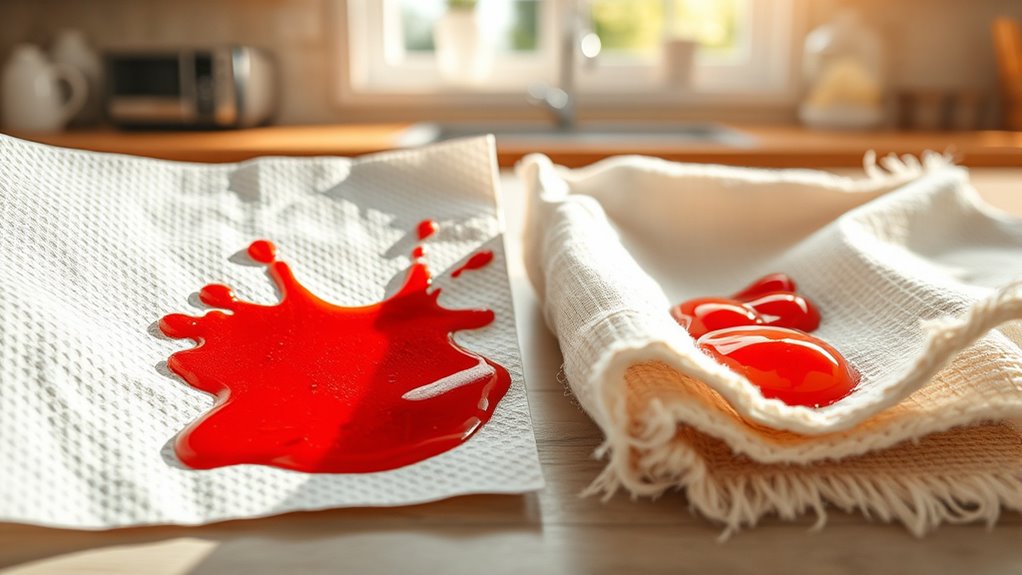
When it comes to drying hands or cleaning up spills, choosing between paper towels and cloths often depends on convenience, cost, and environmental impact. If you’re looking for eco-friendly alternatives, cloths generally stand out because they can be reused multiple times, reducing waste. This not only benefits the environment but can also be more cost-effective over time. While paper towels might seem cheaper initially, their recurring purchase costs add up quickly, especially in busy settings like offices or restaurants. Cloths, on the other hand, require an upfront investment and regular laundering, but their long-term savings and minimal waste make them an attractive choice for those prioritizing environmental sustainability.
Cloths are reusable, eco-friendly, and cost-effective alternatives to disposable paper towels.
In terms of absorbency science, cloths tend to be less absorbent than paper towels on a per-use basis, especially when it comes to quick, heavy spills. Paper towels are designed to be highly absorbent, with layered structures that trap moisture rapidly, making them ideal for fast cleanup. Their fibrous material often contains multiple layers, which can capture more liquid in a single wipe, reducing the number of towels needed. Cloths, however, absorb less liquid initially and might require multiple passes to soak up the same amount of spill, which can be less efficient in urgent situations. But the type of cloth also matters; thick, terry cloth towels or microfiber cloths can outperform thin fabrics, offering better absorption due to their dense fibers and specialized materials.
Additionally, advancements in absorbency technology have led to the development of more efficient microfiber cloths that combine reusability with high absorbent capacity. If eco-friendly alternatives are your priority, microfiber cloths are particularly remarkable. They are reusable, durable, and require fewer resources to produce than paper towels. Additionally, microfiber’s fine fibers trap dirt and liquids effectively, making them a practical choice for cleaning tasks. When considering cost effectiveness, cloths tend to win in the long run, especially if you factor in the cost of buying and disposing of paper towels repeatedly. Proper laundering and maintenance of cloths can extend their lifespan, ensuring you get maximum value out of your initial investment.
Ultimately, your choice depends on your specific needs. If you need quick, disposable solutions, paper towels will serve you well. But if you’re aiming for sustainability, long-term savings, and reducing waste, cloths—especially eco-friendly ones like microfiber or cotton—are a smarter choice. Balancing absorbency, cost, and environmental impact will help you make the best decision for your situation, whether at home or in a professional setting.

Amazon Basics Microfiber Cleaning Cloths, Ultra Absorbent, Lint Free, Streak Free, Non-Abrasive, Reusable and Washable, 16" x 12", Blue/White/Yellow, Pack of 24
- Size: 16 x 12 inches
- Quantity: 24-pack
- Material: Microfiber
As an affiliate, we earn on qualifying purchases.
As an affiliate, we earn on qualifying purchases.
Frequently Asked Questions
How Do Environmental Impacts Compare Between Paper Towels and Cloths?
You’ll find that cloths generally have a better environmental impact than paper towels. In a biodegradability comparison, cloths last longer and can often be reused, reducing waste. A resource consumption analysis shows cloths use fewer resources over time since you wash and reuse them. Paper towels, on the other hand, generate more waste and require continuous production, leading to higher environmental costs.
What Are the Cost Differences Over Time for Both Options?
You’ll find cloths more cost-efficient over time compared to paper towels. While paper towels seem cheaper initially, you keep buying them repeatedly, increasing costs. Cloths, on the other hand, require an upfront investment but can be washed and reused, leading to better long-term savings. This makes cloths a smarter choice for cost efficiency, especially if you want to reduce ongoing expenses and achieve long-term savings.
Which Option Is More Effective for Cleaning Greasy Surfaces?
If you’re tackling greasy surfaces, cloths often outperform paper towels because of their superior absorbency mechanisms and surface compatibility. Cloths can soak up more grease quickly, reducing the need for multiple wipes, while paper towels might tear or spread the mess. So, for stubborn, greasy messes, you’ll find cloths more effective, especially if you want thorough cleaning without endless paper waste. Don’t underestimate the power of a well-chosen cloth.
How Does Hygiene Vary Between Reusable Cloths and Disposable Towels?
You can keep your cleaning hygienic with reusable cloths, especially if they have antibacterial properties, which help reduce germs. However, their fabric durability matters—high-quality fabrics withstand frequent washing better. Disposable towels are more convenient for immediate hygiene, but they don’t offer the same antibacterial benefits and generate waste. Ultimately, choosing between them depends on your cleaning needs, but maintaining proper washing routines guarantees both options stay hygienic.
Are There Specific Materials That Enhance Absorbency in Cloths?
Your cloths’ absorbency skyrocket with specific materials. Opt for fibers like bamboo, microfiber, or hemp—they’re fiber-enhanced to soak up liquids like a sponge on steroids. These fabrics also boast superior fabric durability, meaning they last longer and maintain their absorbency over time. By choosing the right material, you guarantee your cloths are ultra-efficient, making cleanup faster and easier, almost like magic.
Conclusion
Choosing between paper towels and cloths isn’t just about absorbency—it’s about values. While paper towels offer quick disposal and convenience, cloths provide durability and eco-friendliness. Imagine wasting less, saving money, and caring for the planet, or opting for convenience that ends in waste. Your choice reflects what’s more important to you: instant ease or sustainable living. Whichever you choose, remember, every small act impacts the world around you.