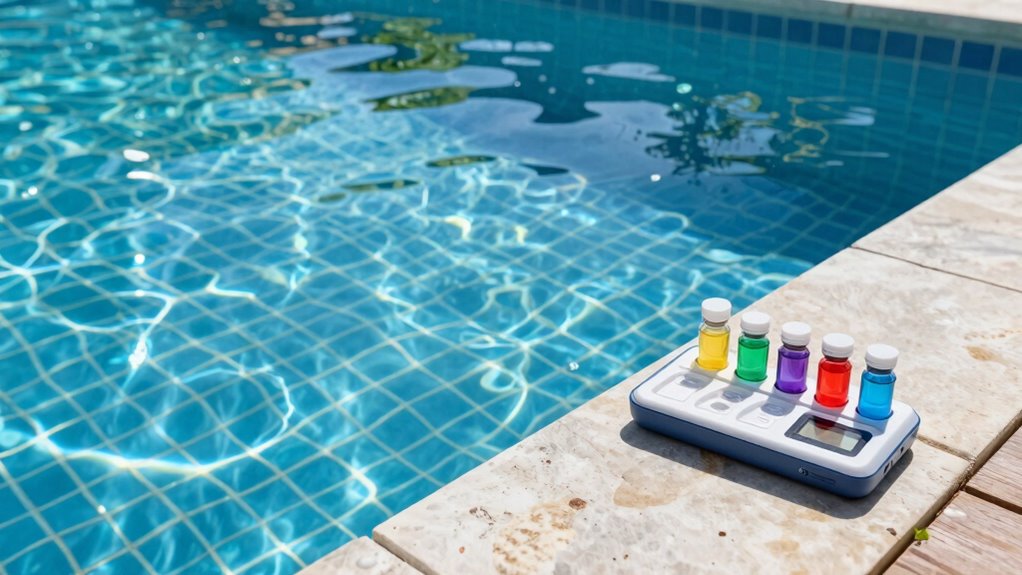

Keeping your pool clean doesn’t have to be a hassle. Just focus on keeping the water balanced by regularly checking and adjusting the chlorine and pH levels—aim for a pH of 7.2 to 7.6. Use testing kits or strips to make it simple. Good chemical balance prevents algae growth, cloudy water, and damage to your equipment. Stick with small, consistent tasks and you’ll enjoy a clear, inviting pool without the fuss. There’s more to discover to make it even easier.

Get school and study supplies delivered free — and shop member deals
- Fast, free delivery on millions of items
- Access to Prime Big Deal Days deals on October 6–7
- Prime Video, Amazon Music and more included
Key Takeaways
- Keep chlorine levels steady with regular testing to prevent algae without complex calculations.
- Use simple test strips or kits for quick pH and sanitizer checks.
- Balance pH between 7.2 and 7.6 to keep water comfortable and reduce chemical needs.
- Add chemicals like baking soda or muriatic acid in small amounts based on test results.
- Perform routine weekly checks to maintain clean, clear water with minimal effort.
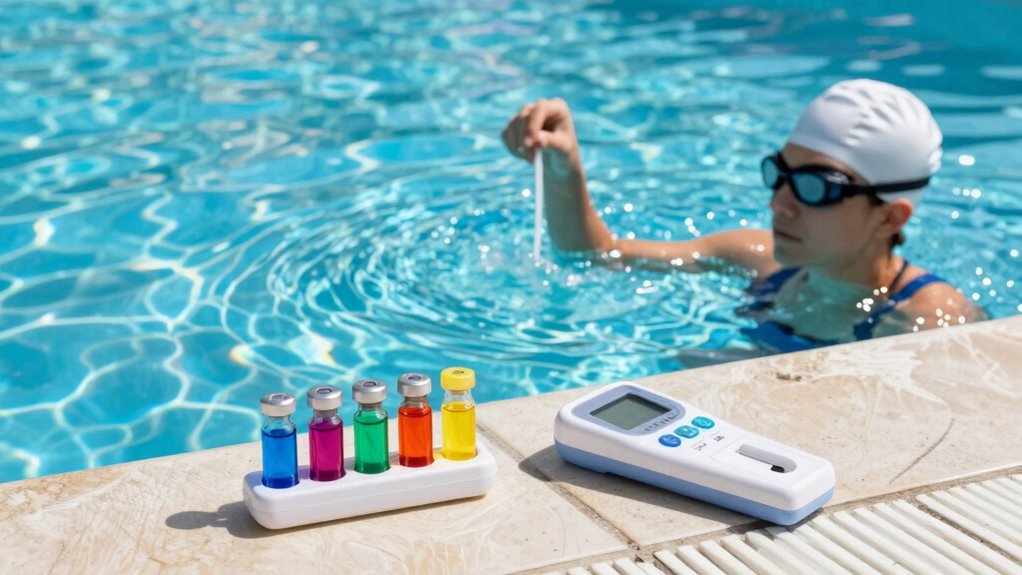
Have you ever wondered what keeps your pool safe and sparkling? It all comes down to understanding some basic pool chemistry, even if you’d rather avoid the complicated details. The most important aspects are algae prevention and pH balancing. When these are managed properly, your pool stays clean, clear, and inviting without much fuss. Algae prevention is vital because algae can turn your pristine water into a green, slimy mess in no time. To prevent this, you need to keep chlorine levels adequate, as chlorine is the main defense against algae growth. Regular testing and adding chlorine when necessary will help you stay ahead of algae problems. You don’t need to be a chemist—just make sure you check the chlorine levels weekly and adjust as needed.
Next, pH balancing is equally important because it affects how well your sanitizer works and how comfortable your water feels. If your pH is too high or too low, chlorine won’t work efficiently, and you could end up with cloudy water or skin irritation. The ideal pH range is typically between 7.2 and 7.6. To keep it in this range, you can use simple pH adjusters—either pH increasers (like baking soda) or pH decreasers (like muriatic acid). Testing your pool water regularly with affordable test strips or a testing kit makes this process straightforward. When you maintain proper pH levels, your sanitizer works more effectively, and you reduce the chances of mineral buildup or corrosion on equipment. Understanding the importance of pool chemistry can help you make better decisions for your pool’s maintenance routine.
Maintaining proper chemical balance is essential for preventing issues such as corrosion or scale formation, which can damage your pool equipment over time. Even if you’re not a chemistry enthusiast, staying on top of these basics doesn’t have to be complicated. Incorporate a weekly routine of testing your water, adjusting chlorine, and balancing pH. This routine helps prevent algae blooms and keeps your water feeling fresh and safe. Remember, the key is consistency—small, regular checks make a big difference over time. If you keep these two principles—algae prevention and pH balancing—in mind, you’ll find managing your pool chemistry becomes much less intimidating. Your pool will stay clear and inviting, and you’ll enjoy more time swimming and less time scrubbing or worrying about nasty surprises. Ultimately, understanding and maintaining these simple aspects of pool chemistry ensures your swimming experience remains enjoyable without turning into a science project.
As an affiliate, we earn on qualifying purchases.
Frequently Asked Questions
How Often Should I Test My Pool Water?
You should test your pool water at least twice a week to maintain proper pool safety and keep the water balanced. Regular testing helps you stay ahead of issues and prevents algae growth or cloudy water. Stick to a consistent maintenance schedule, especially during peak usage or hot weather, and adjust your chemical levels as needed. This routine keeps your pool safe, clean, and inviting for everyone.
What’s the Simplest Way to Balance Pool Chemicals?
To balance pool chemicals simply, start by testing your water regularly, aiming for accurate results to avoid chemical imbalance. Use test strips or a reliable test kit for quick, clear readings. Adjust chemicals gradually, adding small amounts of chlorine, pH stabilizers, or algaecide as needed. Keep track of your tests to improve test accuracy, and always follow product instructions. This straightforward approach keeps your pool safe, clean, and easy to manage.
Can I Use Household Products to Treat Pool Water?
You can try DIY treatments with household products, but exercise caution and prioritize chemical safety. For example, baking soda can help raise alkalinity, and vinegar can be used to lower pH. However, avoid mixing chemicals without proper knowledge, as improper use can harm your pool and your health. Always research thoroughly, follow safety guidelines, and consider testing your water regularly to guarantee balanced, safe pool conditions.
How Do I Fix Cloudy or Green Water Quickly?
To fix cloudy or green water quickly, start by shocking your pool with a chlorine treatment to kill algae and bacteria. Use water clarifiers to help clear up the cloudiness fast. For green water, focus on algae control by brushing the pool surfaces and running the filter continuously. Regularly test and balance your water chemistry to prevent future issues, ensuring your pool stays clear and inviting.
Is It Necessary to Drain and Refill My Pool Regularly?
You don’t always need to drain and refill your pool regularly if you maintain proper pool chemistry and perform routine pool maintenance. Constantly draining can waste water and disrupt chemical balance. Instead, focus on balancing pH, alkalinity, and sanitizer levels to keep water clear and safe. Always prioritize chemical safety and avoid overuse of chemicals, which can harm both your pool and environment. Regular testing and maintenance are key to a healthy, inviting pool.
Conclusion
Understanding pool chemistry might seem intimidating, but remember, it’s the secret to endless summer fun without the fuss. When you keep your water balanced, you’re the captain steering clear of algae storms and cloudy chaos. Think of your pool as a living entity needing love and care—a dance between chemicals and water. Embrace these basics, and you’ll find that maintaining your pool becomes less of a chore and more of a melody—an effortless harmony that invites you to jump in.
Halloween Picks
halloween
As an affiliate, we earn on qualifying purchases.