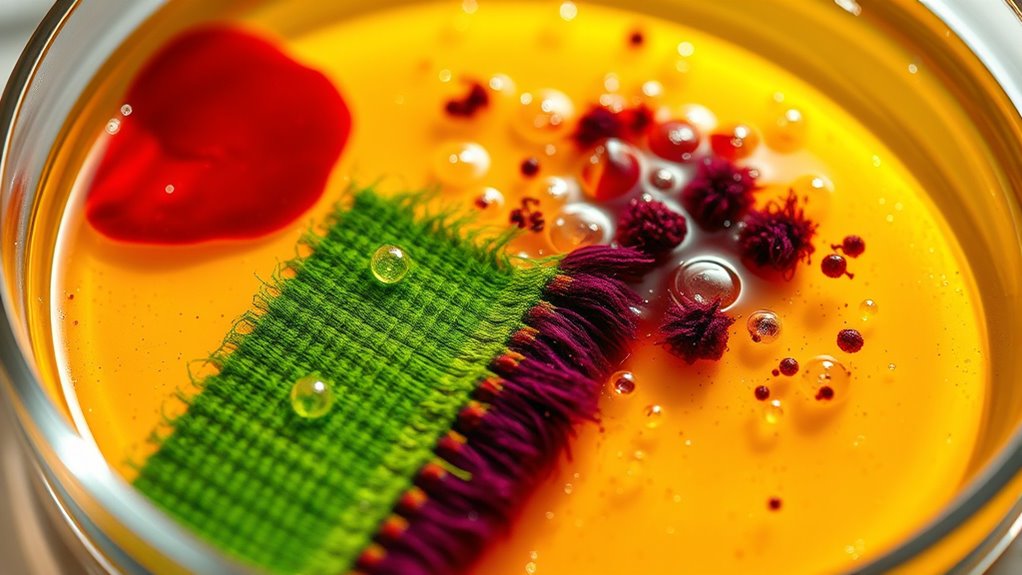

Enzymes in stain removers act like biological catalysts, attacking specific types of messes. Proteases break down protein stains like blood or sweat, while amylases target carbohydrate-based stains such as food or starch. Lipases jump in to break down fats and grease. These enzymes make stains easier to lift by breaking molecules into smaller, water-soluble pieces. If you want to understand how each enzyme works to fight stains effectively, there’s more to discover ahead.
Key Takeaways
- Enzymes are biological catalysts that target and break down specific stain molecules for easier removal.
- Proteases digest protein stains like blood and sweat into water-soluble fragments.
- Amylases break down carbohydrate-based stains such as food and starch into simpler sugars.
- Lipases hydrolyze fats and greases, making oily stains easier to rinse away.
- Proper conditions like temperature and pH optimize enzyme activity for effective stain removal.
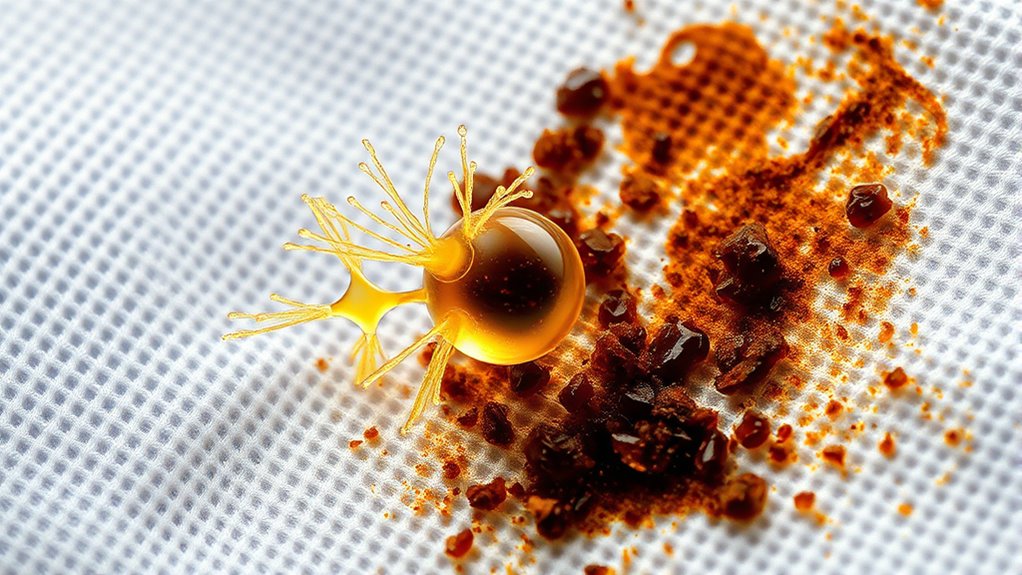
Stains can seem inevitable, but understanding the science behind stain removers helps you tackle them more effectively. One of the key players in many effective stain removers is enzymes, which work through specific enzyme mechanisms to break down stubborn messes. These biological catalysts are specially designed to target particular types of stains, making them highly efficient at restoring your fabrics.
Recognizing how stain chemistry interacts with enzymes allows you to select the right product and use it properly, saving you time and effort. Enzyme mechanisms involve complex but precise processes that accelerate the breakdown of complex molecules in stains. For example, proteases target protein-based stains like blood or sweat, breaking down large protein chains into smaller, water-soluble pieces that can be easily rinsed away.
Understanding stain chemistry helps you choose and apply the right products efficiently.
Amylases, on the other hand, focus on carbohydrate-based stains such as food or starch from pasta or potatoes. Lipases work on greasy or oily stains by breaking down fats into smaller components, which are easier to wash out. Each enzyme’s mechanism is tailored to its target, making stain removal more effective than traditional methods like scrubbing or soaking alone. Additionally, enzyme activity is influenced by factors like temperature and pH, so following product instructions ensures maximum efficiency.
Understanding stain chemistry is fundamental because it reveals why different stains require different approaches. For instance, protein stains are best tackled with proteases, while oil-based stains respond better to lipases. When you know what your stain is made of, you can choose an enzyme-based cleaner optimized for that material. Using enzyme stability considerations can further improve your results, as enzymes can be deactivated by certain conditions or chemicals.
This targeted action prevents the need for excessive scrubbing, which can damage fabrics or spread the stain further. Additionally, enzyme activity is influenced by factors like temperature and pH, so following product instructions ensures maximum efficiency. Warm water, for example, often enhances enzyme activity without damaging delicate fabrics. Knowing how enzymes work also helps you avoid common mistakes, such as using the wrong cleaning agents or applying stain removers incorrectly.
Since enzymes are biological molecules, they can be sensitive to certain chemicals or conditions. For example, bleach can deactivate enzymes, rendering them ineffective. Furthermore, understanding enzyme mechanisms can help you appreciate their role in mindfulness practices that promote patience and focused problem-solving during laundry routines. That’s why enzyme-based stain removers are usually formulated to be compatible with other laundry ingredients or used as a pre-treatment before washing. By understanding stain chemistry and enzyme mechanisms, you can better strategize your cleaning routine, making sure you’re using the right products at the right time.
Frequently Asked Questions
Do Enzyme-Based Stain Removers Work on All Types of Stains?
You might wonder if enzyme-based stain removers work on all stain types. While enzymes are effective, enzyme specificity means they target certain stain types like protein, fat, or carbohydrate-based stains.
They excel at removing organic messes like grass or blood but may struggle with synthetic dyes or mineral stains. To get the best results, choose an enzyme product suited for the specific stain you’re treating.
Are Enzyme Cleaners Safe for Delicate Fabrics?
Did you know that over 60% of fabric damages come from harsh cleaning agents? When considering enzyme cleaners, you should be cautious about fabric sensitivity.
While they’re effective, enzyme stability varies, so some delicate fabrics might be harmed. Always test a small, hidden area first, and choose enzyme cleaners specifically formulated for delicate materials.
This way, you protect your fabrics while still benefiting from their stain-fighting power.
How Long Do Enzymes Take to Break Down Stains?
You wonder how long enzymes take to break down stains. Enzyme activity varies depending on factors like temperature, stain type, and fabric.
Generally, you’ll see visible stain breakdown within 30 minutes to a few hours. For best results, follow product instructions, keep the treated area warm and moist, and give the enzymes enough time to work.
This guarantees maximum stain breakdown speed and effective cleaning.
Can Enzymes Cause Allergic Reactions or Skin Irritation?
You might wonder if enzymes cause allergic reactions or skin irritation. While enzyme allergies are rare, some people with skin sensitivity could experience irritation when exposed to enzyme-based products. It’s best to test a small patch first and follow safety instructions.
If you notice redness or discomfort, discontinue use and consult a healthcare professional. Always handle enzyme cleaners carefully to minimize skin contact and potential reactions.
Are Enzyme-Based Stain Removers Environmentally Friendly?
You might wonder if enzyme-based stain removers are eco-friendly. They often score well on biodegradability factors because enzymes naturally break down organic stains without harsh chemicals.
Many brands now formulate these products with eco-friendly formulations, reducing environmental impact. By choosing enzyme-based options, you support sustainable cleaning practices, as they clean effectively while minimizing pollution and harm to ecosystems.
Conclusion
Now that you know how enzymes break down stains, you can trust your stain remover to do its job effectively. Remember, understanding the science behind it gives you an edge in tackling tough messes. By choosing the right product, you’ll turn the tide and keep your clothes looking their best. Don’t forget, a little knowledge goes a long way—sometimes, it’s the secret weapon in your cleaning arsenal. Stay sharp and never let stains catch you off guard.