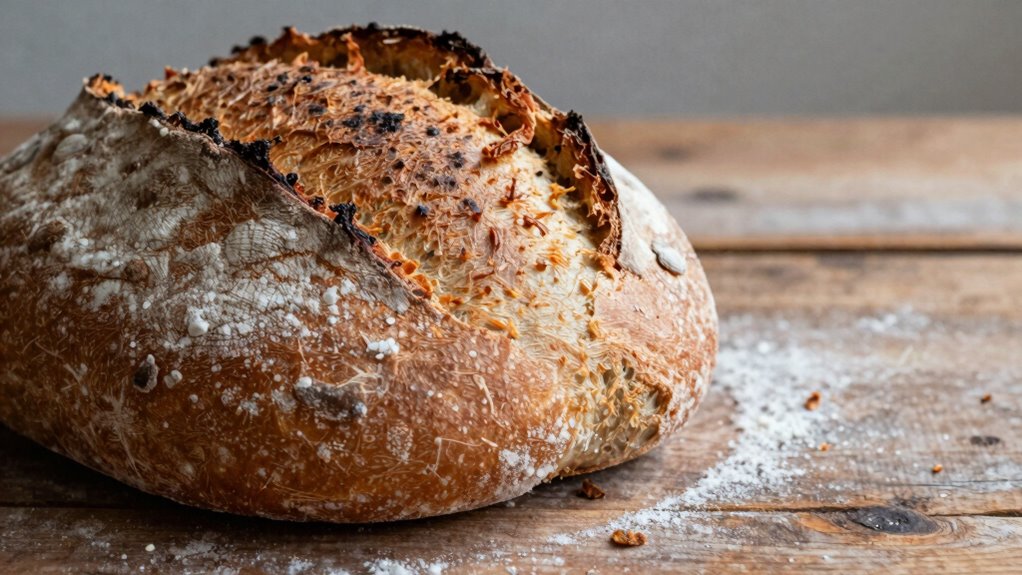
You might notice bread becomes stale because its molecular structure changes over time, causing it to lose moisture and become firmer and crumblier. During cooling, starch molecules retrograde and re-crystallize, pushing out water and making the texture tougher. Even with proper storage, moisture gradually escapes, and crust formation can slow or speed up staling. Understanding these molecular shifts can help you keep bread fresher longer and reveal more ways to preserve its softness.

Prime made for students and young adults
- Fast, free delivery for dorm and study essentials
- Prime Video and Amazon Music included
- Member-only deals
Key Takeaways
- Bread becomes stale due to starch molecules re-crystallizing, which expels water and causes firmness.
- Moisture gradually evaporates from the bread, leading to dryness and tougher texture.
- The crust hardens over time, influencing moisture loss and contributing to staleness.
- Molecular realignment during cooling causes starch retrogradation, increasing crumb firmness.
- Proper storage slows moisture loss, but staling continues due to ongoing molecular changes.

When bread sits out for too long, it becomes stale because of changes happening at the molecular level. You might notice it loses its softness and becomes tougher to enjoy, but what’s really going on is a complex process involving moisture loss and starch retrogradation. During baking, the bread’s structure is formed through the fermentation process, where yeast consumes sugars, producing carbon dioxide and alcohol that help the bread rise. Once baked, this fermentation stops, but the bread still contains residual moisture, which gradually evaporates when left exposed to air. As moisture escapes, the bread becomes dry, and the starch molecules realign, causing that characteristic staleness. Additionally, the formation of a crust influences how moisture moves within the bread, affecting how quickly it goes stale. A key factor in bread going stale is crust formation. When bread cools after baking, the outer layer hardens into a crust, which helps trap some internal moisture. However, as time passes, this crust can become tougher and less flexible. The crust’s formation initially acts as a protective barrier, but over time, it contributes to the overall drying process, accelerating staleness. Additionally, the crust’s texture influences how quickly the internal moisture evaporates because a thicker, harder crust can slow moisture loss, but it also makes the bread less tender overall. The process of staling is largely driven by starch retrogradation. When bread cools, the gelatinized starch molecules—those that absorbed water during baking—start to re-crystallize and expel water. This water migration causes the bread to become firm and crumbly. You’ll notice that even if you store bread in a sealed bag, it still tends to go stale because this molecular realignment is inevitable over time. The more moisture that escapes, the faster the bread loses its original soft texture, and the more pronounced the staling becomes. Proper storage methods, such as wrapping bread tightly or using airtight containers, can help slow down moisture loss and delay staling. For added freshness, some people use reheating techniques that temporarily reverse starch retrogradation. Understanding the molecular changes involved in bread staling helps you appreciate why it doesn’t stay fresh forever, despite your best storage efforts.
bread storage container airtight
As an affiliate, we earn on qualifying purchases.
As an affiliate, we earn on qualifying purchases.
Frequently Asked Questions
Can Freezing Bread Prevent It From Going Stale?
Freezing bread is an effective way to prevent it from going stale, as it slows down the staling process. For proper bread preservation, use airtight storage techniques like wrapping in plastic wrap or placing it in a resealable bag before freezing. When you’re ready to enjoy it, simply thaw at room temperature or toast. This method helps maintain freshness and extends the bread’s shelf life considerably.
Does the Type of Bread Affect How Quickly It Becomes Stale?
Yes, the type of bread affects how quickly it becomes stale. Denser breads like sourdough tend to stay fresh longer, maintaining better bread texture and flavor preservation, while softer breads like sandwich bread may stale faster due to their higher moisture content. Whole grain varieties also resist staling longer because of their natural oils. So, choosing the right bread type can help you enjoy fresh taste and texture for a longer time.
How Does Humidity Influence Bread Staling?
Humidity acts like a sneaky thief, speeding up bread staling by encouraging moisture migration inside. When humidity rises, moisture escapes from the crumb, making the bread dry and hard—like a desert wasteland. To keep bread fresh, humidity control is your best weapon; store it in a cool, dry place or airtight container. This way, you can fight back against the relentless march of staling and keep your bread soft longer.
Is Stale Bread Safe to Eat?
Stale bread is safe to eat, but its texture changes, becoming dry and tough. The bread’s texture affects how enjoyable it is, but it doesn’t mean it’s unsafe. To preserve flavor and improve the bread’s texture, you can reheat or toast it. If it shows signs of mold or an off smell, discard it. Otherwise, stale bread can be repurposed into croutons, bread pudding, or breadcrumbs.
Can Adding Preservatives Stop Bread From Staling?
Yes, adding preservatives can slow down the staling process, but their effectiveness varies. They help extend the bread’s shelf life by inhibiting mold growth and moisture loss, keeping it fresher longer. However, not all preservatives are equally effective, and some might alter flavor or texture. If you’re aiming for longer freshness, choosing bread with proven preservative use can be a smart move, but always consider health implications.
Conclusion
So, next time you see your fresh bread turn dry and hard, remember it’s just nature’s way of saying it’s lost its moisture and freshness. Like a childhood friend growing up, bread ages and changes, but it’s still part of your day. Whether you toast it or make croutons, those stale slices aren’t useless—they’re a reminder that even in decay, there’s potential. Embrace the journey from fresh to stale; it’s all part of the bread’s story.
Halloween Picks
halloween
As an affiliate, we earn on qualifying purchases.