Biocatalysis uses enzymes as natural workhorses to make industrial processes more sustainable and efficient. These biological catalysts enable chemical reactions under mild conditions, reducing the need for harsh chemicals and high energy use. By engineering enzymes and optimizing processes, industries improve yields, reduce waste, and lower environmental impact. If you want to discover how enzyme improvements and process tweaks are transforming sectors like pharmaceuticals and biofuels, keep exploring.
Key Takeaways
- Enzymes act as natural catalysts, enabling sustainable and efficient chemical transformations in industrial processes.
- Engineering enzymes enhances their stability and activity under harsh industrial conditions.
- Process optimization improves yields, reduces costs, and facilitates enzyme reuse through techniques like immobilization.
- Combining enzyme engineering with process tuning minimizes environmental impact and waste generation.
- The integration of biocatalysis promotes greener manufacturing across sectors like pharmaceuticals, biofuels, and specialty chemicals.
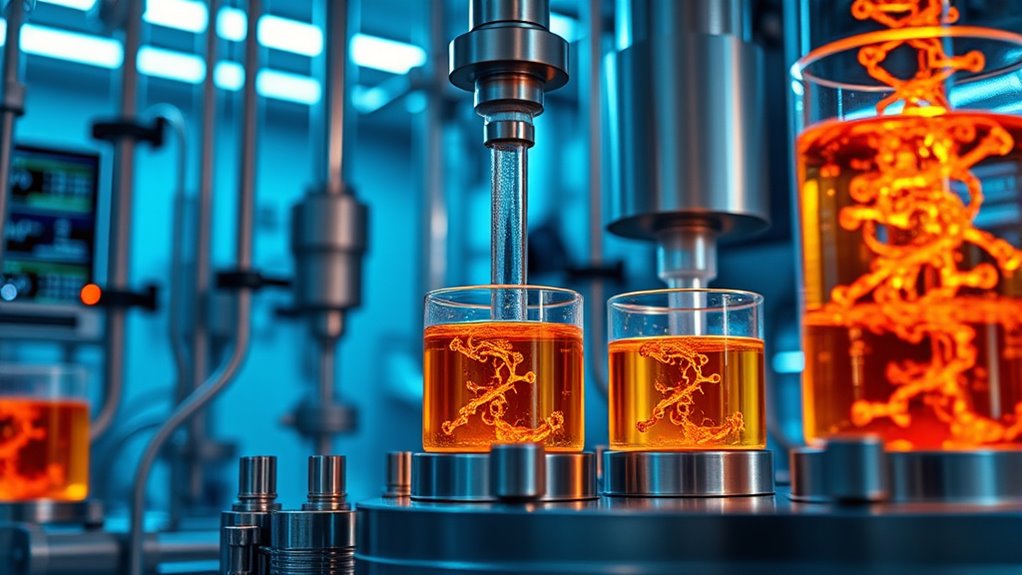
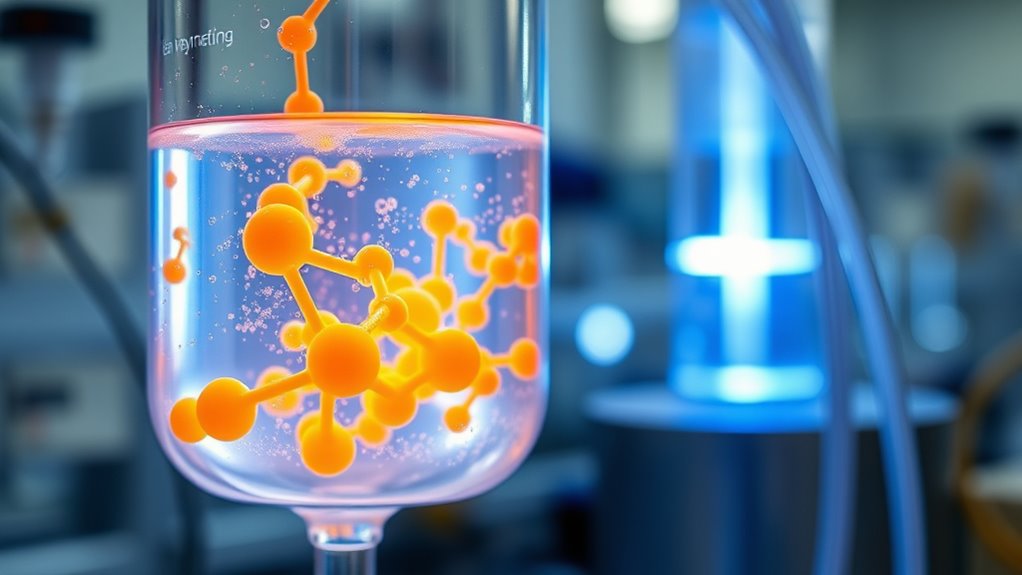
Have you ever wondered how industries produce complex chemicals more sustainably? It’s a fascinating process driven by biocatalysis, where enzymes act as the workhorses to streamline manufacturing. These biological catalysts enable chemical transformations under mild conditions, reducing the need for harsh chemicals and energy-intensive steps. To maximize their effectiveness, scientists focus heavily on enzyme engineering, tailoring enzymes to perform specific tasks with higher efficiency and stability. This customization involves modifying the enzyme’s structure at the molecular level, enhancing their ability to handle industrial challenges like high temperatures, extreme pH levels, or the presence of organic solvents. Through enzyme engineering, you can create biocatalysts that are not only more robust but also more selective, minimizing unwanted byproducts and waste. Understanding enzyme function allows researchers to design more effective biocatalysts for industrial applications.
Process optimization plays a pivotal role in integrating these engineered enzymes into industrial workflows. Once a suitable enzyme is developed, the next step is fine-tuning the process conditions to guarantee maximum productivity. This involves adjusting parameters such as temperature, pH, substrate concentration, and reaction time. By optimizing these variables, industries can considerably increase yields, reduce reaction times, and lower operational costs. For example, using high-throughput screening methods, you can quickly identify the best conditions for enzyme activity and stability, ensuring that the process is both efficient and scalable. Process optimization also includes immobilizing enzymes on solid supports, which allows for their reuse and continuous operation, further improving cost-effectiveness.
Combining enzyme engineering with process optimization creates a powerful synergy that drives sustainable industrial practices. With engineered enzymes that perform reliably under industrial conditions, you can replace traditional chemical catalysts that often require high temperatures, pressures, and toxic reagents. This shift not only lowers environmental impact but also enhances safety and reduces waste generation. Over time, continuous improvements in enzyme design and process control will make biocatalysis an even more integral part of manufacturing, particularly in sectors like pharmaceuticals, biofuels, and specialty chemicals. As you leverage these advancements, you’re helping industries transition toward greener, more sustainable production methods—demonstrating that nature’s catalysts are truly the future of chemical manufacturing.
Frequently Asked Questions
How Are Enzyme Costs Managed in Large-Scale Industrial Processes?
You manage enzyme costs in large-scale processes by carefully monitoring enzyme pricing and implementing cost optimization strategies. You select cost-effective enzyme sources, optimize reaction conditions to reduce enzyme needs, and recycle enzymes where possible. Additionally, you negotiate better deals with suppliers and invest in enzyme engineering to improve efficiency. These approaches help you keep enzyme expenses manageable while maintaining high process performance and product quality.
What Are the Environmental Impacts of Biocatalytic Manufacturing?
You’ll find that biocatalytic manufacturing has positive environmental impacts when you adopt sustainable practices and prioritize waste reduction. Enzymes enable cleaner processes by operating under mild conditions, reducing energy use and harmful emissions. They also minimize waste by increasing product yields and specificity. Overall, this approach helps lower the ecological footprint of production, making it a greener alternative that supports environmental conservation and sustainable industrial growth.
How Do Enzymes Compare to Traditional Chemical Catalysts in Efficiency?
Imagine a master chef crafting a perfect dish; enzymes are similarly precise. They often outperform traditional chemical catalysts in efficiency due to their high enzyme specificity, targeting specific reactions with minimal waste. Their catalytic efficiency allows faster reactions under milder conditions, saving energy and reducing byproducts. Unlike harsh chemicals, enzymes deliver cleaner, more sustainable results, making them a smarter choice for industry where precision and efficiency matter.
What Are the Main Challenges in Enzyme Stability During Industrial Use?
You face challenges with enzyme stability during industrial use, mainly due to enzyme denaturation caused by harsh process conditions like high temperature or extreme pH. To combat this, you can use immobilization techniques, which help protect enzymes and extend their activity. However, maintaining enzyme stability remains complex, and optimizing immobilization methods is vital to prevent denaturation and guarantee consistent performance over time.
How Is Enzyme Activity Monitored and Controlled in Industrial Settings?
Monitoring and managing enzyme activity means you measure enzyme kinetics through precise activity assays, ensuring ideal operation. You control conditions like temperature, pH, and substrate concentration to fine-tune performance. Regularly reviewing data helps detect drops in activity, prompting adjustments. This systematic supervision secures consistent, efficient enzyme function, maximizing productivity and minimizing waste, so your industrial process stays smooth, steady, and supercharged with the right enzymatic activity.
Conclusion
Biocatalysis truly transforms industry, making processes greener, faster, and more efficient. Did you know that enzymes can reduce energy consumption by up to 50%? Imagine the impact on our planet when we harness these natural workhorses to replace harsh chemicals. By embracing biocatalysis, you’re contributing to a more sustainable future, where innovation and environmental care go hand in hand. It’s a powerful step toward cleaner, smarter manufacturing—something worth getting excited about.