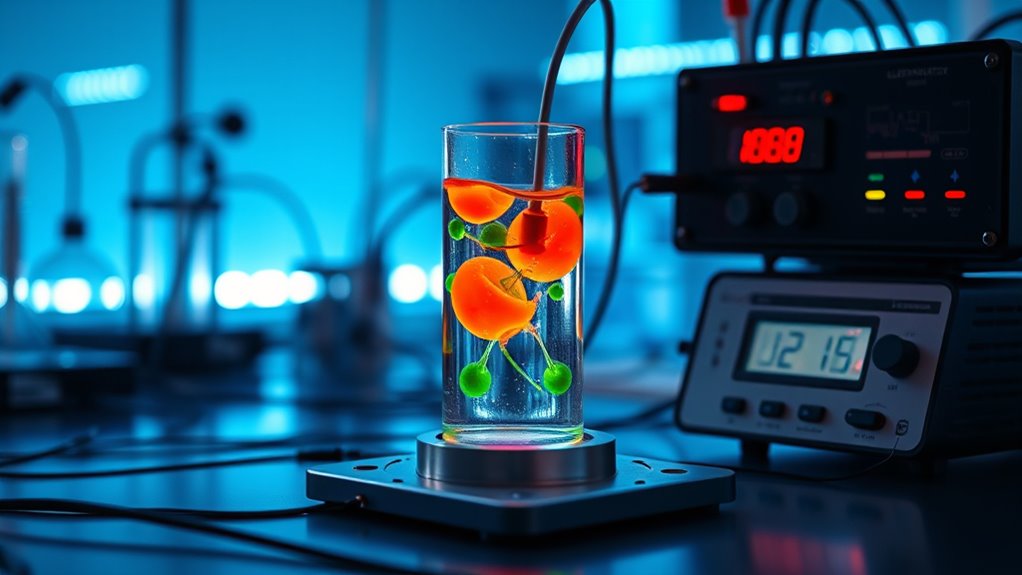

Electrosynthesis offers a greener way to carry out oxidation reactions by replacing harmful chemical oxidants with electric current. This process reduces toxic waste, minimizes hazardous byproducts, and follows green chemistry principles. Choosing the right electrode material, like carbon-based or diamond electrodes, improves efficiency and durability while promoting specific reaction pathways. If you want to discover how surface modifications and advanced materials can further enhance sustainability, stay with us for more insights.
Key Takeaways
- Electrosynthesis eliminates hazardous chemical oxidants, reducing toxic waste and aligning with green chemistry principles.
- Selection of durable, conductive electrode materials like boron-doped diamond enhances reaction stability and efficiency.
- Surface modifications and catalysts on electrodes improve selectivity, minimize side reactions, and promote cleaner oxidation pathways.
- Operating under mild conditions with electrical energy reduces energy consumption and environmental impact.
- Overall, electrosynthesis offers a safer, more sustainable alternative for environmentally friendly oxidation processes.

Electrosynthesis offers a promising route to cleaner oxidation processes by eliminating the need for hazardous chemical oxidants. This approach aligns with the principles of green chemistry, which aim to reduce environmental impact and enhance safety. Instead of relying on traditional chemical oxidants that can generate toxic waste, electrosynthesis uses electrical energy to drive oxidation reactions directly at the electrode surface. This method minimizes waste and often requires milder conditions, making it an attractive alternative for sustainable chemical manufacturing.
Electrosynthesis enables cleaner, safer oxidation processes by eliminating hazardous chemical oxidants and reducing environmental impact.
Your choice of electrode materials plays a vital role in optimizing electrosynthesis for clean oxidations. Selecting the right electrodes can improve reaction efficiency, selectivity, and energy consumption. For example, carbon-based electrodes, such as glassy carbon or graphite, are popular for their conductivity, stability, and affordability. They are compatible with a wide range of reactions and are considered environmentally friendly. Metal electrodes, like platinum or boron-doped diamond, offer higher durability and unique electrochemical properties, but they come with higher costs and potential environmental concerns if not handled properly. The development of novel electrode materials, including conductive polymers and nanostructured surfaces, further enhances reaction performance by increasing surface area and facilitating better electron transfer.
You should consider the electrode’s surface properties and electrochemical stability when designing your electrosynthesis process. A well-chosen electrode material can lower overpotentials, reduce energy input, and improve product yields. Additionally, the electrode’s surface can be modified with catalysts or coatings to promote specific reaction pathways, increasing selectivity and minimizing side reactions. This tailored approach not only boosts efficiency but also aligns with green chemistry goals by reducing waste and energy consumption.
Another aspect to keep in mind is the durability of electrode materials. Long-lasting electrodes reduce replacement costs and waste generation, contributing to a more sustainable process. You can explore advanced materials like boron-doped diamond, which boasts exceptional stability and broad potential windows, making it ideal for complex oxidations. As research advances, new electrode materials and surface modifications will continue to expand the scope of electrosynthesis, enabling more sustainable and efficient oxidation methods. Additionally, electrode stability is crucial for maintaining consistent performance over time, further supporting environmentally friendly practices. By carefully selecting and engineering electrode materials, you can harness the full potential of electrosynthesis to achieve cleaner, safer, and more environmentally friendly oxidation processes.
Frequently Asked Questions
How Does Electrosynthesis Compare Cost-Wise to Traditional Oxidation Methods?
Electrosynthesis is generally more cost-effective than traditional oxidation methods because it improves economic feasibility by reducing operational costs. You’ll find that it uses electricity instead of expensive chemicals, cutting material expenses. Although initial setup might seem higher, the long-term savings on reagents and waste disposal make electrosynthesis a more economical choice. Overall, it offers a cleaner, more sustainable alternative that can lower your operational costs over time.
What Are the Safety Considerations When Implementing Electrosynthesis?
Think of electrosynthesis like handling a delicate but powerful tool—you need to prioritize electrode safety and guard against electrical hazards. Always wear proper protective gear, ensure equipment is properly grounded, and keep liquids away from electrical components. Regularly inspect electrodes for damage, as compromised electrodes can cause shorts or sparks. By respecting these safety measures, you prevent accidents and keep your process both safe and efficient.
Can Electrosynthesis Be Applied to Large-Scale Industrial Processes?
You can apply electrosynthesis to large-scale industrial processes, but you’ll face scaling challenges that require careful process optimization. As you scale up, you need to guarantee consistent electric current distribution and manage heat generation effectively. By optimizing electrode design and reaction conditions, you can improve efficiency and safety. Addressing these challenges allows you to harness electrosynthesis’s environmental benefits while maintaining cost-effectiveness at an industrial level.
What Are Common Challenges in Scaling up Electrosynthesis Reactions?
You’ll face challenges like reaction optimization, ensuring consistent conditions at scale, and selecting suitable electrode materials that withstand prolonged use. Scaling up electrosynthesis reactions requires careful control of current density, temperature, and flow rates, which can be tough to maintain uniformly. You also need durable electrode materials to prevent degradation and maintain efficiency, making the process more complex but manageable with proper design and monitoring.
How Does Electrosynthesis Impact Energy Consumption and Sustainability?
Electrosynthesis considerably impacts energy consumption and sustainability by enabling eco-friendly processes that often rely on renewable energy sources. You can reduce reliance on hazardous chemicals, lowering environmental footprints. By using electricity, especially from renewables, you minimize waste and energy inefficiencies. This approach promotes sustainable practices, making chemical production cleaner and more efficient, helping you achieve greener, more sustainable outcomes while conserving resources and reducing overall environmental impact.
Conclusion
By embracing electrosynthesis, you open the door to a cleaner, greener world where chemistry flows like a gentle river, cutting through pollution with ease. It’s your chance to harness the electric current’s silent power, transforming oxidations from dirty battles into elegant dances of innovation. As you step into this bright future, remember—you hold the spark to ignite change, making chemistry a force for good, not harm. Let your actions shine as brightly as the solutions you create.