An LCA compares recycled and virgin plastics from raw material extraction to disposal, showing that recycled plastics typically require less energy and produce fewer emissions. Using recycled materials helps conserve resources, reduces pollution, and lowers the overall environmental footprint. Although virgin plastics may seem cheaper upfront, they involve energy-intensive processes and greater ecological damage. By exploring these differences further, you’ll discover how choosing recycled plastics benefits both the environment and your sustainability goals.
Key Takeaways
- Recycled plastics generally have a lower environmental footprint due to reduced energy use and greenhouse gas emissions.
- Life Cycle Assessments show virgin plastics involve more pollution and ecological disruption from raw material extraction.
- Recycled plastics often cost less overall, considering energy, transportation, and environmental mitigation expenses.
- Using recycled materials promotes sustainability, resource conservation, and aligns with eco-friendly business practices.
- LCAs highlight significant environmental and economic benefits that favor recycled plastics over virgin counterparts.
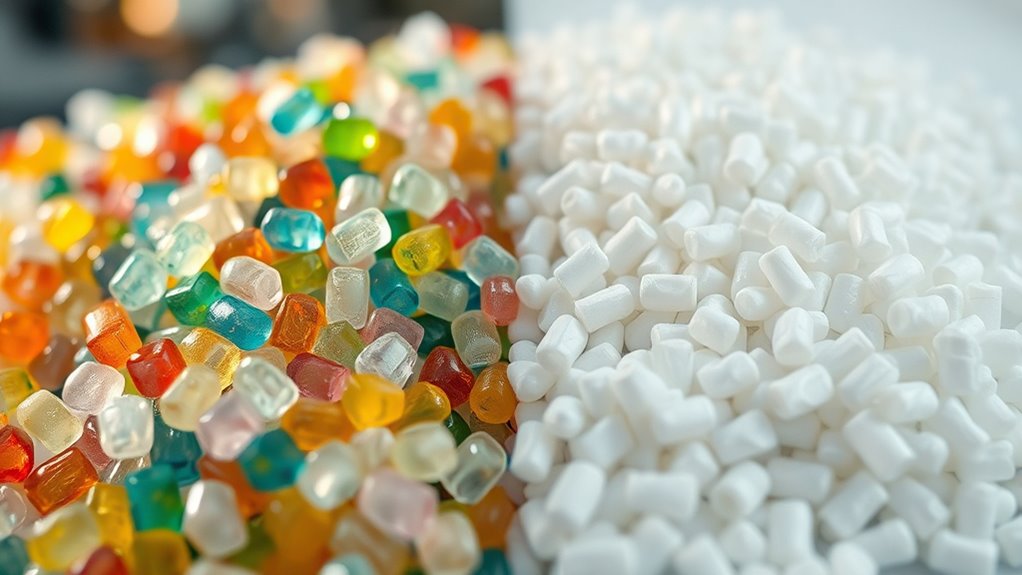
Understanding the environmental impacts of plastics starts with comparing recycled and virgin materials through a life cycle assessment (LCA). This process helps you see the full picture of how each type affects the environment, from raw material extraction to disposal. When evaluating the environmental impact, recycled plastics generally come out ahead because they require less energy to produce. Using recycled materials reduces greenhouse gas emissions, conserves natural resources, and minimizes pollution associated with raw material extraction and processing. Virgin plastics, on the other hand, demand significant energy inputs and often involve environmentally damaging extraction practices, leading to higher carbon footprints and greater ecological disruption. By conducting an LCA, you can quantify these differences, giving a clear comparison of their overall environmental impacts. Additionally, adopting sustainable practices aligns with the principles of the Law of Attraction, attracting positive outcomes for your business and the environment.
Cost comparison is another critical factor in choosing between recycled and virgin plastics. Recycled plastics tend to be more cost-effective because they bypass many energy-intensive and costly steps involved in producing virgin materials. While initial prices for virgin plastics might sometimes seem lower due to established supply chains, the overall costs when factoring in energy, transportation, and environmental mitigation tend to favor recycled options. Additionally, as demand for sustainable products rises, the economic incentive for using recycled plastics increases, often leading to reduced prices and better market stability. You’ll find that companies adopting recycled plastics can also benefit from incentives, tax breaks, or certifications that recognize their environmental efforts, further tipping the financial scales in favor of recycling.
recycled plastic storage containers
As an affiliate, we earn on qualifying purchases.
As an affiliate, we earn on qualifying purchases.
Frequently Asked Questions
How Does Recycling Impact Plastic Durability Over Time?
Recycling can slightly affect plastic durability over time because repeated use and processing might accelerate plastic aging, making it more prone to cracking or degradation. Durability factors like exposure to UV light, temperature, and mechanical stress also play roles. While recycled plastics generally maintain good durability, their aging process could be faster if not properly processed or stabilized, so it’s crucial to evaluate these factors when appraising long-term performance.
What Are the Barriers to Increasing Recycled Plastic Use?
Imagine a world where recycled plastics flow seamlessly through your everyday products. Yet, barriers like consumer perception linger, making people doubt recycled materials’ quality. Supply chain complexities also hinder growth, causing delays and shortages. You might find it frustrating that despite environmental benefits, these hurdles slow adoption. Overcoming these barriers requires shifting perceptions and streamlining supply chains, so recycled plastics become a trusted, integral part of your daily life.
How Do Regional Recycling Rates Affect LCA Results?
Regional disparities in recycling rates substantially impact LCA results because areas with better recycling infrastructure tend to produce lower environmental footprints. When recycling rates are high, the environmental benefits of recycled plastics increase, reducing resource use and emissions. Conversely, regions with limited recycling infrastructure often have higher impacts, as more virgin plastics are produced. Consequently, understanding local recycling infrastructure helps assess the true environmental benefits of recycling practices.
Can Recycled Plastics Match the Performance of Virgin Plastics?
Like a chameleon adapting to its surroundings, recycled plastics can match virgin plastics in performance when advanced recycling technologies refine their material properties. You can find recycled plastics suitable for demanding applications, but it depends on the quality of recycling processes. Continuous innovations in recycling technologies enable recycled materials to approach, and sometimes match, virgin plastics’ strength, durability, and clarity, making them a viable, eco-friendly alternative.
What Are the Economic Implications of Choosing Recycled Over Virgin Plastics?
Choosing recycled plastics over virgin ones can lower your costs due to favorable market pricing and reduced raw material expenses. It also simplifies your supply chain by relying less on virgin resin suppliers, making you more resilient to price fluctuations. However, initial investments in recycling technology or infrastructure might be higher. Overall, the economic benefits hinge on your scale, access to recycled materials, and market demand, leading to potential long-term savings.
virgin plastic packaging materials
As an affiliate, we earn on qualifying purchases.
As an affiliate, we earn on qualifying purchases.
Conclusion
In comparing recycled and virgin plastics, you see that choosing recycled options can drastically cut environmental impacts—it’s like turning a tiny spark into a blazing inferno of sustainability. By opting for recycled plastics, you help save countless resources and reduce pollution, making a massive difference. Every small decision adds up to a greener planet. So, next time you choose plastic, remember, your choice has the power to change the world—don’t underestimate its incredible impact.
eco-friendly recycled plastic products
As an affiliate, we earn on qualifying purchases.
As an affiliate, we earn on qualifying purchases.
recycled plastic furniture
As an affiliate, we earn on qualifying purchases.
As an affiliate, we earn on qualifying purchases.