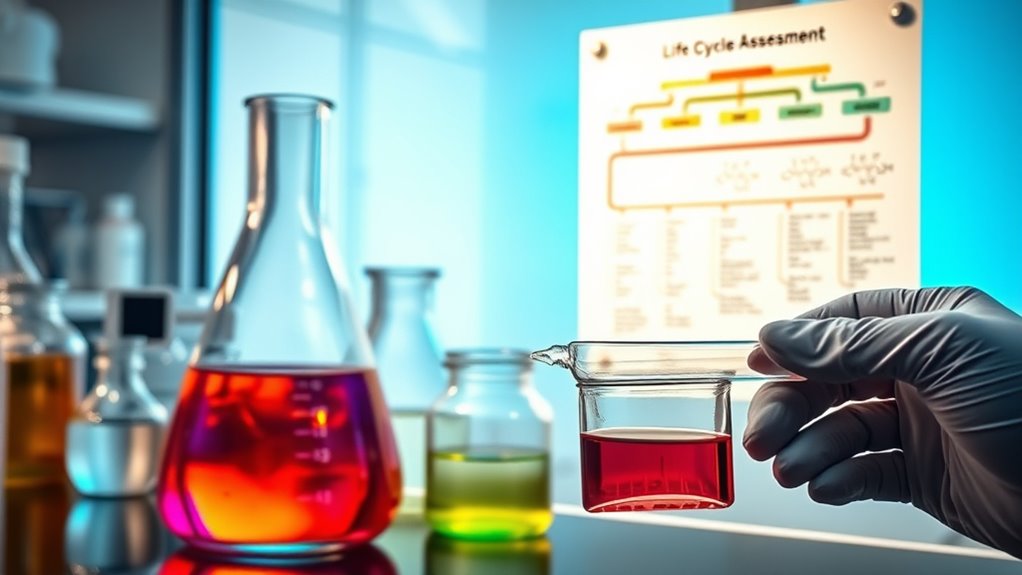

As a chemist, understanding life cycle assessment (LCA) helps you evaluate environmental impacts at every stage of your products and processes, from raw material extraction to disposal. By analyzing energy use, waste, and resource consumption, you can identify greener alternatives and optimize your procedures. Incorporating LCA with green chemistry principles encourages sustainable solutions and reduces ecological footprints. Exploring further reveals how this all-encompassing approach can make your work more environmentally responsible and innovative.
Key Takeaways
- Understand the entire environmental impact of chemical processes from raw material extraction to disposal.
- Use LCA to identify greener raw materials and energy sources for sustainable chemical development.
- Analyze manufacturing techniques and by-products to optimize resource efficiency and minimize waste.
- Incorporate green chemistry principles to design inherently safer and less toxic chemical processes.
- Leverage LCA insights to improve environmental performance, reduce costs, and promote sustainable innovation in chemistry.
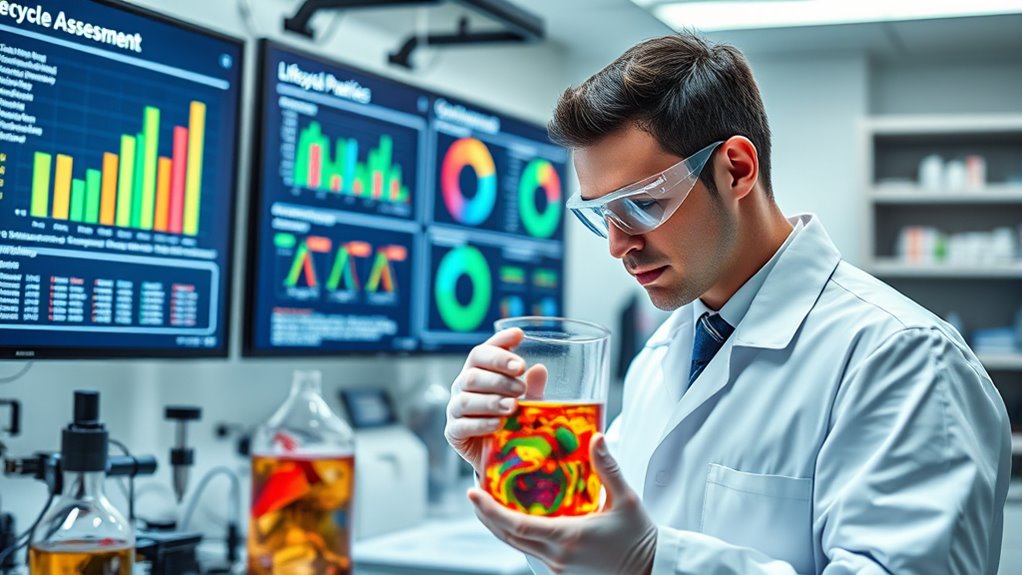
Understanding the environmental impact of chemical processes is essential for modern chemists, and Life Cycle Assessment (LCA) provides a thorough way to evaluate this. By analyzing every stage of a product’s life—from raw material extraction to disposal—you gain a comprehensive view of its ecological footprint. This approach helps you identify areas where sustainable practices can be integrated, making your work not only innovative but also responsible. As a chemist committed to reducing environmental harm, adopting LCA enables you to make informed decisions that align with principles of green chemistry, promoting safer and more sustainable solutions. Green chemistry emphasizes designing chemical products and processes that minimize waste, energy consumption, and toxicity. Incorporating these concepts into your research encourages you to develop methods that are inherently cleaner, reducing reliance on hazardous substances and minimizing pollution. When you perform an LCA, you’re evaluating how your choices—such as raw materials, energy sources, and manufacturing techniques—affect the environment. This insight guides you toward greener alternatives, like choosing renewable feedstocks or optimizing reaction conditions to lower energy use. Embracing sustainable practices through LCA also involves considering the lifecycle of by-products and waste. You can explore innovative recycling methods or safer disposal techniques, ensuring that your processes contribute to a circular economy rather than a linear one. Additionally, understanding the product’s entire life cycle helps in identifying opportunities for process improvements and resource efficiency. By integrating green chemistry principles into your workflow, you not only improve the environmental profile of your projects but also often enhance efficiency and cost-effectiveness. For example, replacing toxic solvents with benign alternatives can streamline your processes while reducing health risks and environmental impact. As you conduct LCAs, you become more aware of the interconnectedness between chemistry and sustainability. This awareness enables you to design processes that are inherently more sustainable from the outset, rather than making incremental improvements after the fact. It empowers you to think holistically about your work, considering not just the immediate results but the long-term consequences for the planet. Ultimately, using LCA as a tool supports your role as a responsible chemist, committed to advancing science in harmony with environmental stewardship. By focusing on sustainable practices and green chemistry, you help pave the way for a more sustainable future in the chemical industry—one where innovation and environmental responsibility go hand in hand.
Frequently Asked Questions
How Can LCA Be Integrated Into Existing Chemical Research Workflows?
You can integrate LCA into your existing chemical research workflows by prioritizing sustainable design early in your process. Incorporate environmental metrics at each stage to evaluate impacts, guiding you toward greener choices. Use LCA tools to analyze raw materials, production, and disposal, ensuring sustainability is a core aspect. This proactive approach helps you develop environmentally responsible chemicals while maintaining efficiency, ultimately aligning your research with eco-friendly innovation.
What Tools Are Most Effective for Conducting LCAS in Chemistry?
You should focus on data analysis tools like GaBi, SimaPro, or OpenLCA, which are highly effective for conducting LCA in chemistry. These software options help you analyze environmental impacts, compare options, and streamline your workflow. When selecting software, consider your specific project needs, complexity, and ease of use. Accurate data analysis is essential, so choose tools that integrate well with your existing research processes for better insights.
How Does LCA Influence Green Chemistry Practices?
Did you know that companies using LCA see a 20% reduction in environmental impact? LCA directly influences green chemistry practices by highlighting areas for sustainable innovation, allowing you to design processes with minimal environmental harm. By understanding the full life cycle, you can develop safer, more sustainable products and reduce waste, making your chemistry work more eco-friendly and aligned with environmental goals.
What Are Common Challenges Faced When Applying LCA to Chemical Processes?
When applying LCA to chemical processes, you often face challenges like data gaps and data quality issues. These problems hinder accurate assessments, making it difficult to identify true environmental impacts. You might struggle to gather complete data or encounter unreliable information, which impacts decision-making. Overcoming these challenges requires diligent data collection, validation, and transparency to guarantee your LCA results truly reflect the environmental footprint of your chemical processes.
How Can Chemists Effectively Communicate LCA Results to Stakeholders?
You can effectively communicate LCA results to stakeholders through clear visual communication, like charts and infographics, that highlight key environmental impacts. Engage stakeholders by explaining how these results influence decision-making and sustainability goals. Use simple language, avoid jargon, and tailor your message to your audience’s interests. Regular updates and open dialogue foster trust and guarantee stakeholders stay informed and involved throughout the assessment process.
Conclusion
So, after all this, you might think chemists have it easy, just mixing compounds and making discoveries. But in reality, your work’s impact extends far beyond the lab—sometimes with unintended consequences. Life Cycle Assessment isn’t just a buzzword; it’s a wake-up call. Ironically, by aiming for innovation, you might inadvertently create a more sustainable future—or at least, that’s the hope. Who knew chemistry could be so environmentally conscientious?