

When selecting solvents, prioritize options that are less toxic, environmentally friendly, and derived from renewable sources. Avoid traditional solvents like benzene that pose health risks and focus on bio-based, biodegradable, and lower-volatility alternatives. By choosing safer solvents, you protect your health and help reduce environmental impact. Understanding key criteria and guidelines can make your selection easier. Keep exploring to discover specific eco-friendly solvents that meet safety and sustainability standards.
Key Takeaways
- Prioritize solvents with low toxicity profiles to minimize health and environmental risks.
- Choose bio-based, renewable solvents that have a reduced environmental footprint.
- Assess volatility and emission levels to ensure safer handling and lower air pollution.
- Verify that the solvent complies with safety regulations and industry standards.
- Consider disposal and biodegradability to promote sustainable and responsible solvent use.
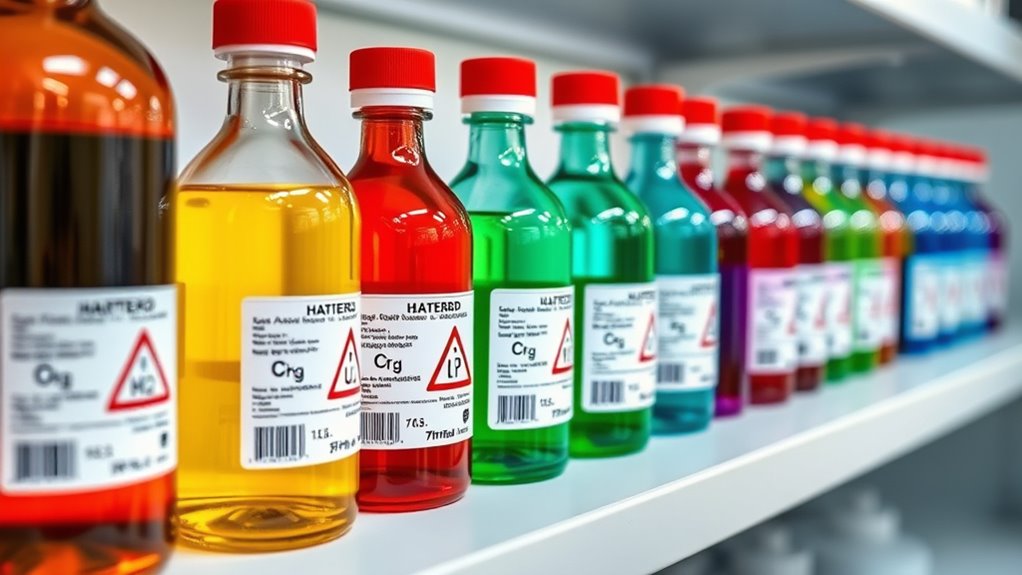
Have you ever wondered how to choose the right solvent for your chemical process or cleaning task? The decision isn’t just about effectiveness; it’s also about safety and environmental impact. Understanding solvent toxicity is critical because some solvents can pose serious health risks to workers and end-users. When selecting a solvent, you need to evaluate how toxic it is—does it emit hazardous fumes, or could it cause skin or respiratory irritation? Many traditional solvents, like benzene or methylene chloride, are highly toxic and linked to health issues, so it’s wise to consider safer alternatives. Environmentally friendly solvents are gaining popularity because they tend to be less harmful to both human health and the planet. These solvents often have lower volatility, reduced toxicity, and are biodegradable, making them preferable choices for sustainable operations.
Choosing environmentally friendly solvents involves looking beyond traditional options. For example, instead of using chlorinated solvents which can be persistent pollutants, you might opt for bio-based solvents derived from renewable resources. These alternatives often have a lower environmental footprint because they produce fewer emissions and are easier to dispose of safely. Additionally, many environmentally friendly solvents are designed to be less volatile, which reduces inhalation risks and air pollution. When evaluating which solvent to use, ask yourself if it’s biodegradable and if it has a low toxicity profile. This way, you’re not only protecting your team but also contributing to a healthier environment. Moreover, selecting safer solvents can help mitigate potential health risks associated with exposure to toxic chemicals, especially during routine handling and disposal.
Frequently Asked Questions
How Often Should Solvent Safety Data Be Reviewed?
You should review solvent safety data at least annually, or more often if there are safety updates or new research. Staying current with review frequency guarantees you’re informed about any changes in hazards, handling procedures, or regulations. Regularly checking safety data sheets helps you maintain safe practices, adapt to new information, and minimize risks. Don’t wait for an incident—prioritize ongoing safety updates through consistent reviews.
Are There Alternatives to Traditional Solvents in Industrial Use?
Imagine a world where you’re not bound by traditional solvents, where eco-friendly alternatives and solvent-free technologies take center stage. You can explore cutting-edge options like water-based or bio-based solvents, which reduce hazards and environmental impact. These innovations not only protect your team but also enhance sustainability. By embracing these alternatives, you transform your operations, making them safer and greener, and opening doors to a cleaner, healthier future.
How Do Regulatory Changes Impact Solvent Selection?
Regulatory changes directly influence your solvent choices by enforcing stricter safety standards and compliance measures. You need to stay updated on new laws to guarantee your solvents meet environmental and health regulations. This may mean switching to safer, approved alternatives or modifying your processes to align with new standards. By proactively adapting, you minimize legal risks, enhance safety, and demonstrate your commitment to regulatory compliance in your operations.
What Training Is Recommended for Handling New Solvents Safely?
They say, “Knowledge is power,” and that’s especially true when handling new solvents safely. You should undergo training that covers proper personal protective equipment, spill containment, and emergency response procedures. Hands-on practice and safety seminars help you understand risks and proper techniques. Staying informed about the properties of new solvents guarantees you can respond effectively and minimize hazards, keeping yourself and your environment safe at all times.
How Can Solvent Use Be Minimized in Manufacturing Processes?
You can minimize solvent use by focusing on solvent reduction and process optimization. Start by evaluating your current processes to identify opportunities for efficiency improvements, such as replacing open systems with closed ones, or using less volatile alternatives. Implementing continuous improvement strategies helps reduce solvent consumption over time. Additionally, explore alternative methods like aqueous or mechanical cleaning to cut down on solvent reliance, ultimately making your manufacturing process safer and more sustainable.
Conclusion
By choosing safer solvents, you’re playing with fire less often and keeping your work environment safer. Remember, it’s better to be safe than sorry—don’t wait until problems arise. Use these guides to make informed decisions and prioritize health and safety. When you pick the right solvent, you’re not just ticking boxes; you’re setting yourself up for success and peace of mind. Stay proactive, and you’ll find that safety truly pays off in the long run.