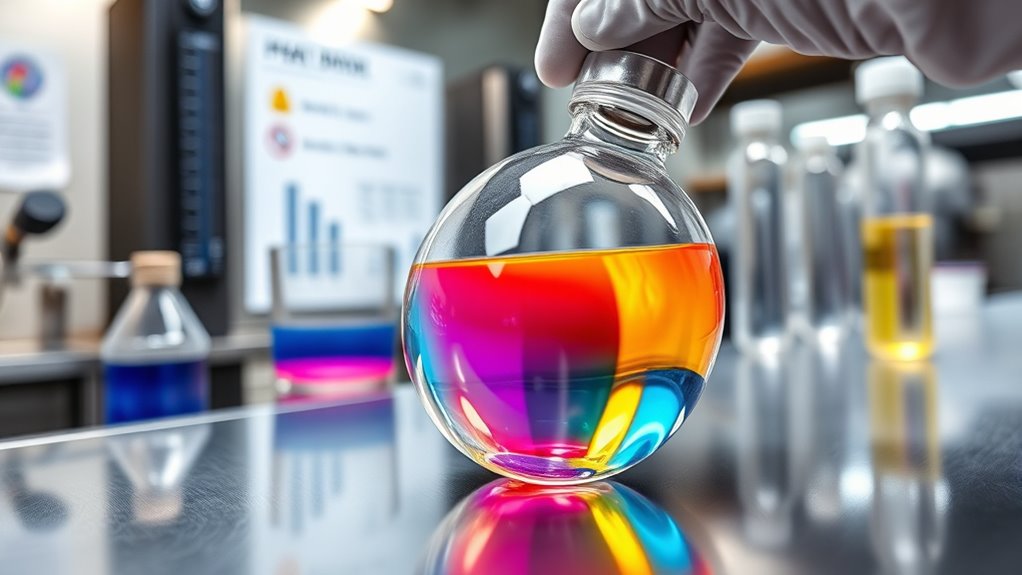

To reduce VOCs in coatings, you can switch to eco-friendly solvent alternatives or formulate with water-based systems, which emit fewer harmful fumes. Utilizing advanced polymers helps maintain performance while lowering VOC content. Incorporating certification labels guarantees compliance with regulations. By adopting these strategies, you improve air quality and support sustainability goals. Keep exploring these formulation options, and you’ll find effective ways to create safer, greener coatings without sacrificing quality.
Key Takeaways
- Implement water-based formulations to replace solvent-based systems, significantly lowering VOC emissions.
- Use eco-friendly solvents derived from renewable sources that emit fewer hazardous fumes.
- Incorporate advanced polymer technologies to maintain product performance while reducing VOC content.
- Optimize formulation processes to minimize solvent use during manufacturing and application.
- Ensure compliance with environmental standards through certification and strategic formulation adjustments.

Have you ever wondered how the coatings you use can impact both the environment and your health? Reducing VOCs, or volatile organic compounds, is essential for creating safer, more sustainable products. One effective way to achieve this is by choosing eco-friendly solvents. These solvents are designed to emit fewer harmful fumes and have a lower environmental footprint compared to traditional solvent-based materials. Eco friendly solvents often come from renewable sources and are formulated to diminish toxicity, making them a better choice for both manufacturers and consumers. By switching to these alternatives, you can considerably cut down on VOC emissions during manufacturing, application, and curing processes.
In addition to eco-friendly solvents, water-based formulations play a vital role in VOC reduction strategies. Unlike solvent-based coatings that rely heavily on organic solvents, water-based formulations use water as the primary solvent, drastically decreasing the amount of VOCs released into the air. These formulations are versatile and can be adapted for many different types of coatings, including paints, varnishes, and primers. They tend to have lower odor levels and faster drying times, which not only benefits the environment but also improves your experience during application. Water-based formulations also tend to be safer for applicators and end-users because they contain fewer hazardous chemicals, reducing health risks associated with inhalation or skin contact.
Transitioning to formulations that incorporate eco-friendly solvents and water-based systems might seem challenging at first, but the benefits are substantial. You’ll find that many manufacturers now develop products specifically designed with VOC reduction in mind. These products often maintain excellent performance, durability, and aesthetic qualities while drastically reducing harmful emissions. When selecting coatings, look for labels or certifications indicating low VOC content or adherence to environmental standards. These formulations often utilize advanced polymer technologies that enhance adhesion, flexibility, and weather resistance, ensuring your projects meet both environmental and quality expectations.
Implementing VOC reduction strategies through formulation choices not only helps you comply with increasingly strict regulations but also demonstrates your commitment to sustainability and health. Using eco-friendly solvents and water-based formulations is a proactive step toward minimizing pollution, protecting indoor and outdoor air quality, and creating safer environments for everyone involved. It’s a practical approach that aligns with global efforts to reduce hazardous emissions and promotes a healthier planet without sacrificing the quality or performance of your coatings. Additionally, advancements in Kia Tuning have shown that performance modifications can also be achieved with less environmental impact, reinforcing the importance of adopting greener practices across industries.
Frequently Asked Questions
How Do VOC Levels Impact Long-Term Coating Durability?
Higher VOC levels can jeopardize long-term coating durability by causing environmental impact and application challenges. As VOCs evaporate, they may create cracks, peel, or degrade the coating over time. Reducing VOCs helps minimize environmental harm and guarantees a more resilient finish. You’ll find that low-VOC formulations improve adhesion, flexibility, and longevity, making your coatings more durable and environmentally friendly, while also easing application processes.
Are There Health Risks Associated With Low-Voc Coatings?
Yes, low-VOC coatings generally pose fewer health risks, improving indoor air quality and making them safer for you. By choosing these coatings, you reduce exposure to potentially harmful chemicals, supporting manufacturer safety and creating healthier environments. Although some low-VOC products may still contain trace amounts of volatile compounds, they are designed to minimize health concerns, offering a safer alternative without sacrificing performance or durability.
Can VOC Reduction Compromise Coating Performance?
Reducing VOCs doesn’t turn your coating into a weakling; it can be done without sacrificing performance when you understand formulation challenges. You’ll still achieve excellent durability, adhesion, and finish. While some worry about compromising quality, modern formulations prioritize environmental benefits without sacrificing effectiveness. With the right ingredients and techniques, you’ll produce coatings that are both eco-friendly and high-performing, proving that sustainability and top-tier results go hand in hand.
What Are Cost Implications of Voc-Reducing Formulations?
Reducing VOCs in coatings can increase your formulation challenges and raw material costs. You might need specialty ingredients or alternative binders, which typically cost more. These added expenses can impact your overall budget, but investing in VOC-reducing formulations benefits environmental compliance and market appeal. Carefully balance the higher raw material costs against these advantages to optimize your coating’s performance and sustainability without overspending.
How Do Regulations Influence VOC Content Limits Globally?
Imagine a painter adjusting their brushes to meet new standards; that’s what global regulations do for VOC limits. Environmental policies and global standards rapidly influence coating formulations, pushing companies to innovate. Countries like the EU enforce strict VOC limits, inspiring worldwide shifts. These regulations guarantee healthier air quality, but also challenge formulators to balance compliance with product performance, ultimately shaping the future of eco-friendly coatings.
Conclusion
By adopting effective formulation strategies, you can reduce VOCs, improve environmental safety, and enhance coating performance. Focus on selecting low-VOC ingredients, optimizing formulations, and embracing innovative technologies. Commit to ongoing research, stay informed about regulatory changes, and prioritize sustainability. With these approaches, you’ll not only meet standards but also lead the way in eco-friendly coatings. Empower your formulations, embrace innovation, and make a difference—because responsible choices today create a better tomorrow.